

Introduction to AI in Everyday Life
Artificial Intelligence (AI) has seamlessly woven itself into the fabric of our daily lives, often without us even noticing. From the moment we wake up to the time we go to bed, AI-powered tools and systems enhance our productivity, entertainment, and even our health. Whether it’s a virtual assistant reminding us of appointments or a smart thermostat adjusting the temperature, AI is everywhere. In this article, we’ll explore how AI shapes our world and why it’s become indispensable.
Key Takeaways
- AI mimics human intelligence, adapting to user behaviour for personalised experiences.
- From virtual assistants to smart homes, AI simplifies daily tasks and enhances efficiency.
- Ethical considerations, such as privacy and bias, are critical as AI becomes more pervasive.
- Understanding AI’s basics helps demystify its role and potential in modern life.
Defining Artificial Intelligence
At its core, AI refers to machines designed to mimic human intelligence, learning from data and making decisions. Unlike traditional software, AI adapts and improves over time, offering personalised experiences. For instance, AI’s future promises even more integration, blurring the lines between human and machine interaction. Understanding this technology helps us appreciate its role in modern life.
The Evolution of AI in Daily Activities
AI’s journey from theoretical concept to everyday utility is remarkable. Early applications were limited to research labs, but today, AI powers everything from search engines to social media algorithms. Its evolution reflects our growing reliance on technology to simplify tasks. For example, AI-driven recommendations on streaming platforms save us hours of browsing, proving how deeply it’s embedded in our routines.
Understanding AI’s Impact on Society
AI’s influence extends beyond convenience; it’s reshaping industries and societal norms. While it boosts efficiency, it also raises ethical questions about privacy and job displacement. Balancing innovation with responsibility is crucial. For more insights, explore AI basics, which demystify its complexities for beginners.
AI in Personal Assistants
How Virtual Assistants Use AI
Virtual assistants like Siri, Alexa, and Google Assistant have become indispensable in our daily lives. These tools leverage AI to understand and respond to voice commands, making tasks like setting reminders or playing music effortless. By analysing speech patterns and context, they provide accurate responses, learning from each interaction to improve over time. The integration of natural language processing (NLP) ensures seamless communication, bridging the gap between humans and machines.
Beyond voice recognition, AI enables these assistants to predict user needs. For instance, they suggest calendar events based on emails or recommend routes using real-time traffic data. This proactive approach enhances productivity, transforming passive tools into active collaborators. As AI evolves, so does the potential for virtual assistants to become even more intuitive, anticipating our needs before we voice them.
Popular AI-Powered Personal Assistants
Among the most widely used AI assistants are Apple’s Siri, Amazon’s Alexa, and Google Assistant. Each offers unique features tailored to different ecosystems. Siri excels in seamless integration with Apple devices, while Alexa dominates smart home control with its vast compatibility. Google Assistant, powered by Google’s search prowess, excels in answering complex queries and managing daily tasks.
These assistants are not just limited to smartphones or smart speakers. They’re embedded in cars, wearables, and even household appliances, creating a connected ecosystem. Their ability to sync across devices ensures continuity, whether you’re at home or on the go. As competition grows, so does innovation, with each assistant striving to offer more personalised and context-aware experiences.
Customising Your AI Assistant for Better Productivity
Personalisation is key to maximising the benefits of AI assistants. Most platforms allow users to tailor settings, such as preferred languages or frequently used apps. By enabling permissions for calendar, email, and location access, assistants can provide more relevant suggestions. For instance, they can remind you of meetings or suggest the fastest route home based on traffic conditions.
Advanced users can create routines or automate tasks. For example, a “good morning” routine might turn on lights, read the news, and start the coffee maker. These customisations not only save time but also make technology feel more intuitive. As AI continues to learn from user behaviour, the potential for hyper-personalised experiences grows, making assistants indispensable in our daily routines.
AI in Smart Home Devices
Smart Thermostats and AI
Smart thermostats like Nest and Ecobee use AI to optimise home heating and cooling. By learning your schedule and preferences, they adjust temperatures automatically, ensuring comfort while reducing energy waste. Over time, these devices detect patterns, such as when you leave for work or return home, and adapt accordingly. This not only enhances convenience but also lowers utility bills.
AI also enables these thermostats to respond to external factors, such as weather changes. For instance, they might lower the heating if a warm front is predicted. Integration with other smart devices, like windows or fans, further refines climate control. The result is a home that feels intuitively managed, with minimal manual input required.
AI in Home Security Systems
AI-powered security systems, such as those from Ring or Arlo, offer advanced features like facial recognition and anomaly detection. Cameras can distinguish between familiar faces and strangers, sending alerts only when necessary. This reduces false alarms and ensures timely responses to genuine threats. Machine learning algorithms improve accuracy over time, adapting to new patterns and behaviours.
Beyond cameras, AI enhances doorbell systems, allowing for real-time communication with visitors. Some systems even integrate with virtual assistants, enabling voice commands to check security status. The ability to analyse data from multiple sensors—like motion detectors or window contacts—creates a comprehensive security net, providing peace of mind whether you’re at home or away.
The Future of AI in Smart Homes
The future of AI in smart homes lies in seamless integration and predictive capabilities. Imagine a home that anticipates your needs—adjusting lighting, temperature, and even music based on your mood or time of day. AI could also monitor energy usage across devices, suggesting optimisations to reduce costs and environmental impact.
Interoperability between brands will be crucial, allowing diverse devices to work together harmoniously. As AI becomes more sophisticated, homes will transition from being smart to being truly intelligent, offering personalised experiences that adapt dynamically to our lifestyles. The potential for innovation is boundless, making the smart home of the future a hub of convenience and efficiency.

AI in Entertainment and Media
Recommendation Algorithms in Streaming Services
Streaming platforms like Netflix and Spotify rely heavily on AI-driven recommendation algorithms. These systems analyse your viewing or listening history to suggest content tailored to your tastes. By identifying patterns—such as genre preferences or binge-watching habits—they curate personalised playlists or watchlists. This not only enhances user experience but also keeps audiences engaged, increasing platform loyalty.
The algorithms also consider external factors, like trending content or seasonal themes, to refine suggestions. Over time, they learn from your feedback—likes, skips, or pauses—to improve accuracy. This dynamic adaptation ensures that recommendations remain relevant, making it easier to discover new favourites without endless scrolling.
AI in Video Game Development
AI is revolutionising video game development by creating more immersive and responsive experiences. Procedural generation, powered by AI, allows for infinite game worlds with unique landscapes and challenges. Non-player characters (NPCs) now exhibit lifelike behaviours, adapting to player actions in real time. This makes games more engaging and unpredictable, enhancing replayability.
Beyond gameplay, AI assists developers in testing and debugging. Automated tools can simulate thousands of playthroughs to identify glitches or balance issues. This speeds up development cycles and ensures smoother launches. As AI continues to evolve, its role in crafting richer, more interactive gaming experiences will only expand.
The Role of AI in Content Creation
AI is increasingly used in content creation, from writing articles to generating music. Tools like GPT-4 can draft coherent text, while AI-powered platforms like Amper Music compose original scores. These technologies democratise creativity, enabling even novices to produce professional-quality work. However, they also raise questions about originality and the role of human input.
In media, AI aids in editing and post-production. Automated systems can enhance video quality, remove background noise, or even generate subtitles. This streamlines workflows, allowing creators to focus on storytelling. While AI can’t replace human creativity, it serves as a powerful collaborator, pushing the boundaries of what’s possible in entertainment and media.
AI in Healthcare Applications
Artificial intelligence is revolutionising healthcare by providing tools that enhance diagnostic accuracy and patient care. AI-powered systems analyse medical data, such as imaging scans, to detect anomalies with precision. Wearable health monitors, equipped with AI, track vital signs in real-time, alerting users and doctors to potential health issues. These advancements are paving the way for personalised medicine, where treatments are tailored to individual genetic profiles and lifestyles.
In hospitals, AI assists in managing patient records and predicting disease outbreaks. For instance, machine learning algorithms can identify patterns in patient data to forecast flu seasons or COVID-19 spikes. This proactive approach allows healthcare providers to allocate resources efficiently. The integration of AI in healthcare not only improves outcomes but also reduces costs, making quality care more accessible. Learn more about AI’s future.
AI for Diagnostic Assistance
AI-driven diagnostic tools are transforming how diseases are detected and treated. These systems use deep learning to interpret X-rays, MRIs, and CT scans, often identifying issues missed by human eyes. For example, AI can detect early signs of cancer or neurological disorders with remarkable accuracy. This technology is particularly valuable in regions with limited access to specialists, bridging gaps in healthcare delivery.
Moreover, AI reduces the burden on healthcare professionals by automating routine tasks. Radiologists and pathologists can focus on complex cases while AI handles preliminary analyses. This collaboration between humans and machines ensures faster, more reliable diagnoses. Explore AI basics.
Wearable Health Monitors and AI
Wearable devices, such as smartwatches and fitness trackers, leverage AI to monitor health metrics like heart rate, sleep patterns, and blood oxygen levels. These gadgets provide real-time feedback, empowering users to take charge of their well-being. For chronic conditions like diabetes, AI-powered wearables can predict blood sugar fluctuations and suggest dietary adjustments.
The data collected by wearables also aids healthcare providers in remote patient monitoring. Doctors can track progress and intervene promptly if anomalies arise. This continuous monitoring is especially beneficial for elderly patients or those with chronic illnesses. Demystify AI.
AI in Personalized Medicine
Personalised medicine uses AI to tailor treatments based on genetic, environmental, and lifestyle factors. By analysing vast datasets, AI identifies the most effective therapies for individual patients. This approach minimises trial-and-error in treatment plans, improving outcomes and reducing side effects. For example, AI helps oncologists select the best chemotherapy drugs for specific cancer types.
AI also accelerates drug discovery by predicting how compounds will interact with human biology. This reduces the time and cost of bringing new medications to market. The potential of AI in personalised medicine is immense, offering hope for previously untreatable conditions. Understand AI types.
AI in Online Shopping and Retail
AI is reshaping the retail landscape by creating personalised shopping experiences. Algorithms analyse browsing history and purchase behaviour to recommend products tailored to individual preferences. This not only enhances customer satisfaction but also boosts sales for retailers. Chatbots, powered by AI, provide instant support, answering queries and resolving issues around the clock.
Behind the scenes, AI optimises inventory and supply chain management. Predictive analytics forecast demand, ensuring shelves are stocked with the right products at the right time. This reduces waste and improves efficiency, benefiting both businesses and consumers. The integration of AI in retail is a win-win, driving innovation and convenience.
Personalized Shopping Experiences with AI
AI-driven recommendation engines, like those used by Amazon and Netflix, suggest products based on past behaviour and similar users’ preferences. These systems learn and adapt, refining their suggestions over time. For shoppers, this means discovering items they might not have found otherwise. Retailers benefit from increased engagement and higher conversion rates.
Virtual try-ons and augmented reality (AR) applications further enhance the shopping experience. AI enables customers to visualise how furniture will look in their homes or how clothes will fit before making a purchase. These innovations bridge the gap between online and in-store shopping, offering the best of both worlds.
AI in Inventory and Supply Chain Management
AI streamlines supply chains by predicting demand fluctuations and optimising logistics. Machine learning models analyse factors like weather, holidays, and market trends to forecast sales accurately. This ensures retailers maintain optimal stock levels, avoiding overstocking or shortages. Automated warehouses, powered by AI, further improve efficiency by speeding up order fulfilment.
Blockchain technology, combined with AI, enhances transparency in supply chains. Consumers can trace the journey of products from factory to shelf, ensuring ethical sourcing. This level of detail builds trust and loyalty, which are crucial in today’s competitive market.
The Impact of AI on Customer Service
AI-powered chatbots and virtual assistants handle routine customer inquiries, freeing up human agents for complex issues. These tools provide instant responses, improving satisfaction and reducing wait times. Natural language processing (NLP) enables chatbots to understand and respond to queries in a conversational manner, mimicking human interaction.
Sentiment analysis, another AI application, gauges customer emotions from reviews and social media. Retailers use this feedback to address concerns and improve services. By leveraging AI, businesses can deliver exceptional customer experiences at scale.
AI in Financial Services
AI is transforming financial services by enhancing security, personalisation, and efficiency. Fraud detection systems use machine learning to identify suspicious transactions in real-time, protecting consumers and institutions. AI also powers robo-advisors, which provide personalised investment advice based on individual goals and risk tolerance. These tools democratise access to financial planning, making it affordable for everyone.
Banks leverage AI to streamline operations, from loan approvals to customer service. Chatbots handle routine inquiries, while predictive analytics assess creditworthiness. This reduces processing times and improves accuracy, benefiting both customers and financial institutions. The integration of AI in finance is driving innovation and inclusivity.
AI for Fraud Detection and Prevention
AI detects fraudulent activities by analysing transaction patterns and flagging anomalies. For example, if a credit card is used in an unusual location, the system can block the transaction and alert the user. Machine learning models continuously improve, adapting to new fraud tactics. This proactive approach minimises losses and builds trust in digital transactions.
Biometric authentication, such as facial recognition and fingerprint scanning, adds another layer of security. AI ensures these systems are accurate and resistant to spoofing. As cyber threats evolve, AI remains a critical tool in safeguarding financial data.
Personalized Banking with AI
AI enables banks to offer tailored services, such as personalised savings plans and budgeting tools. By analysing spending habits, AI provides insights and recommendations to help customers manage their finances. For example, an app might suggest saving a portion of your paycheck or alert you to potential overdrafts.
Voice-activated assistants, like those in mobile banking apps, allow users to check balances or transfer money using natural language. These features make banking more accessible, especially for those with disabilities or limited tech skills. AI is making financial services more intuitive and user-friendly.
AI in Investment Strategies
Robo-advisors use AI to create and manage investment portfolios based on individual goals and risk tolerance. These platforms analyse market trends and historical data to optimise returns. Unlike traditional advisors, robo-advisors are available 24/7 and charge lower fees, making investing accessible to a broader audience.
AI also aids in algorithmic trading, where machines execute trades at lightning speed based on predefined criteria. This reduces human error and emotional bias, leading to more consistent results. The future of investing is increasingly automated, with AI at its core.
AI in Transportation and Navigation
AI is revolutionising transportation by improving safety, efficiency, and convenience. GPS systems use AI to provide real-time traffic updates and suggest the fastest routes. Autonomous vehicles, powered by machine learning, are becoming a reality, promising to reduce accidents and congestion. Public transportation systems also benefit from AI, with predictive maintenance ensuring reliability.
Ride-sharing platforms like Uber and Lyft rely on AI to match drivers with passengers and optimise routes. This reduces wait times and fuel consumption, benefiting both users and the environment. The integration of AI in transportation is creating smarter, more sustainable cities.
AI-Powered GPS and Real-Time Traffic Updates
Modern GPS systems use AI to analyse traffic data from multiple sources, including sensors and user reports. This enables real-time updates, rerouting drivers to avoid delays. Predictive algorithms anticipate congestion based on historical patterns, such as rush hour or events. These features save time and reduce stress for commuters.
AI also enhances pedestrian navigation, helping users find accessible routes or avoid unsafe areas. Whether driving, cycling, or walking, AI-powered navigation tools make getting around easier and safer.
The Role of AI in Autonomous Vehicles
Self-driving cars rely on AI to interpret sensor data and make split-second decisions. Machine learning models process inputs from cameras, lidar, and radar to navigate complex environments. These vehicles promise to reduce accidents caused by human error, such as distracted or impaired driving.
Autonomous trucks are also transforming logistics, enabling long-haul deliveries without fatigue. While fully autonomous vehicles are still in development, AI is already enhancing driver-assistance systems, such as lane-keeping and adaptive cruise control.
AI in Public Transportation Systems
AI optimises public transit by predicting demand and adjusting schedules accordingly. For example, during peak hours, additional buses or trains can be deployed to reduce overcrowding. Predictive maintenance ensures vehicles are serviced before breakdowns occur, minimising disruptions.
Fare collection systems, powered by AI, streamline payments and reduce fraud. Contactless options, like mobile ticketing, improve convenience for passengers. AI is making public transportation more efficient, reliable, and user-friendly.
AI in Education and Learning
Adaptive Learning Technologies
Adaptive learning technologies have revolutionised how we absorb information, tailoring educational content to individual needs. By analysing performance data, AI adjusts difficulty levels and suggests resources, ensuring personalised learning paths. This approach enhances retention and engagement, making education more effective. Schools and online platforms increasingly adopt these tools, bridging gaps in traditional teaching methods. The future promises even more sophisticated systems, capable of predicting learning hurdles before they arise.
These technologies also empower educators by providing insights into student progress. Teachers can identify struggling learners early and intervene with targeted support. AI-driven analytics highlight trends, enabling curriculum adjustments for better outcomes. The result is a dynamic, responsive educational environment where no student is left behind. As AI evolves, its role in shaping personalised education will only grow more profound.
AI Tutors and Educational Assistants
AI tutors and educational assistants are transforming the way we learn, offering round-the-clock support. These tools provide instant feedback, answer questions, and guide learners through complex topics. Unlike human tutors, they are available anytime, making education more accessible. From language learning apps to advanced mathematics helpers, AI assistants cater to diverse needs. Their ability to simulate one-on-one tutoring ensures consistent, high-quality instruction.
Beyond individual learning, AI assistants also support classroom environments. They help teachers manage administrative tasks, freeing up time for direct student interaction. Automated grading and attendance tracking streamline workflows, enhancing efficiency. As these tools become more advanced, they will integrate seamlessly into educational systems, redefining the roles of both students and educators. The potential for AI to democratise education is immense.
The Future of AI in Education
The future of AI in education is brimming with possibilities, from virtual reality classrooms to emotion-sensing tutors. Imagine immersive learning experiences where students explore historical events or scientific concepts in 3D. AI could also detect frustration or boredom, adjusting lessons in real-time to maintain engagement. Such innovations promise to make learning more interactive and enjoyable, catering to diverse learning styles.
Ethical considerations will play a crucial role as AI becomes more embedded in education. Ensuring data privacy and avoiding bias in algorithms are paramount. Collaboration between technologists, educators, and policymakers will shape a future where AI enhances learning without compromising human values. The goal is clear: a world where education is personalised, inclusive, and boundless.
AI in Social Media
AI for Content Moderation
AI plays a pivotal role in content moderation, ensuring social media platforms remain safe and inclusive. By analysing text, images, and videos, AI detects harmful content like hate speech or misinformation. Automated systems flag violations for review, reducing the burden on human moderators. This technology is essential for maintaining community standards at scale, though challenges like false positives persist.
Continuous improvements in AI algorithms enhance accuracy, minimising errors. Platforms invest heavily in training models to recognise nuanced contexts, such as sarcasm or cultural references. Despite its limitations, AI-driven moderation is indispensable in today’s digital landscape. It empowers platforms to foster healthier online spaces while respecting free expression.
Personalised Feeds and AI Algorithms
AI algorithms curate personalised social media feeds, tailoring content to individual preferences. By analysing user behaviour—likes, shares, and time spent—AI predicts what will resonate most. This keeps users engaged but also raises concerns about echo chambers. The balance between relevance and diversity is a constant challenge for developers.
Transparency in how these algorithms work is increasingly demanded by users. Some platforms now offer controls to adjust feed preferences, giving people more agency. As AI evolves, so too will the sophistication of these systems, aiming to deliver content that informs and entertains without compromising mental well-being.
AI in Social Media Advertising
AI revolutionises social media advertising by targeting audiences with precision. Machine learning analyses user data to identify potential customers, optimising ad placements for maximum impact. This ensures businesses reach the right people at the right time, improving return on investment. Dynamic ad creatives, generated by AI, further personalise the experience.
Ethical concerns around data privacy and manipulation persist, prompting calls for stricter regulations. Advertisers must navigate these challenges while leveraging AI’s potential. The future lies in balancing effective marketing with respect for user autonomy, ensuring ads add value rather than intrude.
AI in Workplace Productivity
AI Tools for Time Management
AI tools for time management help professionals optimise their schedules, boosting productivity. Apps like virtual assistants prioritise tasks, set reminders, and even schedule meetings. By analysing work patterns, AI suggests breaks or reallocates time to high-priority projects. These tools reduce cognitive load, allowing employees to focus on creative and strategic work.
Integration with other workplace systems ensures seamless workflow management. AI-driven insights highlight inefficiencies, enabling continuous improvement. As remote work becomes more prevalent, these tools will be indispensable for maintaining productivity across distributed teams. The future of work is undeniably intertwined with AI.
Automating Repetitive Tasks with AI
AI excels at automating repetitive tasks, freeing employees for higher-value work. From data entry to invoice processing, AI handles mundane activities with speed and accuracy. Robotic process automation (RPA) tools mimic human actions, reducing errors and saving time. This shift allows businesses to reallocate resources to innovation and growth.
Employees benefit from reduced burnout and increased job satisfaction. As AI takes over routine tasks, the workforce can focus on skills that require human ingenuity. The key is to view AI as a collaborator, not a replacement, fostering a symbiotic relationship between technology and talent.
AI in Decision Making Processes
AI enhances decision-making by providing data-driven insights and predictive analytics. Businesses use AI to analyse market trends, customer behaviour, and operational metrics. These insights inform strategic choices, reducing uncertainty and risk. AI models simulate scenarios, helping leaders evaluate potential outcomes before committing resources.
Human oversight remains critical to ensure ethical and contextual considerations are addressed. The synergy between AI and human judgment leads to more informed, balanced decisions. As AI tools become more accessible, even small businesses can leverage their power to compete in dynamic markets.
AI in Food and Agriculture
AI in Precision Farming
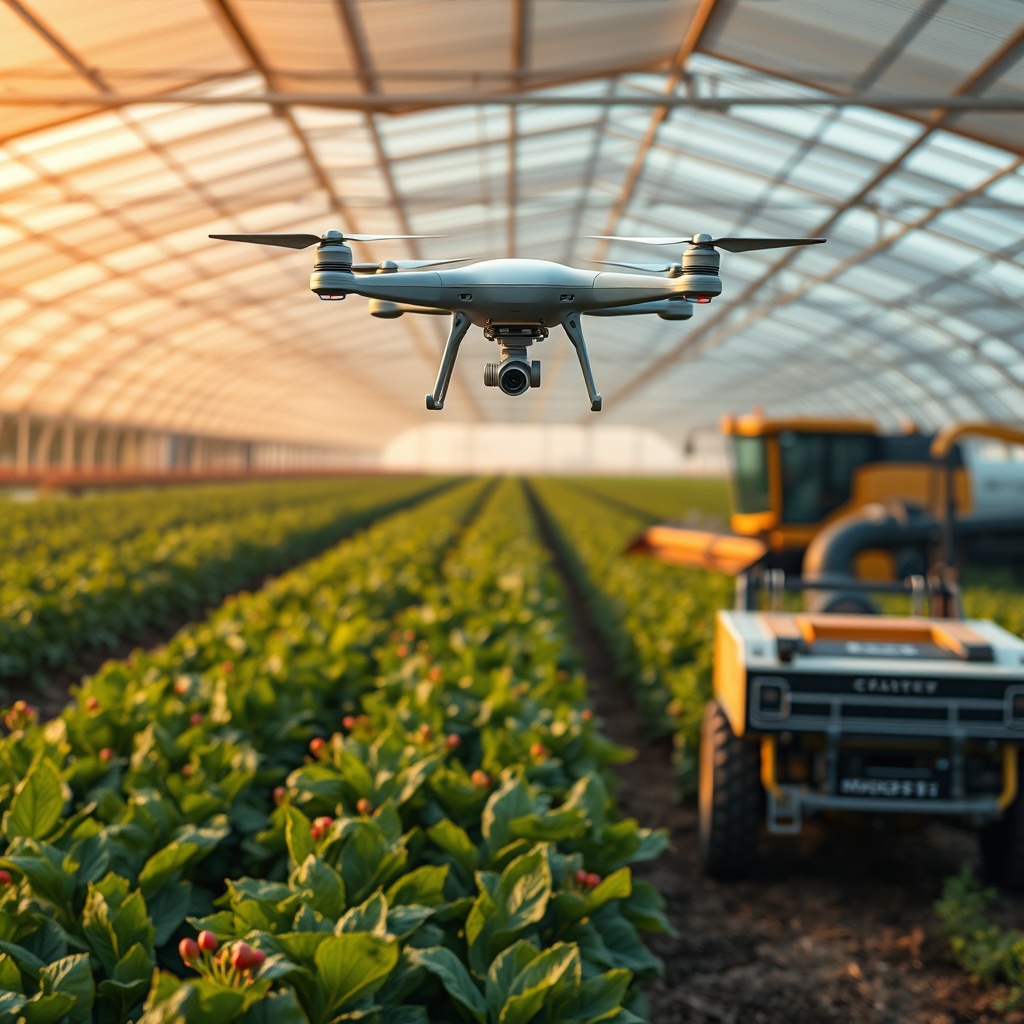
Precision farming leverages AI to optimise agricultural practices, maximising yield and sustainability. Drones and sensors collect data on soil health, moisture levels, and crop growth. AI analyses this information, guiding farmers on irrigation, fertilisation, and pest control. This reduces waste and environmental impact while improving productivity. The result is a smarter, more efficient approach to feeding the world.
Small-scale farmers also benefit from AI-driven insights, levelling the playing field. Mobile apps provide real-time advice, empowering growers with limited resources. As climate change intensifies, AI will be crucial in adapting farming techniques to unpredictable conditions. The future of agriculture is data-driven and resilient.
AI for Food Safety and Quality Control
AI ensures food safety by monitoring production processes for contaminants and defects. Machine learning algorithms analyse images of food products, detecting anomalies like mould or foreign objects. This speeds up inspections and reduces human error. Supply chains also use AI to track conditions during transport, ensuring freshness and compliance with standards.
Consumers benefit from greater transparency, with AI enabling traceability from farm to fork. Blockchain integration further enhances trust, providing immutable records of food journeys. As regulations tighten, AI will play a central role in maintaining safety and quality across global supply chains.
The Role of AI in Sustainable Agriculture
AI drives sustainable agriculture by minimising resource use and environmental harm. Predictive models optimise water and energy consumption, reducing waste. AI also identifies crop varieties resilient to climate change, supporting biodiversity. These innovations align with global efforts to combat food insecurity and ecological degradation.
Collaboration between farmers, scientists, and technologists is key to scaling these solutions. AI’s potential to transform agriculture is vast, but its success depends on equitable access and ethical implementation. The goal is a future where technology and nature thrive in harmony.
AI in Environmental Conservation
Monitoring Wildlife with AI
We’ve seen AI revolutionise wildlife conservation by analysing vast amounts of data from camera traps and satellite imagery. AI algorithms can identify species, track movements, and even predict poaching activities. This technology allows conservationists to focus their efforts more effectively, ensuring endangered species receive the protection they need. For example, AI-powered systems like Wildbook use machine learning to recognise individual animals, helping researchers monitor populations without invasive methods.
Beyond tracking, AI assists in habitat preservation by analysing environmental changes. By processing data on deforestation or climate shifts, AI provides actionable insights for conservation strategies. This proactive approach ensures ecosystems remain balanced, safeguarding biodiversity for future generations. The integration of AI in wildlife monitoring is a testament to how technology can harmonise with nature.
AI in Climate Change Research
AI plays a pivotal role in climate change research by modelling complex environmental systems. We rely on AI to predict weather patterns, assess carbon emissions, and simulate the impact of policy changes. These models help scientists and policymakers make informed decisions to mitigate climate risks. For instance, AI-driven platforms like ClimateAi forecast extreme weather events, enabling communities to prepare and adapt.
Additionally, AI optimises renewable energy solutions by predicting energy demand and improving grid efficiency. By analysing data from wind farms and solar panels, AI ensures sustainable energy sources are utilised effectively. This not only reduces reliance on fossil fuels but also accelerates the transition to a greener economy. AI’s ability to process vast datasets makes it indispensable in the fight against climate change.
AI for Pollution Control
We’re leveraging AI to combat pollution by monitoring air and water quality in real time. Sensors equipped with AI detect pollutants and identify their sources, enabling swift intervention. For example, cities use AI-powered systems to track industrial emissions and enforce environmental regulations. This technology ensures cleaner air and water, improving public health and quality of life. Plume Labs employs AI to provide personalised pollution forecasts, empowering individuals to make healthier choices.
AI also aids in waste management by optimising recycling processes. Machine learning algorithms sort recyclable materials more accurately than manual methods, reducing landfill waste. Innovations like AI-driven robotic sorters are transforming the recycling industry, making it more efficient and sustainable. By addressing pollution at its root, AI helps create a cleaner, healthier planet for all.
AI in Legal and Ethical Considerations
Privacy Concerns with AI
We must address the privacy implications of AI, as it often relies on vast amounts of personal data. While AI enhances convenience, it also raises questions about data security and consent. For instance, facial recognition technology can infringe on individual privacy if misused. Striking a balance between innovation and ethical use is crucial. GDPR and similar regulations aim to protect user data, but ongoing vigilance is necessary.
Transparency in AI systems is another key concern. Users deserve to know how their data is processed and for what purpose. By implementing explainable AI, developers can build trust and ensure accountability. Ethical AI practices must prioritise user privacy while delivering the benefits of advanced technology.
AI and Bias Addressing the Challenges
We recognise that AI systems can inherit biases from their training data, leading to unfair outcomes. For example, biased algorithms in hiring or lending can perpetuate discrimination. Addressing this requires diverse datasets and rigorous testing to identify and mitigate biases. Initiatives like AI Fairness 360 provide tools to evaluate and improve algorithmic fairness.
Moreover, inclusivity in AI development is essential. By involving diverse teams, we can create systems that reflect a broader range of perspectives. Ethical AI must strive for equity, ensuring technology serves everyone equally. This commitment to fairness is vital for building public trust in AI applications.
The Future of AI Regulation
We anticipate stricter regulations as AI becomes more pervasive. Governments and organisations are working to establish frameworks that balance innovation with accountability. For example, the EU’s proposed AI Act categorises systems by risk levels, imposing stricter rules on high-risk applications. Such measures aim to prevent misuse while fostering responsible AI development.
Collaboration between policymakers, technologists, and ethicists is key to effective regulation. By setting clear guidelines, we can ensure AI benefits society without compromising ethical standards. The future of AI regulation must be adaptive, addressing emerging challenges while promoting trust and transparency.
Emerging Trends in AI Applications
The Rise of Edge AI
We’re witnessing the growth of Edge AI, where processing occurs on devices rather than in the cloud. This reduces latency and enhances privacy, making AI more efficient for real-time applications. For instance, smartphones and IoT devices use Edge AI for tasks like voice recognition and image processing. This trend is revolutionising industries from healthcare to manufacturing.
Edge AI also addresses bandwidth limitations by minimising data transfers. By processing information locally, devices can operate seamlessly even in remote areas. This decentralised approach ensures AI is accessible and reliable, paving the way for smarter, more responsive technology.
Quantum Computing and AI
We’re exploring the potential of quantum computing to supercharge AI capabilities. Quantum algorithms can solve complex problems exponentially faster than classical computers. This synergy could revolutionise fields like drug discovery and financial modelling. While still in its infancy, quantum AI promises breakthroughs that were previously unimaginable.
However, challenges like error correction and scalability remain. Researchers are working to overcome these hurdles, bringing quantum AI closer to practical applications. The fusion of these technologies could redefine what’s possible, unlocking new frontiers in science and industry.
The Integration of AI with IoT
We’re seeing AI and IoT merge to create intelligent, interconnected systems. Smart cities, for example, use AI to analyse data from IoT sensors, optimising traffic flow and energy use. This integration enhances efficiency and sustainability, improving urban living. The combination of AI and IoT is transforming how we interact with technology.
In homes, AI-powered IoT devices learn user preferences, automating tasks for convenience. From smart thermostats to security systems, these innovations make daily life easier. The future lies in seamless connectivity, where AI and IoT work together to create smarter environments.
Frequently Asked Questions
How does AI help in wildlife conservation?
AI aids wildlife conservation by analysing data from camera traps and satellites to track species and predict threats like poaching. It enables non-invasive monitoring and provides actionable insights for protecting endangered animals and their habitats.
What role does AI play in climate change research?
AI models climate systems, predicts extreme weather, and optimises renewable energy use. It helps scientists and policymakers develop strategies to mitigate climate risks and transition to sustainable energy solutions.
Can AI reduce pollution effectively?
Yes, AI monitors air and water quality in real time, identifies pollution sources, and optimises waste management. It empowers cities and individuals to take proactive measures for cleaner environments.
What are the ethical concerns with AI?
Ethical concerns include data privacy, algorithmic bias, and accountability. Ensuring transparency, fairness, and regulatory compliance is essential to address these challenges and build trust in AI systems.
What is Edge AI and why is it important?
Edge AI processes data on devices rather than in the cloud, reducing latency and enhancing privacy. It’s crucial for real-time applications like IoT and smart devices, making AI more efficient and accessible.
