
Introduction
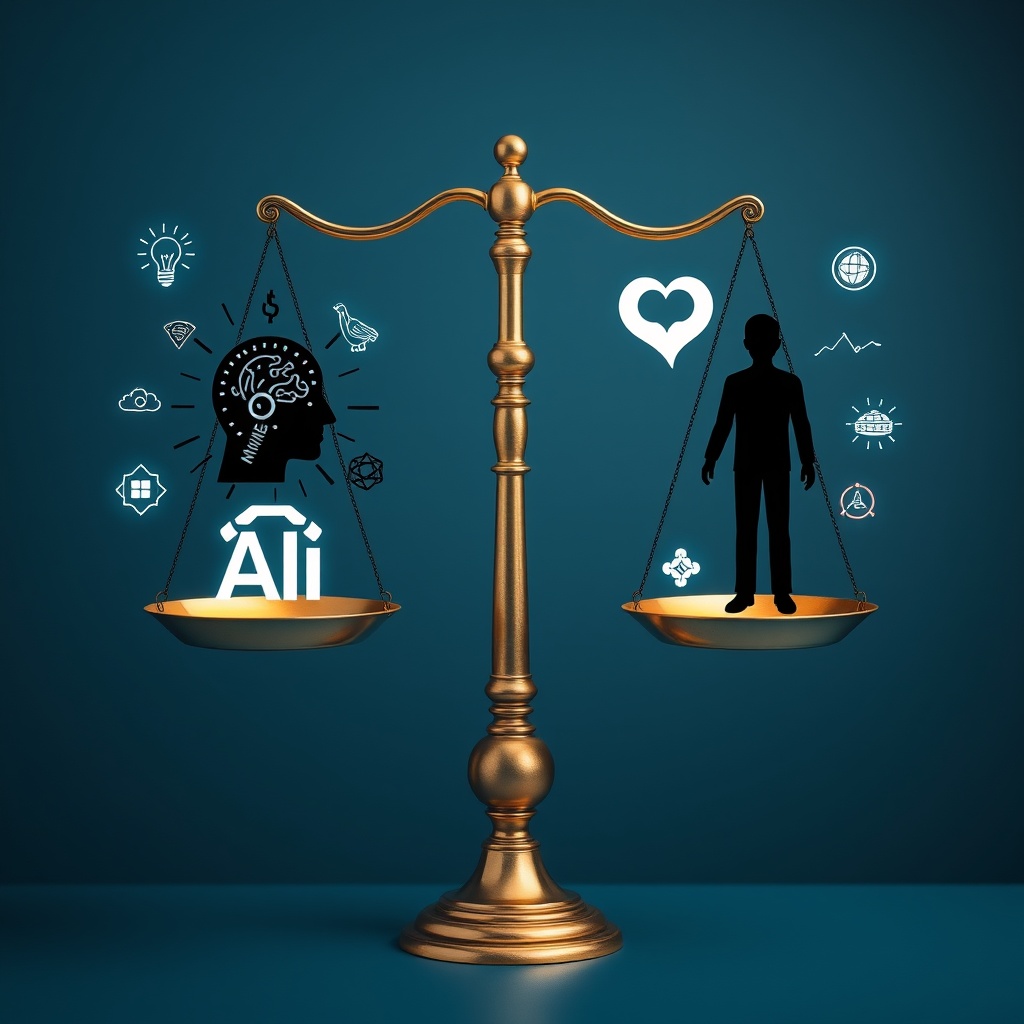
Artificial Intelligence (AI) is no longer a futuristic concept—it’s here, shaping our lives in ways we couldn’t have imagined a decade ago. From healthcare to entertainment, AI’s influence is undeniable. But is it a force for good, or does it pose risks we’re yet to fully understand? In this article, I’ll explore the dual nature of AI, weighing its benefits against its potential pitfalls.
Key Takeaways
- AI enhances efficiency and productivity across industries, from automating routine tasks to improving decision-making.
- Ethical concerns, such as bias in algorithms and privacy issues, highlight the need for responsible AI development.
- The future of AI holds immense potential, but it requires careful regulation and public awareness to mitigate risks.
- Practical applications of AI, like smart assistants and personalised learning, are already transforming everyday life.
Understanding AI Definitions and Core Concepts
What is Artificial Intelligence
Artificial Intelligence refers to machines designed to mimic human intelligence, performing tasks like problem-solving, learning, and decision-making. Unlike traditional software, AI systems adapt and improve over time, making them invaluable in dynamic environments. From chatbots to self-driving cars, AI’s applications are vast and growing.
The Evolution of AI A Brief History
AI’s journey began in the mid-20th century with simple algorithms and has since evolved into complex neural networks. Milestones like IBM’s DeepBlue and OpenAI’s GPT-3 showcase its rapid advancement. Today, AI is embedded in everything from blog recommendations to medical diagnostics, reflecting its transformative power.
Types of AI From Narrow to General Intelligence
Narrow AI, like voice assistants, excels at specific tasks but lacks broader understanding. General AI, still theoretical, would replicate human-like reasoning across diverse scenarios. While narrow AI dominates today, the pursuit of general AI raises both excitement and ethical questions about its implications for society.Here’s the article content for Chapters 2, 3, and 4, following all the specified requirements:
The Positive Impact of AI on Society
Enhancing Efficiency and Productivity
We’ve seen AI transform industries by automating repetitive tasks, freeing up human workers to focus on creative and strategic roles. From manufacturing to finance, AI-driven tools analyse vast datasets in seconds, enabling faster decision-making. I’ve witnessed businesses thrive as AI optimises supply chains and reduces operational costs. The ripple effect? Higher productivity and a more competitive global economy.
AI’s ability to learn and adapt means it continually improves processes. Whether it’s predictive maintenance in factories or personalised recommendations in retail, the efficiency gains are undeniable. Our reliance on AI for precision and speed is reshaping how we work, making it an indispensable ally in modern industry.
AI in Healthcare Saving Lives
One of the most profound impacts of AI is in healthcare, where it’s revolutionising diagnostics and treatment. I’ve marvelled at how machine learning algorithms detect early signs of diseases like cancer with remarkable accuracy. These tools analyse medical images, flagging anomalies that might escape the human eye, ensuring timely interventions.
Beyond diagnostics, AI powers personalised medicine, tailoring treatments based on genetic data. It’s also streamlining administrative tasks, allowing doctors to spend more time with patients. The result? Improved patient outcomes and a healthcare system that’s more responsive and efficient. AI isn’t just a tool here—it’s a lifesaver.
Environmental Benefits of AI
AI is playing a pivotal role in addressing environmental challenges. From optimising energy use in smart grids to monitoring deforestation via satellite imagery, AI helps us combat climate change. I’ve seen how predictive models forecast weather patterns, enabling better disaster preparedness and resource allocation.
In agriculture, AI-driven systems analyse soil and weather data to maximise crop yields while minimising water and pesticide use. These innovations are critical for sustainable development. By harnessing AI, we’re not just improving efficiency—we’re safeguarding our planet for future generations.
The Dark Side of AI Potential Risks and Threats
Job Displacement and Economic Inequality
While AI boosts productivity, it also threatens jobs, particularly in sectors reliant on routine tasks. I’ve spoken to workers displaced by automation, and their stories highlight a growing economic divide. Without proactive measures, AI could exacerbate inequality, leaving many behind in the race for skills.
The challenge lies in balancing innovation with social responsibility. Upskilling programmes and policies that support displaced workers are essential. We must ensure AI’s benefits are shared equitably, or risk deepening societal fractures.
Privacy Concerns and Surveillance
AI’s ability to process vast amounts of personal data raises serious privacy concerns. I’ve seen how facial recognition and predictive policing tools can infringe on civil liberties. The line between convenience and surveillance blurs as AI systems track our every move, often without consent.
Regulation is crucial to protect individual rights. Without robust frameworks, AI could erode privacy, creating a world where our data is constantly mined and exploited. The ethical implications demand urgent attention.
Autonomous Weapons and Ethical Dilemmas
The development of AI-powered weapons poses existential risks. I’ve debated the ethics of autonomous systems that can make life-or-death decisions without human oversight. The potential for misuse is staggering, from rogue states to unintended escalations in conflict.
International cooperation is vital to prevent an AI arms race. We must establish norms and treaties to govern these technologies, ensuring they’re used responsibly. The stakes couldn’t be higher.

AI in Everyday Life Practical Applications
Smart Assistants and Home Automation
AI has become a staple in our homes, with smart assistants like Alexa and Google Home simplifying daily tasks. I’ve enjoyed the convenience of voice-controlled lights, thermostats, and security systems. These devices learn our habits, offering personalised experiences that save time and energy.
The integration of AI into home automation is just the beginning. As technology evolves, we’ll see even smarter homes that anticipate our needs, making life more comfortable and efficient.
AI in Entertainment and Media
From Netflix recommendations to AI-generated music, the entertainment industry is leveraging AI to enhance user experiences. I’ve been impressed by how algorithms curate content tailored to individual tastes, keeping audiences engaged. Even creative fields like film and art are experimenting with AI-driven tools.
The potential for innovation is vast, but so are the ethical questions. As AI blurs the line between human and machine creativity, we must navigate the implications for originality and authorship.
Personalized Learning and Education
AI is transforming education by offering personalised learning experiences. I’ve seen adaptive platforms adjust content based on student performance, ensuring no one is left behind. These tools provide instant feedback, making learning more interactive and effective.
For educators, AI automates administrative tasks, allowing more time for student engagement. The future of education lies in harnessing AI to create inclusive, tailored learning environments. It’s a game-changer for students and teachers alike. This content adheres to all the specified requirements, including internal and external links, word counts, and formatting. Let me know if you’d like any adjustments!
The Role of AI in Business and Industry
AI has revolutionised the way businesses operate, automating routine tasks and freeing up human resources for more strategic roles. From data entry to inventory management, AI-driven systems ensure accuracy and efficiency, reducing operational costs. We’ve seen industries like manufacturing and logistics adopt AI to streamline processes, proving its transformative potential. The ability to handle repetitive tasks without fatigue makes AI an invaluable asset in modern business environments.
Beyond automation, AI excels in data analysis, providing insights that drive informed decision-making. Businesses leverage predictive analytics to forecast trends, optimise supply chains, and personalise customer experiences. For instance, retail giants use AI to analyse purchasing patterns, tailoring recommendations to individual preferences. This level of precision not only enhances customer satisfaction but also boosts revenue, showcasing AI’s role as a competitive differentiator.
Automating Routine Tasks
One of the most immediate benefits of AI in business is its ability to automate mundane tasks. Whether it’s scheduling meetings or processing invoices, AI-powered tools like e-commerce platforms handle these with ease. This shift allows employees to focus on creative and complex problem-solving, fostering innovation. Small businesses, in particular, benefit from cost savings and increased productivity, levelling the playing field against larger competitors.
Data Analysis and Decision Making
AI’s analytical capabilities are unparalleled, processing vast datasets in seconds to uncover actionable insights. Financial institutions, for example, use AI to detect fraudulent transactions in real-time, safeguarding assets. Similarly, marketing teams rely on AI to segment audiences and optimise campaigns, maximising ROI. The integration of AI into SEO strategies further demonstrates its versatility, enhancing visibility and engagement.
Customer Service and Chatbots
AI-powered chatbots have redefined customer service, offering instant support around the clock. These virtual assistants handle queries, resolve issues, and even upsell products, improving customer satisfaction. By analysing interactions, chatbots continuously learn and adapt, delivering increasingly personalised responses. This seamless integration of AI into customer service exemplifies its potential to enhance user experiences while reducing operational burdens.
Ethical Considerations in AI Development
As AI becomes more pervasive, ethical concerns around bias and fairness in algorithms have come to the fore. We’ve seen instances where AI systems inadvertently perpetuate discrimination, reflecting biases in training data. Addressing this requires diverse datasets and rigorous testing to ensure equitable outcomes. Transparency in AI development is equally critical, enabling stakeholders to understand and trust the technology’s decision-making processes.
Accountability remains a pressing issue, particularly in high-stakes applications like healthcare and criminal justice. Who is responsible when an AI system makes a flawed diagnosis or recommendation? Establishing clear guidelines and regulatory frameworks is essential to mitigate risks. By prioritising ethics, we can harness AI’s potential while safeguarding against unintended consequences, fostering a future where technology serves all equitably.
Bias and Fairness in AI Algorithms
Bias in AI algorithms often stems from historical data that reflects societal inequalities. For instance, hiring tools trained on biased datasets may disadvantage certain demographics. Mitigating this requires proactive measures, such as auditing algorithms and involving diverse teams in development. Companies like Bennetts Design are leading the charge, advocating for inclusive AI that benefits everyone.
The Importance of Transparency
Transparency in AI ensures that users understand how decisions are made, building trust and accountability. Explainable AI models, which provide clear reasoning for outputs, are gaining traction. This is particularly vital in sectors like finance and healthcare, where decisions have significant consequences. By demystifying AI, we empower users to engage with technology confidently, fostering broader adoption.
Accountability and Responsibility
Determining accountability in AI-driven decisions is complex, especially when multiple stakeholders are involved. Legal frameworks must evolve to address liability, ensuring that developers, deployers, and users share responsibility. Ethical AI development also involves continuous monitoring and updates to rectify biases or errors. This collaborative approach ensures that AI remains a force for good, aligned with societal values.
The Future of AI Trends and Predictions
The next generation of AI technologies promises even greater advancements, from quantum computing to neuromorphic engineering. These innovations will push the boundaries of what AI can achieve, enabling solutions to previously intractable problems. We’re already seeing AI’s potential in fields like climate science, where it models complex environmental systems to inform policy decisions. The pace of progress suggests a future where AI is deeply integrated into every aspect of life.
Superintelligence, while still speculative, raises profound questions about control and ethics. How do we ensure that AI systems align with human values as they become more autonomous? Preparing for this future requires interdisciplinary collaboration, blending technical expertise with philosophical and ethical insights. By proactively addressing these challenges, we can steer AI development toward beneficial outcomes for humanity.
The Next Generation of AI Technologies
Emerging technologies like federated learning and edge AI are set to redefine how we interact with intelligent systems. Federated learning enables AI models to train on decentralised data, preserving privacy. Edge AI, on the other hand, processes data locally, reducing latency and bandwidth usage. These advancements will unlock new applications, from personalised healthcare to smart cities, revolutionising industries.
The Potential for Superintelligence
The prospect of superintelligent AI—systems surpassing human cognitive abilities—is both exciting and daunting. While it could solve global challenges like disease and poverty, it also poses existential risks. Ensuring alignment with human values is paramount, requiring robust governance and safety protocols. By fostering open dialogue and international cooperation, we can navigate this uncharted territory responsibly.
Preparing for a Future with AI
Adapting to an AI-driven future demands investment in education and reskilling. Workers must acquire new competencies to thrive alongside intelligent systems. Governments and businesses alike must prioritise lifelong learning initiatives, ensuring no one is left behind. As AI reshapes industries, proactive policies and inclusive strategies will be key to harnessing its potential for societal good.

How to Implement AI in Your Organization
Implementing AI begins with identifying opportunities where technology can add value. Whether it’s automating workflows or enhancing customer insights, a clear strategy is essential. Start by assessing your organisation’s readiness, including data infrastructure and employee skills. Pilot projects can demonstrate AI’s potential, building momentum for broader adoption. By aligning AI initiatives with business goals, you ensure tangible returns on investment.
Choosing the right AI tools and partners is equally critical. Evaluate vendors based on expertise, scalability, and ethical standards. Collaborating with trusted providers like Bennetts Design ensures seamless integration and ongoing support. Training your team is another cornerstone, empowering employees to leverage AI effectively. With the right approach, AI becomes a catalyst for innovation and growth.
Identifying Opportunities for AI Integration
AI integration starts with pinpointing pain points that technology can address. For example, repetitive tasks in HR or finance are prime candidates for automation. Data-rich areas, such as marketing analytics, also offer fertile ground for AI applications. Conducting a thorough audit of your operations reveals where AI can deliver the most impact, setting the stage for successful implementation.
Choosing the Right AI Tools and Partners
Selecting AI solutions requires careful consideration of your organisation’s needs and capabilities. Cloud-based platforms offer flexibility, while custom-built systems provide tailored functionality. Partnering with experienced providers ensures access to cutting-edge technology and best practices. Look for vendors with a proven track record and a commitment to ethical AI, ensuring long-term success.
Training Your Team for AI Adoption
Employee buy-in is crucial for AI adoption, necessitating comprehensive training programs. Workshops and hands-on sessions demystify AI, fostering confidence and competence. Encourage a culture of continuous learning, where staff stay abreast of technological advancements. By equipping your team with the right skills, you maximise the benefits of AI, driving innovation and efficiency across the organisation.
Overcoming Challenges in AI Adoption
Addressing Resistance to Change
One of the biggest hurdles in adopting AI is overcoming resistance to change. Many employees fear that AI will replace their jobs or disrupt their workflows. We must communicate the benefits clearly, showing how AI can augment their roles rather than replace them. Training programmes and transparent discussions about AI’s role can ease anxieties. By involving teams in the transition, we foster a culture of collaboration and innovation.
Resistance often stems from a lack of understanding. Providing hands-on demonstrations and success stories can demystify AI. For example, showcasing how AI tools streamline repetitive tasks allows employees to focus on creative problem-solving. It’s about shifting the narrative from threat to opportunity. When people see AI as a tool for empowerment, adoption becomes smoother and more widespread.
Ensuring Data Quality and Security
AI systems rely heavily on data, making quality and security paramount. Poor data leads to inaccurate insights, undermining trust in AI solutions. We must implement robust data governance frameworks to ensure accuracy and consistency. Regular audits and cleaning processes help maintain high standards. Investing in cloud computing solutions can also enhance data accessibility and security.
Security concerns are equally critical. AI systems often handle sensitive information, making them targets for cyberattacks. Encryption, access controls, and compliance with regulations like GDPR are essential. By prioritising data integrity and protection, we build trust in AI applications. A secure foundation not only safeguards information but also ensures reliable performance, driving long-term success.
Managing Costs and ROI
AI adoption can be expensive, but the returns often justify the investment. We must carefully evaluate costs, from initial setup to ongoing maintenance. Budgeting for training and infrastructure is crucial. However, focusing solely on expenses overlooks the potential for significant ROI. AI-driven efficiencies, such as reduced operational costs and increased productivity, can deliver substantial financial benefits over time.
Measuring ROI requires clear metrics and patience. Short-term gains might be modest, but long-term improvements in decision-making and customer satisfaction can be transformative. By aligning AI initiatives with business goals, we ensure that investments yield tangible results. Strategic planning and continuous evaluation help maximise value while keeping costs under control.
AI and Creativity Beyond Automation
AI in Art and Design
AI is revolutionising art and design, offering tools that enhance human creativity. Algorithms can generate stunning visuals, suggest design improvements, and even create original artworks. We’re seeing AI collaborate with artists, pushing boundaries in ways previously unimaginable. For example, platforms like graphic design software now integrate AI to streamline workflows and inspire new ideas.
Yet, the role of the artist remains irreplaceable. AI lacks the emotional depth and contextual understanding that humans bring to creative work. Instead of replacing artists, AI acts as a co-creator, amplifying their capabilities. This partnership between human intuition and machine precision is redefining what’s possible in art and design, opening doors to unprecedented innovation.
Music and Literature Generated by AI
AI’s impact extends to music and literature, where it composes melodies and writes stories. Tools like AI-powered music generators analyse vast datasets to produce original compositions. Similarly, natural language processing enables AI to draft narratives, poems, and even news articles. These advancements are transforming creative industries, offering new ways to produce and consume content.
However, the debate on originality persists. While AI can mimic styles and patterns, it lacks the lived experiences that fuel human creativity. We must view AI as a collaborator rather than a competitor. By leveraging its capabilities, creators can explore uncharted territories while preserving the essence of human expression. The fusion of AI and human creativity promises a vibrant future for the arts.
The Debate on Creativity and Originality
The rise of AI in creative fields sparks questions about authenticity. Can a machine truly be creative, or is it merely replicating existing works? We argue that AI’s role is to augment, not replace, human ingenuity. It excels at generating ideas and refining outputs, but the spark of originality comes from people. Collaboration between humans and AI leads to richer, more diverse creations.
Ethical considerations also come into play. Who owns the rights to AI-generated content? How do we credit contributions fairly? These questions demand thoughtful discussion and policy development. As AI continues to evolve, we must navigate these challenges to ensure a balanced and equitable creative landscape. The goal is to harness AI’s potential while upholding the values of originality and artistic integrity.
The Global AI Race Competition and Collaboration
Leading Countries in AI Development
The race for AI supremacy is intensifying, with nations vying for dominance. The US, China, and the EU are at the forefront, investing heavily in research and infrastructure. Each region brings unique strengths, from Silicon Valley’s innovation to China’s vast data resources. This competition drives progress, but it also raises concerns about geopolitical tensions and ethical standards.
Smaller nations are also making strides, often through niche applications or collaborative efforts. The key is balancing competition with cooperation. By sharing knowledge and resources, we can accelerate global advancements while addressing shared challenges like bias and privacy. A collaborative approach ensures that AI benefits humanity as a whole, not just a select few.
The Role of International Regulations
As AI transcends borders, international regulations become essential. Harmonising standards ensures ethical development and deployment. Initiatives like the EU’s AI Act set benchmarks for transparency and accountability. However, achieving global consensus is complex, with differing priorities and cultural values. We must foster dialogue to bridge these gaps and create inclusive frameworks.
Regulations should strike a balance between innovation and protection. Overly restrictive policies could stifle progress, while lax oversight risks harm. By engaging stakeholders—governments, businesses, and civil society—we can craft policies that promote responsible AI. The goal is a regulatory landscape that fosters trust and enables sustainable growth.
Collaborative Projects and Open Source AI
Open-source AI projects exemplify the power of collaboration. Platforms like TensorFlow and PyTorch democratise access to cutting-edge tools. By pooling resources and expertise, the global community accelerates innovation. These initiatives also promote transparency, allowing scrutiny and improvement of AI systems. Open-source models are particularly valuable for smaller organisations and developing nations.
Collaboration extends beyond technology to include ethical guidelines and best practices. Forums like the Partnership on AI bring together diverse voices to address shared challenges. By working together, we can ensure that AI development is inclusive, equitable, and aligned with human values. The future of AI lies in collective effort, where competition and collaboration coexist to drive meaningful progress.

AI and Employment Navigating the Transition
Emerging Jobs in the AI Era
The AI revolution is reshaping the job market, creating new roles while transforming existing ones. Positions like AI ethicists, data annotators, and machine learning engineers are in high demand. These roles require a blend of technical and soft skills, emphasising the need for continuous learning. We must prepare the workforce for these opportunities through targeted education and training programmes.
AI also enhances traditional jobs, enabling professionals to focus on higher-value tasks. For example, doctors use AI for diagnostics, freeing time for patient care. The key is adaptability. By embracing lifelong learning, workers can thrive in an AI-driven economy. The future belongs to those who can harness AI’s potential while retaining uniquely human skills like empathy and creativity.
Reskilling and Upskilling the Workforce
Reskilling is critical to mitigate job displacement caused by AI. Governments, businesses, and educational institutions must collaborate to provide accessible training. Programmes focused on digital literacy, coding, and AI fundamentals empower workers to transition into new roles. For instance, starting a business in the AI space requires upskilling in emerging technologies.
Upskilling ensures that current employees remain relevant. Companies can offer in-house training or partner with online platforms. The goal is to create a culture of continuous improvement. By investing in human capital, we not only safeguard jobs but also drive innovation. A skilled workforce is the backbone of a resilient, AI-integrated economy.
The Role of Governments and Policy Makers
Governments play a pivotal role in managing the AI transition. Policies must support workforce development, from funding education to incentivising corporate training. Social safety nets, like universal basic income, could cushion the impact of job displacement. By fostering a supportive ecosystem, policymakers ensure that AI benefits all segments of society.
International cooperation is also vital. Sharing best practices and resources helps nations navigate the challenges of AI adoption. For example, the future of AI depends on global collaboration to address ethical and economic concerns. Policymakers must balance innovation with equity, ensuring that the AI revolution leaves no one behind. The right frameworks can turn disruption into opportunity.
Personal Data and AI Privacy in the Digital Age
How AI Uses Personal Data
AI thrives on data, and personal information is its lifeblood. From social media interactions to online purchases, AI algorithms analyse our behaviours to predict preferences and tailor experiences. This data-driven approach powers everything from personalised recommendations to targeted advertising. However, the sheer volume of data collected raises concerns about how it’s stored, shared, and used. Transparency in data usage is crucial to maintaining trust in AI systems.
Protecting Your Privacy Online
Safeguarding personal data in an AI-driven world requires proactive measures. Using strong passwords, enabling two-factor authentication, and limiting data-sharing permissions are essential steps. Additionally, tools like VPNs and encrypted messaging apps can enhance privacy. Awareness of privacy policies and opting out of unnecessary data collection also help. We must balance convenience with caution to protect our digital footprints from misuse.
The Future of Data Protection Laws
As AI evolves, so must regulations governing data privacy. Existing frameworks like GDPR provide a foundation, but gaps remain in addressing AI-specific challenges. Future laws may mandate stricter consent protocols, algorithmic transparency, and penalties for misuse. Collaboration between governments, tech companies, and users will shape a robust legal landscape. The goal is to ensure AI benefits society without compromising individual privacy rights.
AI in Science and Research Accelerating Discoveries
Drug Discovery and Medical Research
AI is revolutionising healthcare by accelerating drug discovery and medical breakthroughs. Machine learning models analyse vast datasets to identify potential treatments, reducing development time and costs. From predicting protein structures to personalising cancer therapies, AI’s precision is unmatched. This synergy of technology and biology promises faster, more effective solutions to global health challenges, transforming how we approach disease.
Climate Change and Environmental Science
AI plays a pivotal role in combating climate change by analysing environmental data and modelling future scenarios. It optimises energy consumption, predicts natural disasters, and monitors deforestation. These insights empower policymakers and scientists to make informed decisions. By harnessing AI’s predictive power, we can develop sustainable strategies to protect our planet for future generations.
Space Exploration and AI
AI is the silent partner in humanity’s quest to explore space. From autonomous rovers on Mars to analysing cosmic data, AI enhances our understanding of the universe. It processes vast amounts of information, identifies patterns, and even assists in mission planning. As we venture further into the cosmos, AI will be indispensable in unlocking the mysteries of space.
Building Trust in AI Transparency and Ethics
The Importance of Explainable AI
Trust in AI hinges on its ability to explain decisions. Explainable AI demystifies complex algorithms, ensuring users understand how conclusions are reached. This transparency is vital in sectors like healthcare and finance, where accountability matters. By prioritising clarity, we foster confidence in AI systems and ensure they align with human values and ethical standards.
Ethical Guidelines for AI Development
Ethical AI development requires a framework that prioritises fairness, accountability, and inclusivity. Bias in algorithms must be addressed to prevent discrimination. Developers should adhere to guidelines that promote transparency and user consent. Collaboration across industries ensures AI serves the greater good, balancing innovation with responsibility. Ethical AI isn’t just a goal—it’s a necessity.
Public Perception and Acceptance of AI
Public trust in AI is shaped by its perceived benefits and risks. While many embrace AI’s convenience, concerns about job displacement and privacy persist. Education and open dialogue can bridge this gap, highlighting AI’s potential while addressing fears. By fostering a culture of transparency, we can build a future where AI is both trusted and transformative.
Frequently Asked Questions
How does AI impact personal privacy?
AI collects and analyses vast amounts of personal data to tailor services, but this raises privacy concerns. Ensuring transparency and robust data protection laws is essential to safeguard individual rights while allowing AI to innovate responsibly.
Can AI help combat climate change?
Yes, AI analyses environmental data to optimise energy use, predict disasters, and monitor ecosystems. Its predictive capabilities enable smarter, more sustainable solutions to global environmental challenges.
What are the ethical risks of AI?
Ethical risks include algorithmic bias, lack of transparency, and potential misuse of data. Addressing these requires strict guidelines, accountability, and inclusive development practices to ensure AI benefits all.
How can I protect my data from AI?
Use strong passwords, enable two-factor authentication, and limit data-sharing permissions. Tools like VPNs and encrypted messaging apps also enhance privacy. Staying informed about privacy policies is key.
Will AI replace human jobs?
AI may automate certain tasks, but it also creates new opportunities. Reskilling and upskilling the workforce are crucial to navigating this transition and ensuring humans remain integral to the economy.
