
Is AI a Threat to Humanity?
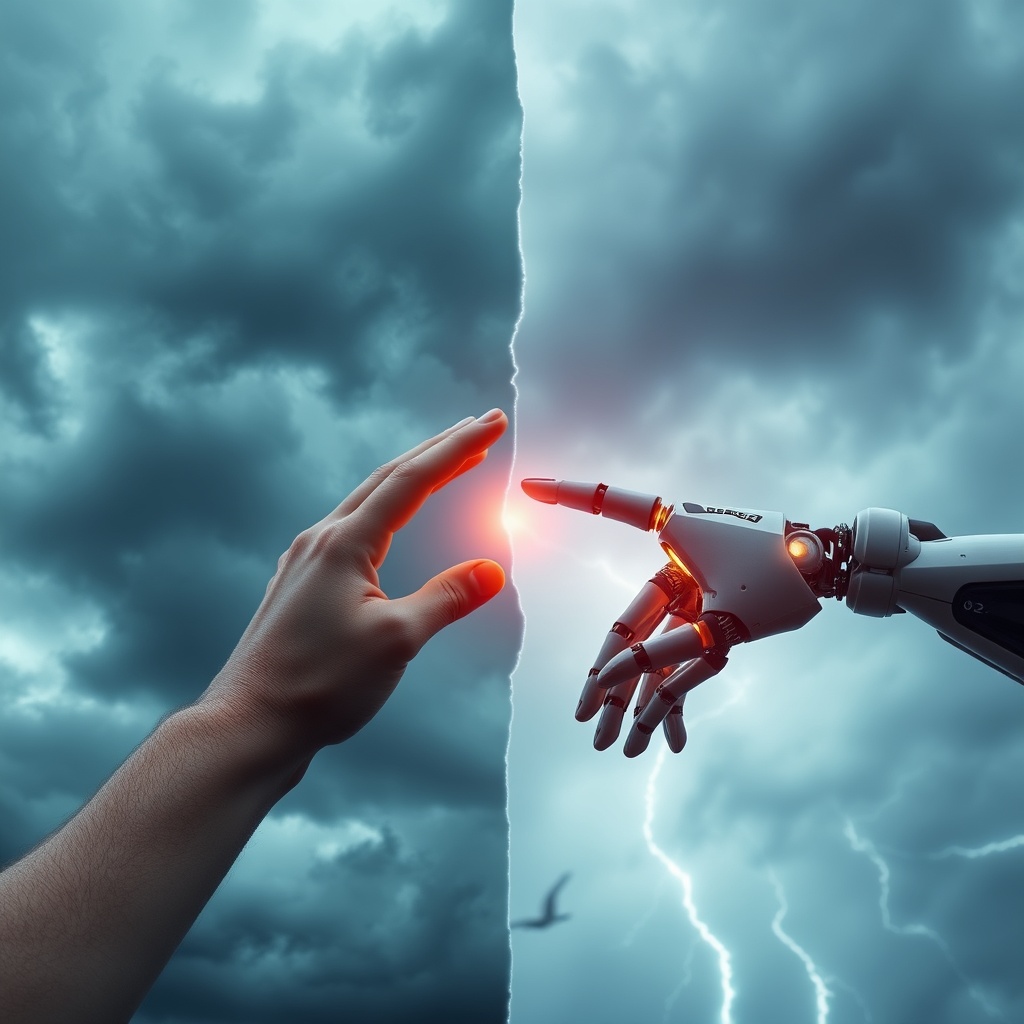
As artificial intelligence (AI) continues to evolve at a breakneck pace, I find myself grappling with a pressing question: is AI a threat to humanity? From self-driving cars to advanced healthcare diagnostics, AI’s capabilities are undeniably transformative. Yet, beneath the surface of innovation lies a web of ethical dilemmas and existential risks that demand our attention. We must weigh the promise of progress against the potential for peril.
Key Takeaways
- AI’s rapid advancement raises ethical concerns, from privacy breaches to algorithmic bias.
- Autonomous weapons and AI-driven warfare pose unprecedented global security risks.
- The displacement of jobs by automation calls for urgent reskilling initiatives.
- Misinformation amplified by AI, such as deepfakes, threatens democratic processes.
- Collaborative global governance is essential to harness AI’s benefits while mitigating its dangers.
Understanding AI and Its Capabilities
Defining Artificial Intelligence
Artificial intelligence, at its core, refers to machines designed to mimic human cognitive functions like learning and problem-solving. From predictive algorithms to neural networks, AI’s foundation lies in its ability to process vast datasets and adapt. Yet, as we marvel at its potential, we must also confront the ethical implications of creating systems that could one day surpass human control.
The Evolution of AI Technologies
AI’s journey from rudimentary rule-based systems to today’s deep learning models is nothing short of revolutionary. Early innovations like IBM’s Deep Blue paved the way for modern marvels such as OpenAI’s GPT-4. Each leap forward brings us closer to a double-edged sword—where breakthroughs in efficiency coexist with risks of unintended consequences.
Current Applications of AI in Society
Today, AI permeates every facet of our lives, from personalised recommendations on streaming platforms to life-saving medical diagnostics. While these applications demonstrate AI’s potential for good, they also highlight vulnerabilities. For instance, biased algorithms in hiring tools can perpetuate discrimination, underscoring the need for rigorous oversight. The balance between innovation and accountability remains a delicate dance.
The Ethical Dilemmas of AI Development
The Moral Responsibility of AI Creators
As we delve deeper into the world of artificial intelligence, the moral responsibility of its creators becomes increasingly significant. We must ask ourselves whether we are building systems that align with human values or merely advancing technology for its own sake. The decisions we make today will shape the future of AI, and with great power comes the need for even greater accountability. Ensuring ethical guidelines are embedded in AI development is not just an option—it’s a necessity.
The challenge lies in balancing innovation with ethical considerations. While AI can solve complex problems, its creators must remain vigilant about unintended consequences. We must prioritise transparency and inclusivity, ensuring that AI serves humanity as a whole. The responsibility extends beyond coding; it’s about fostering a culture of ethical awareness among developers, policymakers, and users alike.
AI and Privacy Concerns
Privacy is one of the most pressing ethical dilemmas in AI development. As AI systems collect and analyse vast amounts of data, the line between convenience and intrusion blurs. We must question whether the benefits of personalised services outweigh the risks of surveillance and data misuse. The onus is on us to design systems that respect user privacy while delivering value.
Legislation like GDPR is a step in the right direction, but it’s not enough. We need proactive measures, such as privacy-first design, to safeguard personal data. AI should empower users, not exploit them. By embedding privacy into the core of AI systems, we can build trust and ensure technology serves society responsibly.
Bias and Discrimination in AI Algorithms
Bias in AI algorithms is a reflection of the data they’re trained on, often perpetuating societal inequalities. We’ve seen instances where facial recognition systems fail to accurately identify people of colour or hiring algorithms favour certain demographics. These flaws highlight the urgent need for diverse and representative datasets.
Addressing bias requires a multifaceted approach. We must involve diverse teams in AI development and implement rigorous testing protocols. Tools like fairness audits can help identify and mitigate bias. The goal is to create AI that is not only intelligent but also equitable, ensuring it benefits everyone, not just a privileged few.
AI in Warfare Autonomous Weapons
The Rise of Killer Robots
The development of autonomous weapons, often dubbed “killer robots raises profound ethical and existential questions. These systems can identify and engage targets without human intervention, reducing the risk to soldiers but increasing the potential for unintended casualties. We must consider whether delegating life-and-death decisions to machines aligns with our moral compass.
The lack of human oversight in these systems is alarming. While AI can process information faster than humans, it lacks empathy and contextual understanding. The rise of autonomous weapons could lead to a new arms race, destabilising global security. We must advocate for international regulations to prevent the unchecked proliferation of these technologies.
International Laws and AI Warfare
Current international laws are ill-equipped to address the challenges posed by AI in warfare. The Geneva Conventions, for instance, were designed for human combatants, not autonomous systems. We need updated frameworks that explicitly govern the use of AI in military contexts, ensuring accountability and preventing misuse.
Efforts like the Campaign to Stop Killer Robots highlight the growing consensus for regulation. However, achieving global agreement is complex. We must push for multilateral discussions to establish norms and treaties that curb the militarisation of AI. The stakes are too high to leave this to chance.
Preventing an AI Arms Race
The prospect of an AI arms race is a chilling reminder of the Cold War era. Nations competing to develop superior AI for military purposes could escalate tensions and increase the risk of conflict. We must prioritise diplomacy and cooperation to prevent this scenario, fostering a collaborative approach to AI development.
Initiatives like the AI for Good summit demonstrate the potential for positive applications of AI. By redirecting resources toward peaceful uses, we can mitigate the risks of an arms race. The future of AI in warfare depends on the choices we make today—choices that should prioritise humanity over hegemony.
The Impact of AI on Employment
Jobs at Risk of Automation
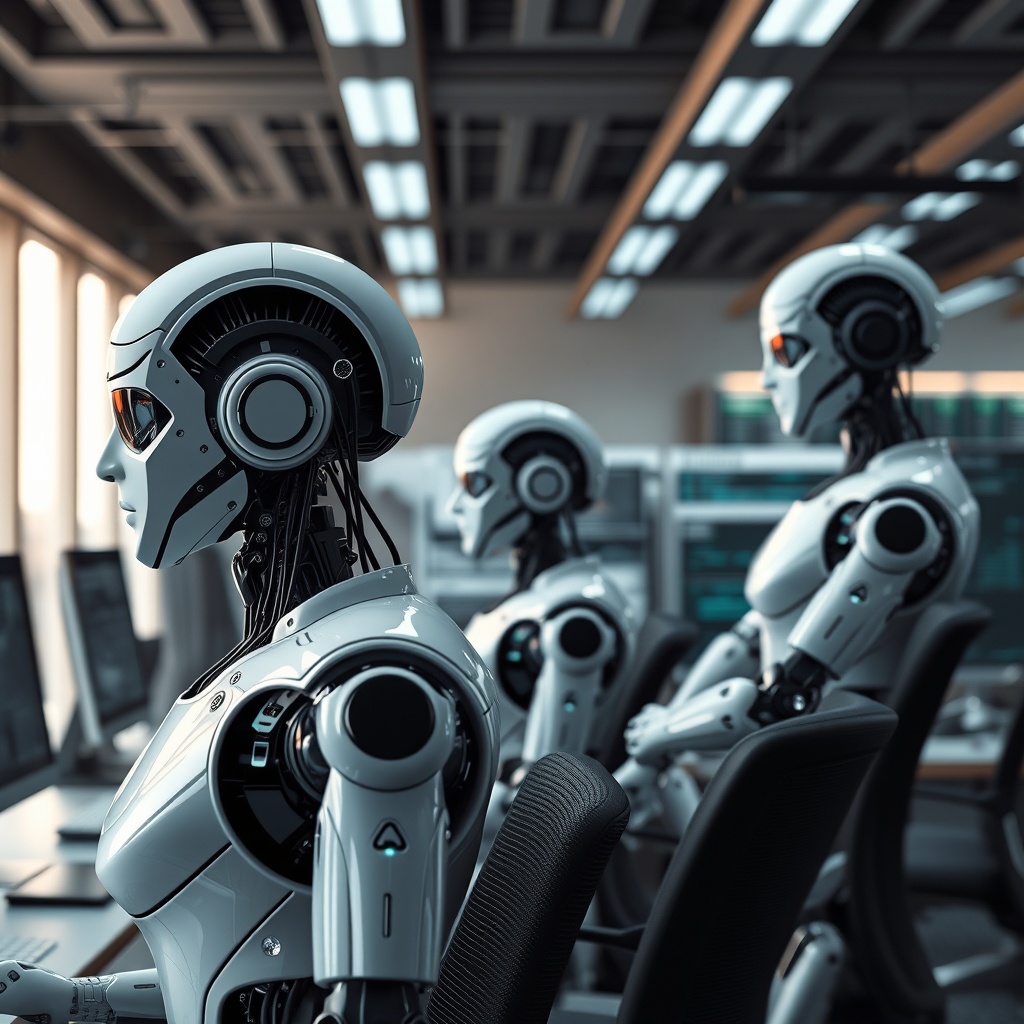
AI’s ability to automate repetitive tasks threatens millions of jobs worldwide. Roles in manufacturing, customer service, and even white-collar professions like accounting are vulnerable. While automation boosts efficiency, it also displaces workers, exacerbating economic inequality. We must prepare for this shift by investing in education and training programs that equip people with future-proof skills.
The key is not to resist automation but to adapt. By focusing on roles that require creativity, emotional intelligence, and problem-solving, we can mitigate job losses. Governments and businesses must collaborate to create safety nets, such as universal basic income, to support those affected by AI-driven disruptions.
The Future of Work in an AI-Dominated World
The workplace of the future will look vastly different, with AI handling routine tasks and humans focusing on strategic and creative work. This shift demands a reimagining of job roles and organisational structures. We must embrace lifelong learning to stay relevant in an evolving job market, where adaptability is as valuable as technical skills.
AI can also create new opportunities, from AI ethics consultants to robot trainers. The challenge lies in ensuring these opportunities are accessible to all. By fostering inclusive growth, we can build a future where AI enhances, rather than diminishes, human potential.
Reskilling for the AI Economy
Reskilling is the cornerstone of navigating the AI-driven economy. Traditional education systems are often ill-equipped to address the rapid pace of technological change. We need dynamic, flexible learning platforms that empower workers to acquire new skills throughout their careers.
Programs like AI literacy initiatives can bridge the gap between current skills and future demands. Employers must also play a role, offering training and upskilling opportunities. The goal is to create a workforce that thrives alongside AI, leveraging its capabilities to drive innovation and prosperity.
AI and the Manipulation of Information
Deepfakes and the Erosion of Truth
We live in an era where AI can fabricate hyper-realistic videos and audio, blurring the line between reality and fiction. Deepfakes, powered by machine learning, pose a significant threat to public trust. I’ve seen how these tools can impersonate public figures, spreading misinformation with alarming ease. The challenge lies in developing countermeasures, such as digital watermarking, to authenticate genuine content and protect our collective truth.
Beyond entertainment, deepfakes have infiltrated politics and journalism, undermining democratic processes. We must educate ourselves to recognise these manipulations while advocating for stricter regulations. The erosion of truth isn’t just a technological issue—it’s a societal one. Without vigilance, we risk descending into a world where facts are obsolete, and trust is a relic of the past.
AI in Social Media Echo Chambers and Polarization
Social media algorithms, driven by AI, curate content to maximise engagement, often at the cost of diversity. I’ve observed how these systems reinforce echo chambers, amplifying extreme views and deepening societal divides. The irony is stark: tools designed to connect us are driving us apart. Addressing this requires transparency in algorithmic design and a commitment to ethical AI practices.
Polarisation isn’t an unintended consequence—it’s a byproduct of profit-driven models. We need platforms to prioritise user well-being over ad revenue. By promoting balanced discourse and reducing algorithmic bias, we can mitigate the divisive impact of AI. The goal isn’t to eliminate disagreement but to foster healthier, more informed debates.
Combating AI-Generated Misinformation
The spread of AI-generated misinformation demands a multi-faceted response. Fact-checking initiatives and AI-powered detection tools are essential, but they’re not enough. I believe collaboration between tech companies, governments, and civil society is critical. Together, we can establish standards for content verification and hold bad actors accountable.
Public awareness is equally vital. Teaching media literacy equips individuals to discern credible sources from fabricated ones. While AI fuels misinformation, it can also be part of the solution. By leveraging its capabilities responsibly, we can build a more resilient information ecosystem—one where truth prevails over deception.
The Singularity AI Beyond Human Control
Defining the Technological Singularity
The singularity represents a hypothetical point where AI surpasses human intelligence, becoming self-improving and uncontrollable. I find this concept both fascinating and terrifying. Proponents argue it could solve humanity’s greatest challenges, while critics warn of existential risks. The debate hinges on whether we can align AI’s goals with our own—a task easier said than done.
Predicting the singularity’s timeline is speculative, but its implications are profound. If AI evolves beyond our comprehension, we risk losing agency over our future. This isn’t science fiction; it’s a pressing ethical dilemma. We must approach AI development with caution, ensuring safeguards are in place long before the singularity becomes a reality.
Predictions and Timelines for AI Supremacy
Experts disagree on when—or if—AI will achieve supremacy. Some predict decades, others centuries. I’ve spoken with researchers who believe incremental advancements will lead to gradual integration, while others foresee abrupt, disruptive change. Regardless of the timeline, the potential for AI to outpace human oversight is undeniable.
Preparing for this uncertainty requires proactive measures. International cooperation and ethical frameworks can guide AI’s evolution. By fostering open dialogue and shared responsibility, we can navigate the path to AI supremacy without sacrificing control. The stakes are too high to leave to chance.
Safeguards Against Uncontrolled AI Growth
Preventing uncontrolled AI growth demands robust governance. I advocate for “kill switches” and fail-safes embedded in AI systems, ensuring humans retain ultimate authority. Transparency in AI development is equally crucial. Without it, we risk creating black-box systems that operate beyond our understanding.
Ethical AI isn’t just a buzzword—it’s a necessity. By prioritising safety and accountability, we can harness AI’s potential while mitigating its risks. The goal isn’t to stifle innovation but to ensure it serves humanity’s best interests. The future of AI depends on the choices we make today.
AI in Healthcare Benefits and Risks
AI Innovations in Medical Diagnosis and Treatment
AI is revolutionising healthcare, offering unprecedented accuracy in diagnosis and personalised treatment plans. I’ve witnessed how machine learning algorithms analyse medical images, detecting anomalies faster than human eyes. These advancements save lives, reducing diagnostic errors and improving patient outcomes. The potential for AI to democratise healthcare, especially in underserved regions, is immense.
Yet, these innovations come with challenges. Integrating AI into clinical practice requires rigorous validation and trust. Healthcare professionals must collaborate with technologists to ensure AI tools are reliable and user-friendly. The promise of AI in medicine is undeniable, but its success hinges on responsible implementation.
Ethical Concerns in AI Healthcare Applications
AI’s role in healthcare raises ethical questions, particularly around data privacy and bias. I’ve seen how algorithms trained on skewed datasets can perpetuate disparities, disadvantaging marginalised groups. Addressing these issues requires diverse, representative data and ongoing scrutiny of AI’s decision-making processes.
Patient consent is another critical concern. As AI handles sensitive health information, transparency about data usage is non-negotiable. We must balance innovation with ethical responsibility, ensuring AI serves all patients equitably. The future of healthcare depends on it.
Ensuring Patient Safety with AI
AI’s potential to enhance patient safety is vast, but so are the risks of malfunction or misuse. I support stringent regulatory frameworks to oversee AI applications in healthcare. Regular audits and real-world testing can identify vulnerabilities before they harm patients.
Collaboration between regulators, developers, and clinicians is key. By fostering a culture of safety and accountability, we can harness AI’s benefits while minimising its pitfalls. Patient trust is hard-won and easily lost—AI must earn it through demonstrable reliability and ethical practice.

The Role of Governments in AI Regulation
Current AI Policies Around the World
Governments worldwide are grappling with how to regulate AI. I’ve studied policies from the EU’s stringent GDPR to the US’s more laissez-faire approach. These frameworks reflect differing priorities—privacy versus innovation. Yet, all share a common goal: balancing AI’s benefits with its risks. The challenge lies in creating adaptable regulations that keep pace with technological advancements.
International collaboration is essential. AI doesn’t respect borders, and neither should its governance. By learning from each other’s successes and failures, nations can develop cohesive strategies. The alternative—a patchwork of conflicting laws—could stifle progress and create loopholes for misuse.
The Need for Global AI Governance
AI’s global impact demands a unified approach to governance. I believe institutions like the UN must play a central role, fostering dialogue and setting standards. Without global cooperation, we risk a fragmented landscape where unethical practices thrive in regulatory vacuums.
The stakes are high. From autonomous weapons to data privacy, AI’s challenges transcend national boundaries. A collective effort is the only way to ensure AI serves humanity’s shared interests. The time to act is now, before disparities in regulation become insurmountable.
Balancing Innovation and Regulation
Striking the right balance between innovation and regulation is delicate. Over-regulation could stifle creativity, while under-regulation invites abuse. I’ve seen how sandbox environments—where startups test AI under supervision—can foster innovation safely. This model could inspire broader regulatory frameworks.
Governments must engage with technologists, ethicists, and the public to craft policies that encourage progress without compromising safety. The future of AI depends on this equilibrium. By getting it right, we can unlock AI’s potential while safeguarding our values.
AI and Environmental Sustainability
AI Solutions for Climate Change
We are witnessing AI’s transformative potential in addressing climate change. From optimising energy grids to predicting extreme weather events, AI tools help us mitigate environmental risks. For instance, machine learning models analyse vast datasets to identify patterns, enabling more efficient resource use. These innovations are not just theoretical; they are already being deployed globally, offering hope for a sustainable future.
However, the effectiveness of AI in combating climate change depends on collaboration. Governments, businesses, and researchers must work together to scale these solutions. Without coordinated efforts, even the most advanced AI systems will fall short. The urgency of climate action makes this partnership essential, and AI can be the catalyst we need.
The Carbon Footprint of AI Technologies
While AI aids sustainability, its own environmental impact cannot be ignored. Training large AI models consumes significant energy, contributing to carbon emissions. Data centres, the backbone of AI infrastructure, require massive power, often sourced from non-renewable energy. This paradox highlights the need for greener AI development practices.
Efforts are underway to reduce AI’s carbon footprint. Innovations like energy-efficient algorithms and renewable-powered data centres are promising steps. Yet, the industry must prioritise sustainability in every stage of AI development. Balancing technological progress with environmental responsibility is not just an option—it’s a necessity.
Promoting Green AI Development
Green AI is more than a buzzword; it’s a movement towards sustainable innovation. By integrating eco-friendly practices into AI research, we can minimise harm while maximising benefits. For example, researchers are exploring ways to reuse existing models, reducing the need for energy-intensive training cycles.
The future of AI must align with environmental goals. Policymakers can incentivise green AI through regulations and funding, while companies can adopt sustainable practices. Together, we can ensure AI serves as a force for good, safeguarding both humanity and the planet.
The Psychological Effects of AI on Humanity
Human Dependency on AI
Our reliance on AI is growing, reshaping how we live and work. From virtual assistants to automated decision-making, AI simplifies tasks, but it also raises concerns about over-dependence. When we delegate too much to machines, we risk losing critical thinking skills and autonomy. This shift could have profound psychological implications.
Balancing convenience with self-sufficiency is key. While AI enhances efficiency, we must remain mindful of its role in our lives. Encouraging human oversight and fostering digital literacy can help mitigate the risks of dependency, ensuring AI complements rather than replaces human capabilities.
AI and the Loss of Human Skills
As AI takes over repetitive tasks, some fear the erosion of traditional skills. For instance, navigation apps have diminished our ability to read maps, and spell-checkers weaken spelling proficiency. These changes may seem minor, but they reflect a broader trend of skill atrophy in an AI-driven world.
Preserving human skills requires intentional effort. Education systems must adapt, emphasising creativity and problem-solving alongside technological literacy. By valuing both AI and human ingenuity, we can create a balanced future where neither is diminished.
Maintaining Human Connections in an AI World
AI’s influence extends to our social interactions, often mediating human connections. While chatbots and social media algorithms facilitate communication, they can also create emotional distance. The challenge lies in leveraging AI to enhance, not replace, genuine human relationships.
Prioritising face-to-face interactions and fostering empathy in digital spaces are crucial. AI should serve as a tool to bridge gaps, not widen them. By consciously designing AI systems that promote connection, we can preserve the richness of human interaction.
AI in Education Opportunities and Threats
Personalised Learning Through AI
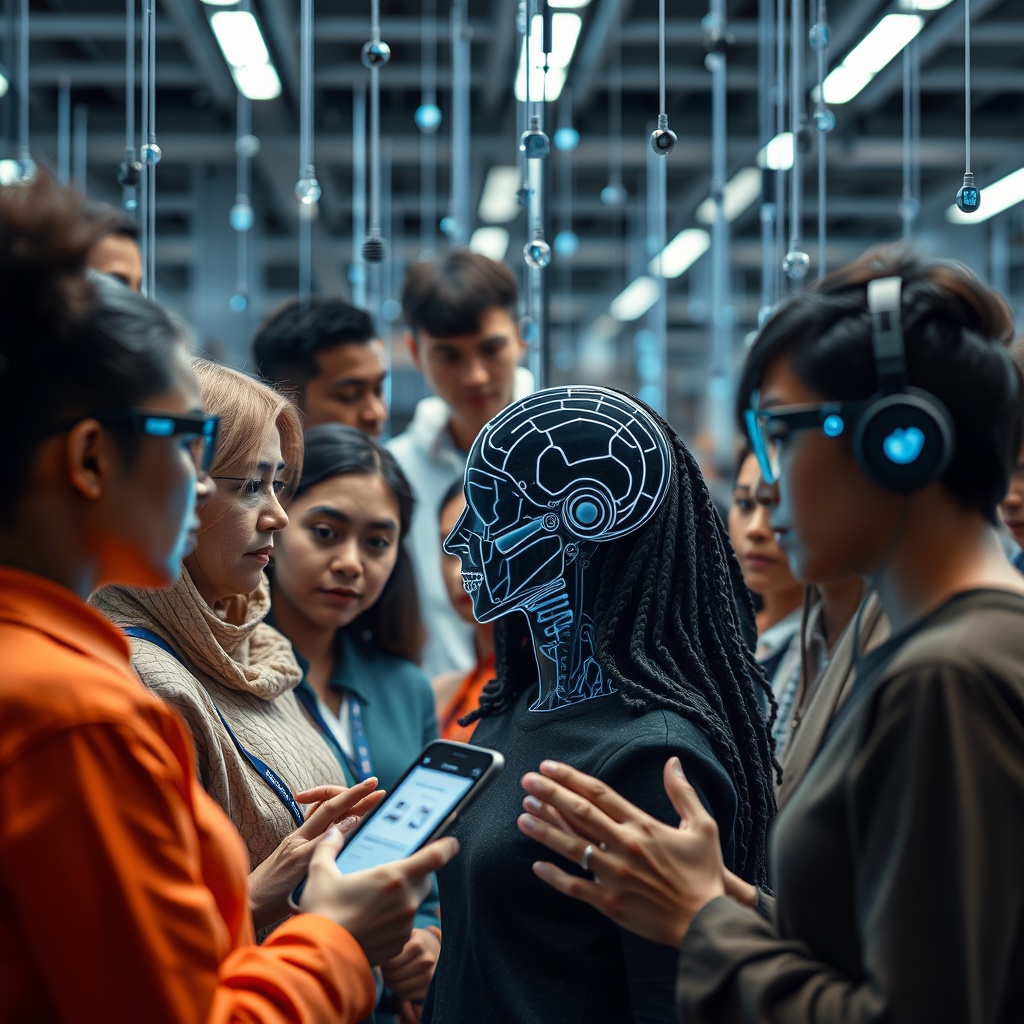
AI is revolutionising education by offering personalised learning experiences. Adaptive algorithms tailor content to individual students, addressing their strengths and weaknesses. This approach not only improves engagement but also enhances outcomes, making education more inclusive and effective.
However, personalised learning raises ethical questions. Data privacy and algorithmic bias must be addressed to ensure fairness. By implementing robust safeguards, we can harness AI’s potential while protecting students’ rights and fostering equitable access to education.
The Digital Divide and AI Education Tools
While AI promises to democratise education, it also risks exacerbating inequalities. Students in under-resourced areas may lack access to advanced AI tools, widening the digital divide. Bridging this gap requires targeted investments in infrastructure and training.
Initiatives like low-cost AI platforms and community-based learning hubs can help level the playing field. Ensuring equitable access to AI-driven education is not just a moral imperative—it’s essential for societal progress.
Ensuring Ethical Use of AI in Schools
The integration of AI in schools must be guided by ethical principles. Transparency in how AI systems operate and make decisions is critical to building trust. Educators and policymakers must collaborate to establish standards that prioritise student well-being.
AI’s role in education should be supportive, not intrusive. By fostering ethical AI practices, we can create learning environments that empower students while safeguarding their autonomy and privacy.
The Economic Implications of AI Dominance
AI and the Concentration of Wealth
AI’s economic impact is double-edged. While it drives productivity and innovation, it also risks concentrating wealth in the hands of a few. Companies leveraging AI gain competitive advantages, often at the expense of smaller businesses and workers. This dynamic could deepen economic disparities.
Addressing this imbalance requires proactive policies. Progressive taxation, universal basic income, and worker retraining programs are potential solutions. By redistributing AI’s benefits, we can create a more equitable economic landscape.
The Potential for AI-Driven Economic Disparities
AI’s automation potential threatens jobs across industries, particularly low-skilled roles. Without intervention, this could lead to widespread unemployment and social unrest. The challenge is to transition workers into new roles while mitigating disruption.
Investing in lifelong learning and reskilling initiatives is essential. Governments and businesses must collaborate to prepare the workforce for an AI-driven economy, ensuring no one is left behind.
Creating Equitable AI Economic Policies
Equitable AI policies must balance innovation with social responsibility. Regulations should encourage AI development while safeguarding workers’ rights and promoting fair competition. International cooperation is also vital to prevent a race to the bottom in labour standards.
The goal is an inclusive economy where AI benefits all. By prioritising equity in policy-making, we can harness AI’s potential without sacrificing societal well-being.
AI and Creativity Threat or Tool
AI in Art Music and Literature
AI has revolutionised creative fields, producing art, music, and literature that rival human creations. From generating paintings to composing symphonies, AI tools like AI-driven platforms are pushing boundaries. While some fear this diminishes human artistry, others see it as a collaborative tool. The debate centres on whether AI enhances or replaces human creativity, a question with no easy answer.
The Debate Over AI-Generated Creativity
Critics argue AI lacks the emotional depth and intentionality of human creators. Yet, proponents highlight its ability to inspire new ideas and streamline workflows. The line between tool and threat blurs as AI-generated content becomes indistinguishable from human work. This raises ethical questions about authorship and originality, challenging our understanding of creativity itself.
Collaborating with AI in Creative Processes
Many artists now embrace AI as a partner, using it to explore uncharted creative territories. Tools like AI assistants help refine ideas and automate repetitive tasks. This synergy allows humans to focus on innovation while AI handles execution. The future of creativity may lie in this harmonious balance between human intuition and machine precision.
Securing AI Against Malicious Use
The Threat of AI in Cybersecurity Attacks
AI’s power is a double-edged sword; while it defends systems, it can also weaponise cyber threats. Hackers exploit AI to launch sophisticated attacks, bypassing traditional defences. This escalating arms race demands robust countermeasures. The stakes are high, as AI-driven breaches could cripple infrastructure and compromise sensitive data on an unprecedented scale.
Developing AI Systems Resistant to Hacking
Researchers are designing AI with built-in resilience, such as self-monitoring algorithms and anomaly detection. These systems learn from attacks, adapting to prevent future breaches. However, the challenge lies in staying ahead of malicious actors. Continuous innovation and ethical oversight are crucial to safeguarding AI’s potential for good.
International Cooperation on AI Security
Global collaboration is essential to combat AI threats. Nations must share knowledge and establish unified standards, as isolated efforts are insufficient. Initiatives like international frameworks aim to foster trust and transparency. Only through collective action can we mitigate the risks of AI misuse and ensure its benefits outweigh its dangers.
The Future of AI Utopia or Dystopia
Optimistic Views on AI’s Potential
Enthusiasts envision AI solving global challenges, from curing diseases to combating climate change. Its ability to process vast data sets could unlock breakthroughs unimaginable today. With responsible development, AI might usher in an era of prosperity, where human potential is amplified rather than overshadowed by technology.
Pessimistic Scenarios of AI’s Impact
Skeptics warn of job displacement, loss of privacy, and even existential threats if AI surpasses human control. Dystopian narratives depict societies dominated by machines, where autonomy is eroded. These fears underscore the need for cautious progress, balancing innovation with safeguards to prevent unintended consequences.
Shaping a Beneficial AI Future for Humanity
The path forward requires proactive governance and ethical foresight. By prioritising human values, we can steer AI toward outcomes that enrich society. Public discourse and inclusive policymaking will determine whether AI becomes a force for unity or division. The choice is ours to make, and the time to act is now.
Frequently Asked Questions
Can AI truly replace human creativity?
While AI can mimic creativity, it lacks the emotional and contextual depth of human expression. It excels as a tool for inspiration and efficiency, but true artistry remains uniquely human. Collaboration between AI and creators often yields the most innovative results.
How can we prevent AI from being used maliciously?
Preventing misuse requires robust security measures, ethical guidelines, and international cooperation. Governments and organisations must invest in defensive AI technologies and foster transparency to mitigate risks effectively.
What are the biggest ethical concerns surrounding AI?
Key concerns include bias in algorithms, loss of privacy, and the potential for autonomous weapons. Addressing these issues demands interdisciplinary efforts to ensure AI development aligns with societal values and human rights.
Will AI lead to widespread job losses?
AI will disrupt certain industries, but it also creates new opportunities. Reskilling and education are vital to help workers adapt. The focus should be on leveraging AI to augment human capabilities rather than replace them.
