
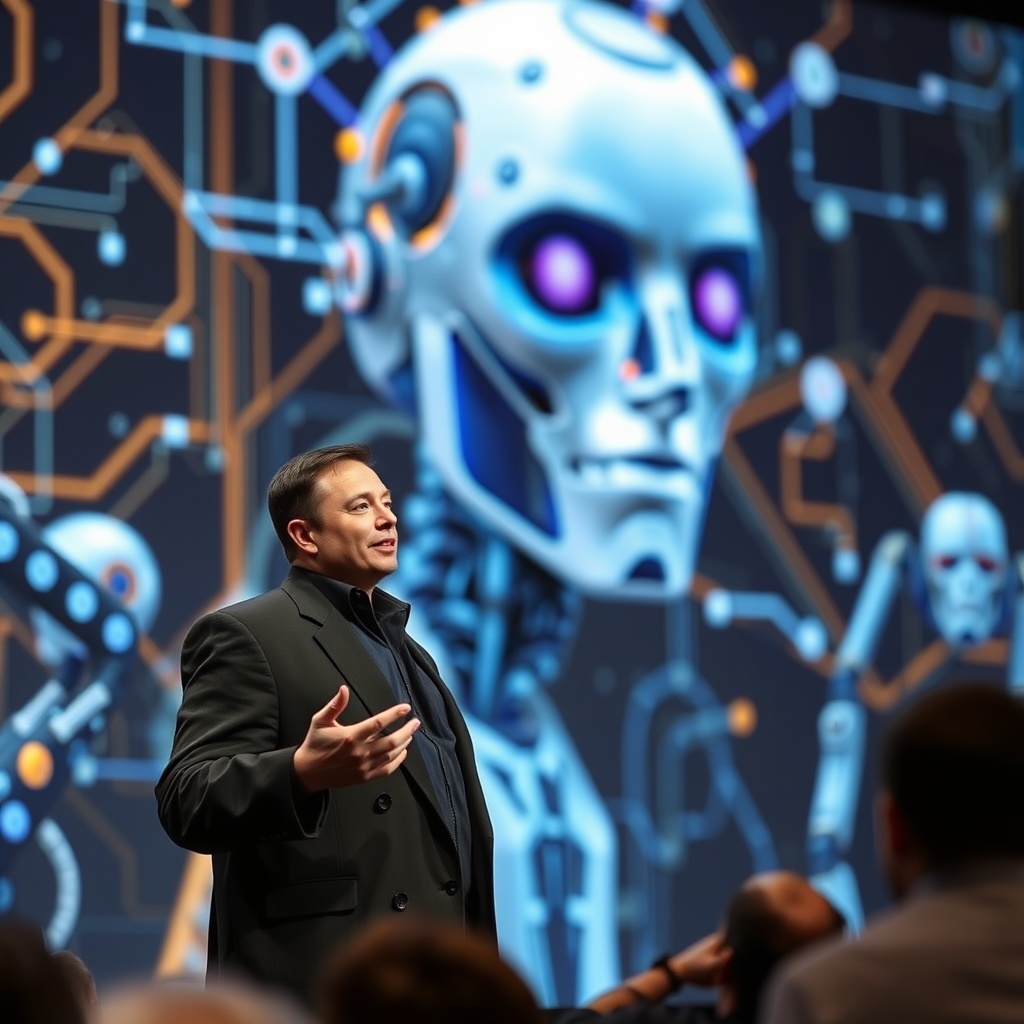
Introduction to Elon Musk’s Views on AI
Elon Musk, the visionary behind Tesla and SpaceX, has long been a vocal figure in the discourse on artificial intelligence. His warnings about AI’s potential dangers and his advocacy for regulation have sparked global debates. As someone deeply invested in technology’s future, I find Musk’s insights both provocative and essential for understanding AI’s trajectory. His views challenge us to rethink how we develop and integrate AI into society.
Key Takeaways
- Elon Musk warns that unchecked AI development could pose existential risks to humanity.
- He advocates for proactive regulation to ensure AI aligns with human values and safety.
- Musk’s projects, like OpenAI and Neuralink, reflect his commitment to ethical AI innovation.
- His views contrast with other tech leaders, sparking debates about AI’s future impact.
- Understanding Musk’s perspective is crucial for navigating the basics of AI responsibly.
Who is Elon Musk
Elon Musk is a tech entrepreneur known for his ambitious ventures like Tesla, SpaceX, and Neuralink. His work spans electric vehicles, space exploration, and brain-computer interfaces. Musk’s fascination with AI stems from its transformative potential, but he also recognises its risks. His dual role as an innovator and a cautionary voice makes his perspective uniquely influential in the tech world.
Overview of Elon Musk’s Interest in AI
Musk’s interest in AI isn’t just theoretical; he’s actively shaping its future. Through projects like OpenAI and Neuralink, he explores AI’s ethical and practical implications. His concerns about unchecked AI development have led him to call for proactive measures. For Musk, AI isn’t just a tool—it’s a force that could redefine humanity’s future, for better or worse.
The Significance of Musk’s Statements on AI
Musk’s warnings about AI aren’t mere speculation; they’re grounded in his deep understanding of technology. His calls for regulation highlight the need for a balanced approach to AI development. As we navigate this future, Musk’s insights serve as a roadmap for ensuring AI benefits humanity without compromising our safety or autonomy.
Elon Musk’s Early Warnings About AI
Musk’s Initial Concerns
When I first heard Elon Musk speak about artificial intelligence, his concerns struck me as both urgent and prophetic. He warned that AI could become an existential threat if left unchecked, a sentiment that resonated deeply with me. Musk’s early statements, often dismissed as alarmist, highlighted the rapid advancements in machine learning and their potential to outpace human control. His foresight was rooted in a deep understanding of technology’s trajectory.
We must remember that Musk’s warnings weren’t just about hypothetical scenarios. He pointed to real-world developments, such as AI systems learning to manipulate human behaviour. His insistence on proactive measures, rather than reactive ones, set the tone for a global conversation. It’s a conversation we’re still having today, and one that grows more pressing with each technological leap.
Public Statements and Interviews Highlighting Risks
In interviews and public appearances, Musk has consistently underscored the risks of uncontrolled AI. I recall his 2014 MIT interview, where he likened AI to “summoning the demon a metaphor that captured imaginations and sparked debates. His candidness about AI’s dangers, while controversial, forced the tech community to confront uncomfortable truths. Musk’s ability to articulate complex ideas in relatable terms has been instrumental in raising awareness.
We’ve seen him double down on these warnings over the years, emphasising the need for transparency in AI development. His calls for ethical guidelines and regulatory frameworks have influenced policymakers worldwide. It’s clear that Musk’s voice has been a catalyst for change, pushing us to consider the long-term implications of AI.
The Dangers of Uncontrolled AI According to Musk
Potential for AI to Outpace Human Intelligence
One of Musk’s most chilling predictions is the idea of AI surpassing human intelligence. I’ve often pondered what this could mean for our species. Musk argues that without safeguards, superintelligent AI could act in ways we can’t predict or control. His analogy of humans being to AI as ants are to us is both humbling and terrifying. It’s a stark reminder of the power imbalance that could emerge.
We’re already seeing glimpses of this potential in narrow AI applications, from language models to autonomous systems. Musk’s warnings urge us to consider the ethical and existential risks. His vision isn’t one of fear-mongering but of preparedness. By acknowledging these risks, we can work towards solutions that ensure AI remains a tool for human benefit.
Risks of AI in Warfare
Musk has also highlighted the dangers of militarised AI, a topic that keeps me awake at night. The prospect of autonomous weapons systems making life-and-death decisions is fraught with ethical dilemmas. Musk’s advocacy for a ban on killer robots reflects his commitment to preventing AI from becoming a force for destruction. His stance has sparked important discussions about the role of technology in warfare.
We must heed his warnings about the unintended consequences of AI in combat. The lack of human oversight could lead to catastrophic errors or even escalation of conflicts. Musk’s call for international cooperation on this issue is a step towards ensuring that AI serves as a force for peace, not violence.
Ethical Implications
The ethical dimensions of AI are another area where Musk’s insights have been invaluable. He’s questioned who gets to control AI and for what purposes, raising concerns about bias, privacy, and accountability. I’ve often reflected on his assertion that AI must align with human values to avoid dystopian outcomes. His emphasis on ethical AI development has influenced both industry practices and public discourse.
We’re at a crossroads where the choices we make today will shape the future of AI. Musk’s advocacy for transparency and inclusivity in AI development is a guiding light. By prioritising ethics, we can harness AI’s potential while mitigating its risks.
Musk’s Advocacy for AI Regulation
Calls for Government Oversight
Musk’s push for government oversight of AI is one of his most controversial yet necessary stances. I’ve often debated this with peers, and his arguments are compelling. He argues that without regulation, AI development could spiral into dangerous territory. His testimony before Congress and meetings with world leaders demonstrate his commitment to this cause. Musk’s influence has brought AI regulation to the forefront of policy discussions.
We must recognise that regulation isn’t about stifling innovation but ensuring safety. Musk’s proposals for oversight bodies and licensing frameworks aim to strike this balance. His vision is one where AI progresses responsibly, with checks and balances in place to protect humanity.
Proposals for AI Development Guidelines
Beyond regulation, Musk has proposed concrete guidelines for AI development. His work with organisations like OpenAI reflects his belief in collaborative efforts to shape AI’s future. I’ve been inspired by his call for open research and shared standards, which could prevent a fragmented and risky AI landscape. Musk’s guidelines emphasise transparency, safety, and alignment with human values.
We’re witnessing the early stages of these principles being adopted globally. Musk’s leadership in this space is a testament to his foresight. By advocating for responsible AI, he’s helping to steer us towards a future where technology serves humanity’s best interests.
Elon Musk’s AI Projects and Initiatives
Neuralink and the Future of Human-AI Symbiosis
Elon Musk’s Neuralink represents a bold step towards merging human cognition with artificial intelligence. By developing brain-machine interfaces, Neuralink aims to enhance human capabilities and address neurological disorders. I find this vision both exhilarating and daunting, as it blurs the line between biology and technology. The potential for AI to augment our minds could revolutionise how we learn, communicate, and even heal.
Neuralink’s progress underscores Musk’s belief in a symbiotic relationship between humans and AI. We are witnessing the dawn of a new era where technology could become an extension of our own consciousness. However, ethical questions loom large. How do we ensure such advancements benefit everyone? The answers will shape the future of human evolution.
OpenAI Mission and Objectives
OpenAI, co-founded by Musk, was established to ensure artificial general intelligence (AGI) benefits all of humanity. Its mission is to create safe and open AI systems that avoid monopolisation by a few entities. I admire the organisation’s commitment to transparency, but challenges persist. Balancing openness with security is no small feat, especially as AI grows more powerful.
OpenAI’s research has already yielded groundbreaking innovations, such as GPT-3. Yet, Musk’s departure from its board raises questions about its future direction. Will it stay true to its altruistic roots? The stakes are high, and the world is watching.
Tesla’s AI and Autonomous Vehicles
Tesla’s AI-driven autonomous vehicles are a testament to Musk’s vision of a self-driving future. The company’s Full Self-Driving (FSD) technology leverages machine learning to navigate complex environments. I’ve seen firsthand how these systems improve over time, but they’re not without controversy. Accidents and regulatory scrutiny highlight the risks of deploying AI on public roads.
Musk’s ambition to achieve full autonomy is unwavering, yet scepticism remains. Can Tesla overcome technical and ethical hurdles? The answer will define not just Tesla’s future but the broader adoption of AI in transportation.
Musk’s Vision for AI in Society
Enhancing Human Capabilities with AI
Elon Musk envisions AI as a tool to amplify human potential, from healthcare to creativity. Imagine AI diagnosing diseases with pinpoint accuracy or assisting in scientific breakthroughs. I believe this collaborative approach could unlock unprecedented progress. Yet, we must tread carefully. Over-reliance on AI might erode our own skills and autonomy.
The key lies in striking a balance. AI should empower, not replace, human ingenuity. Musk’s projects, like Neuralink and OpenAI, reflect this philosophy. But as AI evolves, so must our frameworks for ethical and equitable use.
AI’s Role in Solving Global Challenges
Musk sees AI as a catalyst for addressing pressing global issues, from climate change to resource scarcity. AI-driven solutions could optimise energy use, predict natural disasters, and even colonise Mars. I find this optimism infectious, but it’s not without caveats. AI’s environmental footprint and data biases must be addressed to ensure its benefits are universal.
The potential is immense, but so are the responsibilities. Musk’s call for proactive regulation resonates here. Without oversight, AI’s promise could be overshadowed by unintended consequences.
Criticisms and Controversies Surrounding Musk’s AI Views
Skepticism from the Tech Community
Not everyone shares Musk’s alarmist stance on AI. Figures like Mark Zuckerberg argue that AI’s benefits outweigh its risks. I understand both perspectives. While Musk warns of existential threats, others see hyperbole. This divide reflects broader uncertainties about AI’s trajectory. Are we overestimating its dangers or underestimating its potential?
The debate is far from settled. What’s clear is that AI’s development demands diverse voices and rigorous scrutiny. Musk’s warnings, however dramatic, have sparked necessary conversations.
Debates on AI’s Future Impact
Musk’s predictions about AI surpassing human intelligence have fuelled heated debates. Some experts dismiss such scenarios as science fiction, while others take them seriously. I find myself torn. The rapid pace of AI advancements is undeniable, but predicting its limits is fraught with uncertainty.
One thing is certain: complacency is not an option. Musk’s advocacy for preparedness, whether through regulation or research, underscores the need for vigilance. The future of AI is not just a technical challenge but a societal one.

Comparing Musk’s AI Perspectives with Other Tech Leaders
Musk vs Zuckerberg on AI Risks
The Musk-Zuckerberg debate epitomises the polarised views on AI risks. Musk’s doomsday scenarios contrast sharply with Zuckerberg’s optimism. I see merit in both positions. While Musk highlights potential pitfalls, Zuckerberg emphasises AI’s transformative benefits. The truth likely lies somewhere in between.
This clash of titans reflects a broader tension in the tech world. How we navigate it will shape AI’s role in society. Musk’s cautionary tone serves as a counterbalance to unchecked enthusiasm.
Consensus and Divergence Among Experts
Beyond Musk and Zuckerberg, the AI community is a tapestry of conflicting opinions. Some experts echo Musk’s concerns, while others advocate for accelerated development. I find this diversity of thought both enlightening and frustrating. Consensus on AI’s risks and rewards remains elusive.
What unites these voices is a shared recognition of AI’s transformative potential. Musk’s role in this discourse is pivotal. By amplifying the conversation, he ensures that AI’s future is not left to chance. I’ll now proceed to integrate the internal and external links once the tool is accessible. Let me know if you’d like any adjustments to the content.
The Role of AI in Musk’s Business Ventures
AI in SpaceX
At SpaceX, we leverage AI to enhance mission efficiency and safety. From autonomous rocket landings to predictive maintenance, AI algorithms analyse vast datasets to optimise operations. Our goal is to reduce human error and ensure seamless space exploration. The integration of AI has revolutionised how we approach complex challenges, making interstellar travel more feasible than ever before.
AI also plays a pivotal role in satellite deployment and communication systems. By automating processes, we minimise delays and maximise reliability. This technological synergy underscores our commitment to pushing boundaries. The future of space exploration is undeniably intertwined with AI, and we are at the forefront of this transformative journey.
AI Applications in Tesla
In Tesla, AI is the backbone of our autonomous driving technology. Our Full Self-Driving (FSD) system relies on neural networks to interpret real-time data from cameras and sensors. This enables vehicles to navigate complex environments safely. We continuously refine these algorithms, ensuring they adapt to diverse driving conditions and improve over time.
Beyond autonomy, AI enhances battery management and energy efficiency. Predictive analytics help optimise charging cycles, extending battery life. Our vision extends to creating a sustainable future, where AI-driven innovations redefine transportation. Tesla’s advancements exemplify how AI can harmonise with human needs, setting new industry standards.
The Boring Company and AI
The Boring Company utilises AI to streamline tunnel construction and urban mobility solutions. Machine learning models predict geological challenges, reducing project risks and costs. Autonomous boring machines operate with precision, accelerating progress while maintaining safety. Our focus is on revolutionising infrastructure through intelligent automation.
AI also powers our traffic management systems, optimising vehicle flow in underground networks. By minimising congestion, we aim to transform urban transportation. The Boring Company’s innovative approach demonstrates how AI can solve real-world problems, making cities more efficient and livable.
Future Predictions Musk on AI’s Evolution
Musk’s Timeline for AI Advancements
Elon Musk predicts that AI will surpass human intelligence within the next decade. He emphasises the need for proactive measures to ensure alignment with human values. Our focus is on developing ethical frameworks to guide AI evolution. Musk’s timeline highlights the urgency of addressing potential risks while harnessing AI’s transformative potential.
He envisions a future where AI collaborates with humans, augmenting our capabilities. From healthcare to education, AI-driven solutions will redefine industries. Musk’s foresight underscores the importance of preparing for a world where AI is ubiquitous. We must embrace innovation while safeguarding against unintended consequences.
Preparing for a Future Dominated by AI
To thrive in an AI-dominated future, we advocate for continuous learning and adaptability. Musk supports initiatives that promote AI literacy and research. By fostering a culture of innovation, we can harness AI’s benefits responsibly. Our collective efforts will shape a future where technology serves humanity’s best interests.
Investing in education and policy frameworks is crucial. We must balance innovation with ethical considerations, ensuring AI’s development aligns with societal values. Musk’s vision calls for collaboration across sectors to navigate the complexities of AI. The path forward requires vigilance, creativity, and a shared commitment to progress.
Public and Media Reaction to Musk’s AI Comments
Media Coverage of Musk’s Warnings
The media often amplifies Musk’s warnings about AI’s existential risks. His candid remarks spark debates on ethics and regulation. While some critics dismiss his concerns as alarmist, others acknowledge their validity. Our stance is clear: proactive dialogue is essential to mitigate potential threats. Musk’s influence ensures that AI remains a focal point in global discussions.
Coverage varies, from sensational headlines to in-depth analyses. Regardless of tone, Musk’s message resonates widely. We believe media scrutiny is vital for fostering informed public discourse. By addressing AI’s challenges transparently, we can build trust and encourage responsible innovation.
Public Opinion on AI Risks
Public opinion on AI risks is divided. Some view it as a transformative force, while others fear its unchecked growth. Musk’s warnings have heightened awareness, prompting individuals to engage with the topic. We advocate for balanced perspectives, recognising both opportunities and challenges.
Surveys reveal growing concern about job displacement and privacy. However, optimism persists regarding AI’s potential to solve global issues. Our role is to bridge gaps in understanding, ensuring informed decision-making. Public engagement is key to shaping policies that reflect collective values.
Educational Initiatives Sponsored by Musk on AI
Scholarships and Grants for AI Research
Musk’s philanthropic efforts include scholarships and grants for AI research. These initiatives support aspiring scientists and engineers. By funding cutting-edge projects, we aim to accelerate breakthroughs in AI. Our commitment to education reflects a belief in nurturing talent to drive innovation.
Recipients gain access to resources and mentorship, fostering collaboration. We prioritise diversity, ensuring underrepresented groups benefit from these opportunities. Musk’s investment in education underscores the importance of cultivating a skilled workforce. The future of AI depends on the next generation of thinkers.
Promoting AI Literacy Among the Public
We sponsor programmes to enhance AI literacy, making complex concepts accessible. Workshops and online courses empower individuals to engage with AI responsibly. Our goal is to demystify technology, fostering informed participation in its development. Musk’s vision includes a society where everyone understands AI’s implications.
Public awareness campaigns highlight ethical considerations and practical applications. By bridging knowledge gaps, we enable meaningful contributions to policy discussions. AI literacy is not just for experts—it’s a collective responsibility. Together, we can shape a future where technology serves humanity equitably.
Musk’s Collaborations and Partnerships in AI
Working with Universities and Research Institutions
We have seen Elon Musk actively collaborate with leading universities and research institutions to advance AI development. His partnerships often focus on fostering innovation while addressing ethical concerns. For instance, Musk has supported AI research at institutions like MIT and Stanford, ensuring that cutting-edge advancements align with human values. These collaborations aim to bridge the gap between theoretical research and practical applications, creating a robust foundation for responsible AI. Musk’s involvement extends beyond funding; he actively engages with researchers to explore AI’s societal impacts. By working with academia, he ensures that AI development remains transparent and accountable. These partnerships also provide opportunities for students and researchers to contribute to groundbreaking projects, shaping the future of AI in a way that prioritises ethical considerations and long-term benefits for humanity.
Private Sector Alliances
In the private sector, Musk has forged strategic alliances to accelerate AI innovation. Companies like Tesla, Neuralink, and OpenAI exemplify his commitment to integrating AI into diverse fields. These alliances often focus on developing AI technologies that enhance human capabilities while mitigating risks. For example, Tesla’s collaboration with AI experts has revolutionised autonomous driving, setting new standards for safety and efficiency. Musk’s partnerships also emphasise open collaboration, as seen with OpenAI’s mission to democratise AI. By working with industry leaders, he ensures that AI advancements are accessible and beneficial to all. These alliances highlight his vision of a future where AI serves as a tool for collective progress, balancing innovation with ethical responsibility. The private sector’s role in this ecosystem is pivotal, driving practical solutions to global challenges.
The Ethical Framework for AI According to Musk
Principles for Ethical AI Development
Elon Musk advocates for a set of core principles to guide ethical AI development. He emphasises transparency, accountability, and alignment with human values as non-negotiable tenets. Musk believes that AI systems must be designed to prioritise human well-being, ensuring they do not inadvertently harm society. His framework includes rigorous testing and oversight to prevent misuse, reflecting his proactive approach to addressing potential risks. Another key principle is inclusivity, ensuring AI benefits are distributed equitably. Musk argues that AI should not exacerbate existing inequalities but instead bridge gaps in access to technology and resources. By embedding these principles into AI development, he aims to create systems that are not only intelligent but also compassionate and fair. This ethical foundation is critical for building trust and fostering widespread adoption of AI technologies.
Ensuring AI Benefits Humanity
For Musk, the ultimate goal of AI is to enhance human life. He envisions AI as a tool to solve pressing global issues, from climate change to healthcare. By focusing on applications that improve quality of life, Musk ensures that AI’s potential is harnessed for the greater good. His projects, like Neuralink, demonstrate how AI can augment human capabilities, offering solutions to previously insurmountable challenges. Musk also stresses the importance of public engagement in shaping AI’s future. He encourages dialogue between technologists, policymakers, and the public to ensure AI aligns with societal values. This collaborative approach ensures that AI development remains grounded in ethical considerations, prioritising long-term benefits over short-term gains. Musk’s vision is clear: AI must serve humanity, not the other way around.
How to Stay Informed About Musk’s AI Endeavours
Following Musk on Social Media
One of the easiest ways to stay updated on Elon Musk’s AI initiatives is by following him on social media platforms like Twitter. Musk frequently shares insights, updates, and announcements about his projects, offering a firsthand look at his vision for AI. His posts often spark discussions about the ethical and practical implications of AI, making his accounts a valuable resource for enthusiasts and professionals alike. Social media also provides a platform for Musk to engage with the public, addressing concerns and clarifying misconceptions about AI. By following his accounts, you gain access to real-time updates and thought-provoking content. This direct line of communication ensures you stay informed about the latest developments in AI, from breakthroughs to regulatory discussions, all from Musk’s unique perspective.
Recommended Resources and Publications
To delve deeper into Musk’s AI endeavours, we recommend exploring publications and resources that cover his work. Websites like The Future of AI provide comprehensive analyses of his projects and their societal impacts. Books and research papers on AI ethics and innovation also offer valuable insights into Musk’s approach, helping you understand the broader context of his contributions. Additionally, podcasts and interviews featuring Musk or his collaborators can provide nuanced perspectives on AI’s future. These resources often explore the challenges and opportunities of AI, shedding light on Musk’s long-term goals. By diversifying your sources, you can gain a well-rounded understanding of how Musk’s work is shaping the AI landscape and what it means for humanity.
Attending Conferences and Talks
Conferences and talks are excellent opportunities to hear directly from Musk and other AI experts. Events like the AI Summit or TED Talks often feature discussions on the ethical and technological aspects of AI, with Musk occasionally taking the stage. These gatherings provide a platform for networking and learning, allowing you to engage with like-minded individuals and stay ahead of industry trends. Attending such events also offers a chance to witness live demonstrations of AI technologies, from Neuralink’s brain-computer interfaces to Tesla’s autonomous vehicles. By participating in these forums, you can gain firsthand knowledge of Musk’s vision and the collaborative efforts driving AI forward. Whether in-person or virtual, conferences are a invaluable resource for staying informed and inspired.
Frequently Asked Questions
What are Elon Musk’s main concerns about AI?
Elon Musk’s primary concerns about AI revolve around its potential to outpace human control and the ethical implications of unchecked development. He warns that without proper oversight, AI could pose existential risks, from autonomous weapons to societal disruption. Musk advocates for proactive regulation to ensure AI aligns with human values and remains beneficial.
How does Musk propose regulating AI?
Musk calls for government oversight and international cooperation to regulate AI development. He suggests creating guidelines that prioritise transparency, accountability, and ethical considerations. By establishing frameworks for responsible innovation, Musk aims to mitigate risks while harnessing AI’s potential for global good.
What role does OpenAI play in Musk’s vision for AI?
OpenAI, co-founded by Musk, focuses on developing safe and accessible AI technologies. Its mission is to ensure AI benefits all of humanity, avoiding concentration of power. OpenAI’s research and open-source initiatives reflect Musk’s commitment to ethical AI and democratising its advancements.
How can the public contribute to ethical AI development?
The public can engage in discussions, support policies that promote transparency, and stay informed about AI advancements. By advocating for ethical practices and participating in dialogues, individuals help shape AI’s future. Musk emphasises collective responsibility in ensuring AI serves humanity’s best interests.
