

The Origins of Artificial Intelligence
The Conceptual Foundations of AI
Artificial Intelligence, as we know it today, didn’t emerge overnight. Its roots trace back to ancient myths and philosophical musings about creating intelligent machines. I often marvel at how early thinkers like Aristotle laid the groundwork with their logical frameworks, which later became pivotal in AI development. The idea of mechanising thought processes was revolutionary, and it’s fascinating to see how these early concepts evolved into the AI we rely on now.
One of the most intriguing aspects of AI’s foundation is its reliance on mathematics and logic. Figures like George Boole and Gottfried Wilhelm Leibniz contributed significantly to the binary systems and symbolic reasoning that underpin modern AI. Their work, though centuries old, remains relevant today, proving that the seeds of AI were planted long before the digital age.
Key Takeaways
- AI’s conceptual roots date back to ancient philosophy and early mathematical theories.
- Alan Turing and John McCarthy were pivotal figures in shaping modern AI.
- Mathematics and logic remain fundamental to AI’s development and future.
- The interplay between theory and practice drives AI’s evolution.
- Understanding AI’s history helps us appreciate its current and future potential.
Early Visionaries and Their Contributions
The 20th century saw a surge of visionaries who dared to imagine machines that could think. Alan Turing, often hailed as the father of computer science, proposed the idea of a universal machine capable of performing any computation. His theoretical work was groundbreaking, but it was his practical contributions during World War II that showcased the potential of machines to mimic human intelligence.
Another key figure was John McCarthy, who coined the term “Artificial Intelligence” in 1956. His work on the Lisp programming language became a cornerstone for AI research. I find it inspiring how these pioneers, despite limited resources, laid the foundation for a field that would transform our world. Their legacy lives on in every AI application we use today.
The Role of Mathematics and Logic in AI’s Birth
Mathematics and logic are the bedrock of AI. Without them, the algorithms that power AI would be impossible. I’ve always been struck by how abstract concepts like probability theory and linear algebra became the tools that enable machines to learn and adapt. The marriage of these disciplines with computing power in the mid-20th century marked the true birth of AI as a scientific field.
It’s worth noting how the future of AI continues to rely on advancements in these areas. From neural networks to deep learning, the mathematical frameworks developed decades ago are still being refined and expanded. This interplay between theory and practice is what makes AI such a dynamic and exciting field.
The Turing Test and Its Significance
Understanding the Turing Test
When I first encountered the Turing Test, it struck me as a brilliant yet simple way to measure machine intelligence. Proposed by Alan Turing in 1950, the test evaluates whether a machine can exhibit behaviour indistinguishable from a human. It’s not about mimicking human responses perfectly but about creating a convincing illusion of thought. This idea laid the groundwork for how we perceive AI today.
The test’s elegance lies in its focus on outcomes rather than processes. We don’t need to understand how a machine thinks—only whether it can convince us it’s thinking. This shift in perspective was revolutionary, moving AI research from theoretical musings to practical applications. It’s a concept that continues to inspire debates about consciousness and intelligence.
Alan Turing’s Influence on AI Development
Alan Turing’s contributions to AI extend far beyond the test bearing his name. His work during World War II on the Enigma machine demonstrated the power of computational logic, a cornerstone of modern AI. Turing’s vision of machines that could learn and adapt was decades ahead of its time, and his ideas remain foundational to our understanding of artificial intelligence.
What fascinates me most is how Turing’s legacy intertwines with ethics and philosophy. His writings hint at questions we still grapple with: Can machines truly think? What does it mean to be intelligent? These questions aren’t just academic—they shape how we design and interact with AI today. Turing’s influence is a reminder that technology and humanity are deeply connected.
The Dartmouth Conference AI’s Official Birth
Key Figures and Their Proposals
The Dartmouth Conference in 1956 is often hailed as the birthplace of AI, and for good reason. Organised by John McCarthy, Marvin Minsky, Nathaniel Rochester, and Claude Shannon, the event brought together brilliant minds to explore the potential of machines that could simulate human intelligence. Their proposal was ambitious: to create machines capable of abstract reasoning, problem-solving, and self-improvement.
What stands out to me is the optimism of that era. The attendees believed that significant progress could be made in just a few months. While their timeline was overly ambitious, their vision set the stage for decades of research. The conference also introduced the term “artificial intelligence giving a name to a field that would grow beyond their wildest expectations.
The Goals and Outcomes of the Conference
The Dartmouth Conference aimed to explore how machines could use language, form abstractions, and solve problems reserved for humans. While the immediate outcomes were modest—no groundbreaking AI was built—the event fostered collaboration and shared goals. It was a catalyst for research that would later lead to milestones like expert systems and neural networks.
Reflecting on the conference, I’m struck by how it framed AI as a multidisciplinary endeavour. The participants came from mathematics, psychology, and engineering, highlighting the diverse skills needed to advance the field. This interdisciplinary approach remains a hallmark of AI research today, proving that innovation thrives at the intersection of ideas.

The Evolution of AI Research
Major Milestones in AI Development
The journey of AI research is marked by breakthroughs that reshaped our world. In the 1960s, programs like ELIZA demonstrated rudimentary natural language processing, while the 1980s saw the rise of expert systems that mimicked human decision-making. Each milestone brought us closer to machines that could learn and adapt, culminating in today’s deep learning revolution.
What excites me about these milestones is how they reflect broader technological trends. The advent of powerful computers and vast datasets enabled advances like IBM’s Deep Blue and Google’s AlphaGo. These achievements weren’t just technical feats—they showed the world what AI could achieve, sparking public imagination and investment in the field.
Shifts in Research Focus Over the Decades
AI research has evolved from symbolic logic to statistical methods and now to neural networks. Early efforts focused on rule-based systems, but the limitations of these approaches led to a shift toward machine learning. Today, we’re seeing a resurgence of interest in general AI, blending the strengths of different methodologies to create more versatile systems.
This evolution reminds me that AI is a field of cycles and reinvention. What was once dismissed as impractical often resurfaces with new insights. The current focus on ethics and transparency, for example, echoes earlier concerns about the societal impact of technology. It’s a testament to the field’s dynamism and its ability to learn from its own history.
The Role of Machine Learning in AI
Defining Machine Learning
Machine learning, a cornerstone of modern AI, enables systems to learn from data without explicit programming. We’ve seen it transform industries by identifying patterns and making predictions with remarkable accuracy. Unlike traditional AI, which relies on rigid rules, machine learning adapts dynamically, improving its performance over time. This flexibility makes it indispensable in applications like recommendation systems and fraud detection.
At its core, machine learning involves algorithms that process vast datasets to uncover insights. Whether supervised, unsupervised, or reinforcement learning, each approach serves unique purposes. Supervised learning, for instance, excels in tasks like image recognition, while unsupervised learning uncovers hidden structures in data. The versatility of these methods underscores their pivotal role in AI’s evolution.
How Machine Learning Differs from Traditional AI
Traditional AI systems operate on predefined rules, limiting their adaptability. In contrast, machine learning thrives on data-driven decision-making, evolving as it encounters new information. We’ve witnessed this shift in natural language processing, where models like GPT-3 generate human-like text by learning from vast corpora. This adaptability marks a departure from the rigid logic of early AI systems.
Another key distinction lies in scalability. Traditional AI struggles with complex, unstructured data, whereas machine learning excels. From healthcare diagnostics to autonomous vehicles, machine learning’s ability to handle ambiguity has redefined what AI can achieve. This paradigm shift underscores the transformative power of data-centric approaches in modern AI.
Neural Networks and Deep Learning
The Basics of Neural Networks
Neural networks, inspired by the human brain, form the backbone of deep learning. These interconnected layers of nodes process information hierarchically, enabling tasks like speech recognition and image classification. We’ve seen their potential in transforming raw data into actionable insights, mimicking the brain’s ability to recognise patterns and make decisions.
Each neuron in a network performs simple computations, but collectively, they solve complex problems. Training involves adjusting weights to minimise errors, a process known as backpropagation. This iterative refinement allows neural networks to excel in tasks requiring nuance, such as sentiment analysis or medical imaging. Their layered architecture unlocks capabilities beyond traditional algorithms.
Breakthroughs in Deep Learning
Deep learning, a subset of neural networks, has revolutionised AI with its multi-layered architectures. Breakthroughs like convolutional neural networks (CNNs) have transformed computer vision, enabling applications from facial recognition to autonomous driving. We’ve also seen recurrent neural networks (RNNs) excel in sequential data tasks, such as language translation and time-series forecasting.
The advent of transformers, like those powering ChatGPT, marks another leap forward. These models process context across vast datasets, generating coherent and context-aware outputs. Such innovations highlight deep learning’s potential to push AI beyond human-like performance in specialised domains, reshaping industries and everyday life.
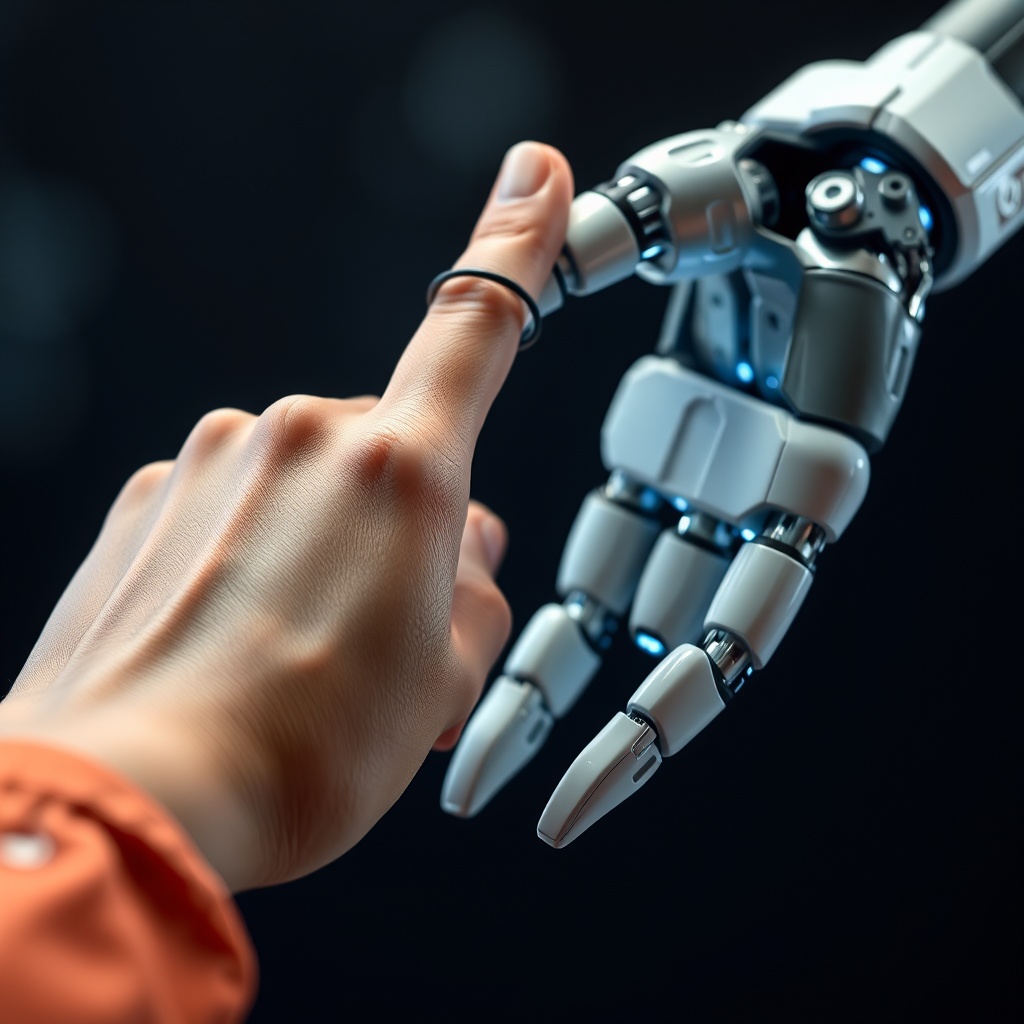
The Impact of AI on Society
Positive Transformations Brought by AI
AI has ushered in unprecedented efficiencies across sectors. In healthcare, algorithms assist in early disease detection, saving lives through timely interventions. We’ve also seen AI streamline logistics, optimising supply chains and reducing waste. These advancements underscore AI’s potential to enhance productivity and improve quality of life on a global scale.
Education, too, benefits from personalised learning platforms powered by AI. Adaptive systems tailor content to individual needs, bridging gaps in traditional teaching methods. From agriculture to finance, AI-driven insights empower decision-makers, fostering innovation and sustainability. The societal impact of these technologies is profound, offering solutions to some of humanity’s most pressing challenges.
Ethical Considerations and Challenges
Despite its benefits, AI raises ethical dilemmas, from bias in algorithms to job displacement. We’ve observed how biased training data can perpetuate inequalities, necessitating rigorous oversight. Privacy concerns also loom large, as AI systems process vast amounts of personal data. Balancing innovation with accountability remains a critical challenge for developers and policymakers alike.
The potential for misuse, such as deepfake technology, further complicates the ethical landscape. Ensuring transparency and fairness in AI systems is paramount to building public trust. As we navigate these challenges, interdisciplinary collaboration will be key to harnessing AI’s potential responsibly, safeguarding both individual rights and societal values.
AI in the Modern World
Current Applications of AI
AI permeates daily life, from virtual assistants like Siri to recommendation engines on streaming platforms. In business, AI-driven analytics enhance decision-making, while in manufacturing, predictive maintenance reduces downtime. We’ve also seen AI revolutionise creative fields, with tools generating art, music, and even literature, blurring the lines between human and machine creativity.
Healthcare continues to be a frontier for AI, with applications ranging from drug discovery to robotic surgery. Autonomous vehicles, though still evolving, promise to redefine transportation. These examples illustrate AI’s versatility, demonstrating its capacity to innovate across diverse domains and improve efficiency in ways previously unimaginable.
Future Prospects of AI Technology
The future of AI holds boundless possibilities, from general AI mimicking human cognition to breakthroughs in quantum computing. We anticipate advancements in natural language understanding, enabling more intuitive human-machine interactions. AI’s role in addressing global challenges, such as climate change and healthcare disparities, will likely expand, driven by interdisciplinary research and ethical frameworks.
Collaboration between AI and other emerging technologies, like blockchain and IoT, will unlock new synergies. As AI becomes more accessible, its democratisation will empower smaller enterprises and individuals. The journey ahead is fraught with challenges, but with thoughtful stewardship, AI promises to reshape our world for the better, fostering innovation and inclusivity.
The Pioneers of AI A Closer Look
John McCarthy and the Lisp Language
John McCarthy, often hailed as the father of AI, revolutionised the field with his creation of the Lisp programming language in 1958. Lisp became the cornerstone of AI research, offering unparalleled flexibility for symbolic reasoning. McCarthy’s work at MIT and Stanford laid the groundwork for decades of innovation, proving that machines could mimic human thought processes. His vision extended beyond mere computation, aiming for machines that could learn and adapt.
McCarthy’s contributions weren’t limited to Lisp; he also coined the term “artificial intelligence” in 1955. His pioneering ideas set the stage for AI’s evolution, inspiring generations of researchers. Despite the complexity of his work, McCarthy remained a vocal advocate for AI’s potential to solve real-world problems. His legacy endures in every AI system that leverages symbolic logic, a testament to his foresight.
Marvin Minsky’s Contributions to AI
Marvin Minsky, another luminary in AI, co-founded the MIT AI Lab in 1959, fostering a collaborative environment for groundbreaking research. His work on neural networks and robotics pushed the boundaries of what machines could achieve. Minsky’s book Perceptrons co-authored with Seymour Papert, critically analysed neural networks, shaping the direction of AI research for years. His interdisciplinary approach bridged gaps between computer science, psychology, and philosophy.
Minsky’s influence extended to popular culture, where he demystified AI for the public. His innovative theories on machine perception and cognition remain foundational. Though some of his predictions were overly optimistic, Minsky’s relentless curiosity and creativity continue to inspire. His belief in AI’s potential to enhance human intelligence reflects the enduring spirit of the field.
The Intersection of AI and Robotics
How AI Powers Modern Robotics
Modern robotics relies heavily on AI to perform tasks that once seemed impossible. From autonomous vehicles to surgical robots, AI algorithms enable machines to perceive, learn, and act in dynamic environments. Machine learning, a subset of AI, allows robots to improve their performance over time by analysing data. This synergy has transformed industries, making robots more adaptable and efficient than ever before.
The integration of AI and robotics isn’t just about automation; it’s about creating intelligent partners. For example, cloud computing enhances robotic capabilities by providing access to vast datasets. This collaboration between hardware and software is redefining what robots can achieve, from warehouse logistics to disaster response. As AI advances, the line between human and machine capabilities continues to blur, opening new frontiers.
Examples of AI-Driven Robots
AI-driven robots are no longer confined to science fiction. Boston Dynamics’ Spot, for instance, navigates complex terrains using AI-powered sensors and algorithms. Similarly, robotic arms in manufacturing plants leverage AI to perform precise, repetitive tasks with minimal human intervention. These innovations highlight the transformative potential of AI in robotics, making them indispensable in sectors like healthcare, agriculture, and logistics.
One standout example is Sophia, the humanoid robot, which uses AI to simulate human expressions and conversations. While such robots are still in their infancy, they offer a glimpse into a future where AI and robotics coexist seamlessly. The rapid advancements in this field underscore the need for ethical considerations, ensuring these technologies benefit society as a whole.
AI in Popular Culture vs Reality
Misconceptions About AI
Popular culture often portrays AI as either a saviour or a dystopian threat, but reality is far more nuanced. Films like “The Terminator” exaggerate AI’s autonomy, while others oversimplify its capabilities. In truth, AI systems are tools designed for specific tasks, lacking consciousness or intent. These misconceptions can lead to unrealistic expectations or unfounded fears, hindering productive discussions about AI’s role in society.
Another common myth is that AI will replace all human jobs. While automation does displace certain roles, it also creates new opportunities. AI excels at repetitive tasks but struggles with creativity and emotional intelligence. Understanding these limitations is crucial for fostering a balanced perspective. By demystifying AI, we can focus on its potential to augment human abilities rather than replace them.
The Reality of AI’s Capabilities
Today’s AI excels in narrow domains, such as image recognition and natural language processing. Systems like GPT-3 can generate human-like text, but they lack true understanding or context. AI’s strength lies in its ability to process vast amounts of data quickly, identifying patterns invisible to humans. However, it remains reliant on human oversight and curated datasets, highlighting the importance of responsible development.
Despite its limitations, AI has already transformed industries like healthcare, where it aids in diagnostics and drug discovery. The key is to view AI as a complement to human expertise, not a replacement. By aligning expectations with reality, we can harness AI’s potential while addressing its challenges. The future of AI lies in collaboration, not competition, between humans and machines.

The Global Race for AI Supremacy
Leading Countries in AI Research
The race for AI dominance is intensifying, with countries like the US, China, and the UK at the forefront. The US leads in foundational research and private-sector innovation, home to tech giants like Google and OpenAI. China, meanwhile, has made AI a national priority, investing heavily in research and infrastructure. The UK excels in academic contributions, with institutions like Cambridge and Oxford driving breakthroughs.
This competition isn’t just about technological prowess; it’s about economic and geopolitical influence. Governments worldwide are prioritising AI in their policies, recognising its transformative potential. However, collaboration remains essential to address global challenges like climate change and healthcare. The balance between competition and cooperation will shape AI’s future, ensuring its benefits are shared equitably.
The Role of Private Companies in AI Development
Private companies are the engines of AI innovation, driving advancements at an unprecedented pace. Firms like DeepMind and NVIDIA are pushing the boundaries of machine learning and hardware. Their investments in research and development yield cutting-edge technologies, from self-driving cars to AI-powered assistants. However, this rapid progress also raises questions about accountability and ethical oversight.
The influence of private companies extends beyond technology; they shape public perception and policy. Initiatives like open-source AI promote transparency, but proprietary systems dominate the market. Striking a balance between innovation and regulation is critical to ensure AI serves the greater good. As the race heats up, the role of private enterprises will be pivotal in defining AI’s trajectory.
The Ethical Development of AI
Principles for Responsible AI
We must prioritise ethical considerations in AI development to ensure systems align with human values. Transparency, fairness, and accountability are foundational principles. By embedding these into AI design, we mitigate risks like bias and misuse. Collaboration between technologists, ethicists, and policymakers is essential. Together, we can create frameworks that guide responsible innovation. Ethical AI isn’t just a goal—it’s a necessity for societal trust and long-term success.
Adopting ethical guidelines ensures AI benefits all, not just a privileged few. For instance, AI’s future hinges on inclusivity and accessibility. Developers must consider diverse perspectives to avoid reinforcing inequalities. Regular audits and stakeholder feedback loops help maintain ethical standards. This proactive approach fosters AI that respects human dignity and rights while driving progress.
The Importance of Transparency in AI Systems
Transparency builds trust in AI by making decision-making processes understandable. Users deserve to know how algorithms affect their lives, from job applications to healthcare. Explainable AI models demystify complex systems, empowering users to question outcomes. This clarity is crucial for accountability, especially in high-stakes applications like criminal justice or finance.
Without transparency, AI risks becoming a black box, eroding public confidence. For example, AI basics highlight the need for clear communication. Open-source initiatives and detailed documentation can bridge the gap between developers and end-users. By prioritising transparency, we ensure AI serves as a tool for empowerment, not exclusion.
AI and the Future of Work
How AI is Changing Job Markets
AI is reshaping industries, automating repetitive tasks while creating new roles. While some jobs may disappear, others will emerge, requiring adaptability. Workers must embrace lifelong learning to stay relevant. Upskilling programmes and reskilling initiatives are vital to this transition. Governments and businesses must collaborate to prepare workforces for an AI-driven economy.
The shift isn’t just about technology—it’s about human potential. For insights, explore types of AI. By focusing on creativity and emotional intelligence, workers can thrive alongside AI. The future isn’t humans versus machines; it’s humans and machines working together for greater efficiency and innovation.
Preparing for an AI-Driven Economy
Preparation starts with education, integrating AI literacy into curricula at all levels. Policymakers must address disparities in access to technology and training. Small businesses, for instance, can leverage business strategies to adapt. Flexibility and resilience will define success in this new era.
Embracing change requires a mindset shift. Workers should view AI as a collaborator, not a competitor. Governments can incentivise innovation while safeguarding labour rights. By fostering a culture of continuous learning, we ensure no one is left behind in the AI revolution.
The Next Frontier in AI Research
Emerging Areas of AI Study
AI research is expanding into uncharted territories like quantum computing and neurosymbolic AI. These fields promise breakthroughs in problem-solving and efficiency. Researchers are also exploring AI’s role in climate science and healthcare. The potential for societal impact is immense, but so are the ethical challenges. Balancing innovation with responsibility will define the next decade of progress.
Interdisciplinary collaboration is key to unlocking AI’s full potential. For a deeper dive, consider AI’s dual nature. By pooling expertise across fields, we can tackle global challenges like disease and inequality. The future of AI lies not just in technology, but in its thoughtful application.
The Quest for General AI
General AI, capable of human-like reasoning, remains the holy grail of research. Achieving it requires advances in cognition, learning, and adaptability. While narrow AI excels in specific tasks, general AI would revolutionise industries. However, it also raises profound ethical questions about control and autonomy.
Researchers must proceed with caution, prioritising safety and alignment with human values. The journey toward general AI is as much about philosophy as it is about technology. By grounding our ambitions in ethical principles, we can navigate this frontier responsibly.
Frequently Asked Questions
What are the core principles of ethical AI?
Ethical AI revolves around transparency, fairness, accountability, and inclusivity. These principles ensure AI systems align with human values and avoid harm. Developers must prioritise these to build trust and foster responsible innovation. Regular audits and diverse stakeholder input are crucial for maintaining ethical standards.
How does AI impact job markets?
AI automates repetitive tasks but also creates new roles requiring advanced skills. Workers must adapt through upskilling and reskilling. The shift emphasises creativity and emotional intelligence, areas where humans excel. Collaboration between governments, businesses, and educators is key to preparing for this change.
Why is transparency important in AI?
Transparency ensures users understand how AI decisions affect them, fostering trust and accountability. Explainable models demystify complex algorithms, empowering users to question outcomes. Without transparency, AI risks becoming opaque and untrustworthy, undermining its potential benefits.
What is the future of AI research?
AI research is exploring quantum computing, neurosymbolic AI, and general AI. These areas promise breakthroughs but also pose ethical challenges. Interdisciplinary collaboration and responsible innovation will shape the next decade of progress, ensuring AI serves humanity’s best interests.
