

What is AI
Artificial Intelligence, or AI, is like giving a computer a brain that can learn and make decisions. Imagine teaching your dog new tricks—AI works similarly, but instead of treats, it uses data and algorithms. It’s not magic, just clever programming that helps machines solve problems, recognise patterns, and even chat with us like a friend.
While AI can do impressive things, it’s not quite like human intelligence. We think creatively and feel emotions, but AI follows rules and learns from examples. For instance, when you ask Siri or Alexa for the weather, they’re using AI to understand your question and fetch the answer. It’s a tool, not a replacement for human smarts.
Defining Artificial Intelligence
AI is the science of making machines smart. It’s about creating systems that can perform tasks usually requiring human intelligence, like understanding language or playing chess. These systems learn from experience, improving over time without being explicitly programmed for every scenario. Think of it as a digital apprentice that gets better with practice.
From recommending movies on Netflix to filtering spam emails, AI is everywhere. It’s not just for tech experts—kids interact with AI daily, often without realising it. For example, when YouTube suggests videos you might like, that’s AI at work. It’s a quiet helper, making life a little easier and more personalised.
AI vs Human Intelligence
Humans and AI think differently. We use intuition and emotions, while AI relies on logic and data. A child can recognise a cat in a photo after seeing a few examples, but an AI needs thousands of images to learn the same skill. However, AI excels at tasks like crunching numbers or analysing vast amounts of information—something humans find tedious.
Despite its strengths, AI lacks common sense. It doesn’t understand context like we do. For instance, if you say, “It’s raining cats and dogs,” AI might picture pets falling from the sky! That’s why human oversight is crucial. AI is a powerful tool, but it’s only as good as the people who design and guide it.
Simple Examples of AI in Everyday Life
AI isn’t just for futuristic robots—it’s part of our daily routines. When you play a game against a computer opponent, that’s AI. When your phone’s keyboard predicts your next word, that’s AI too. Even the filters on social media apps use AI to enhance photos or add fun effects. It’s like having a tiny, invisible assistant in your pocket.
Another example is smart home devices. A thermostat that learns your schedule or a fridge that suggests recipes based on its contents—both use AI. These technologies are designed to make life smoother, and they’re becoming more intuitive every day. For more insights, check out our blog on how AI is shaping the future.
The History of AI
The Origins of Artificial Intelligence
The idea of artificial intelligence isn’t new. In fact, it dates back to ancient myths and stories about mechanical beings. However, the modern concept of AI began in the 1950s when scientists like Alan Turing asked, “Can machines think?” This question sparked the field of AI research. Early computers were simple, but they laid the groundwork for the sophisticated systems we have today.
One of the first AI programs, called the Logic Theorist, was created in 1956. It could solve mathematical problems, mimicking human reasoning. This was a huge step forward. Over time, researchers developed more advanced algorithms, and AI slowly evolved from a theoretical idea into a practical tool. The journey was filled with challenges, but each breakthrough brought us closer to the AI we know now.
Major Milestones in AI Development
AI has come a long way since its early days. In the 1990s, IBM’s Deep Blue defeated chess champion Garry Kasparov, showing that machines could outperform humans in complex tasks. Then, in 2011, IBM’s Watson won Jeopardy!, proving AI could understand and process natural language. These milestones demonstrated AI’s potential to solve real-world problems.
More recently, AI has become part of our daily lives. From voice assistants like Siri to recommendation systems on Netflix, AI is everywhere. Advances in machine learning and big data have accelerated progress, making AI smarter and more accessible. The future holds even more exciting possibilities as AI continues to evolve and transform industries.
How AI Works
The Basics of Machine Learning
At the heart of AI is machine learning, a method that allows computers to learn from data. Instead of being explicitly programmed, machines use algorithms to identify patterns and make decisions. For example, a machine learning model can learn to recognise cats in photos by analysing thousands of cat images. The more data it processes, the better it gets.
Machine learning comes in different forms. Supervised learning uses labelled data to train models, while unsupervised learning finds hidden patterns in unlabelled data. Reinforcement learning, inspired by how humans learn from rewards, is used in robotics and gaming. These techniques power everything from spam filters to self-driving cars, making AI incredibly versatile.
Understanding Algorithms
Algorithms are the step-by-step instructions that guide AI systems. Think of them as recipes for solving problems. Simple algorithms might sort a list of numbers, while complex ones can predict weather patterns. The key is choosing the right algorithm for the task. For instance, decision trees are great for classification, while neural networks excel at recognising images.
Algorithms are constantly improving. Researchers develop new ones to handle bigger datasets and more complex tasks. This progress is what makes AI so powerful. Whether it’s diagnosing diseases or translating languages, algorithms are the invisible force behind AI’s capabilities.
Data The Fuel for AI
Data is what makes AI possible. Without it, machines wouldn’t have anything to learn from. AI systems analyse vast amounts of data to find patterns and make predictions. For example, a weather app uses historical data to forecast rain. The more accurate and diverse the data, the better the AI performs.
However, data isn’t always perfect. Biases in data can lead to unfair outcomes, like facial recognition systems that struggle with certain skin tones. That’s why it’s important to use high-quality, representative data. As AI grows, so does the need for ethical data practices to ensure fairness and accuracy.
Types of AI
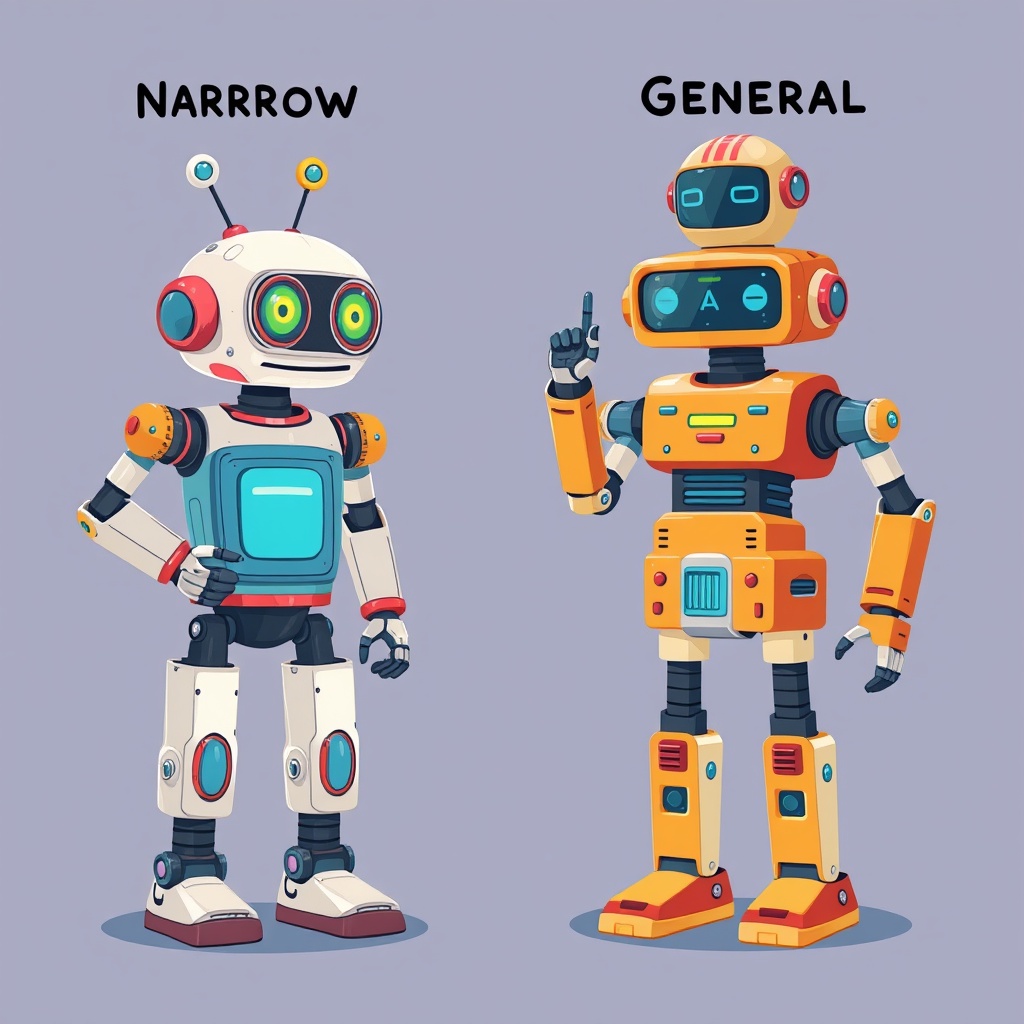
Narrow AI vs General AI
Most AI today is Narrow AI, designed for specific tasks like playing chess or recommending songs. It’s highly skilled in one area but can’t do anything else. For example, a chatbot can answer questions but can’t drive a car. Narrow AI is everywhere, from virtual assistants to fraud detection systems, making our lives easier in countless ways.
General AI, on the other hand, is more like human intelligence. It can learn, reason, and adapt to new situations. While this type of AI doesn’t exist yet, scientists are working toward it. Achieving General AI would be a monumental leap, but it also raises important ethical questions about control and safety.
Reactive Machines and Beyond
Reactive machines are the simplest form of AI. They react to inputs without memory or past experiences. IBM’s Deep Blue is a classic example—it could analyse chess moves but didn’t learn from previous games. While limited, reactive machines are incredibly fast and reliable for tasks like filtering spam.
More advanced AI, like self-driving cars, uses memory and learning to improve over time. These systems combine multiple AI techniques to handle complex environments. As AI continues to advance, we’ll see even smarter machines capable of creativity and problem-solving, pushing the boundaries of what’s possible.
AI in Your Home
Smart Assistants Like Siri and Alexa
Imagine having a friend who can answer your questions, play your favourite songs, or even tell you a joke—all without being in the same room. That’s what smart assistants like Siri and Alexa do! These clever helpers use AI to understand your voice and respond in ways that feel almost human. Whether you’re asking about the weather or setting a reminder, AI makes it all possible. It’s like magic, but it’s really just clever technology working behind the scenes.
These assistants learn from every interaction, getting better at predicting what you need over time. They can even control other smart devices in your home, like turning off lights or adjusting the thermostat. While they’re not perfect, their ability to adapt and improve is a great example of how AI is becoming part of our everyday lives. It’s a small glimpse into a future where technology feels more intuitive and helpful.
AI in Toys and Games
Have you ever played with a toy that seems to know what you’re thinking? Many modern toys and games use AI to create interactive experiences. From robots that respond to your commands to board games that adapt to your skill level, AI is making playtime more exciting. These toys use algorithms to learn from your actions, making each game unique and personalised.
For example, some stuffed animals can recognise your voice and hold simple conversations, while educational games adjust their difficulty based on how well you’re doing. AI in toys isn’t just about fun—it’s also a great way to learn. By interacting with these smart devices, children can develop problem-solving skills and even get a head start on understanding how technology works. It’s learning disguised as play!
AI in Schools
Educational Apps Powered by AI
AI is transforming the way we learn, and educational apps are at the forefront of this change. These apps use AI to tailor lessons to each student’s needs, making learning more effective and engaging. For instance, if you’re struggling with maths, an AI-powered app might offer extra practice problems or explain concepts in a different way. It’s like having a personal tutor available anytime.
Some apps even use speech recognition to help with language learning, correcting pronunciation in real time. Others analyse your progress and suggest new topics to explore. By adapting to individual learning styles, AI ensures that no one gets left behind. It’s a powerful tool that’s helping students of all ages achieve their full potential, one lesson at a time.
How AI Can Help with Homework
Homework can be tough, but AI is here to lend a hand. Tools like AI-powered calculators or writing assistants can help you tackle tricky problems and improve your work. For example, some apps scan your handwritten notes and turn them into digital text, making it easier to organise and revise. Others provide instant feedback on essays, pointing out grammar mistakes or suggesting better word choices.
AI can also help with research by summarising articles or finding reliable sources. While it’s important to think for yourself, these tools can save time and reduce frustration. They’re not about doing the work for you—they’re about making the process smoother and more efficient. With AI, homework becomes less of a chore and more of a chance to learn and grow.
AI in Entertainment
AI in Movies and Video Games
Have you ever wondered how video game characters seem to react to your moves? That’s AI at work! In games, AI controls non-player characters, making them behave in realistic ways. Whether it’s a villain plotting against you or a friendly guide offering hints, AI brings these characters to life. It’s what makes games feel dynamic and immersive.
In movies, AI helps create stunning visual effects and even generates entire scenes. Some filmmakers use AI to analyse scripts and predict audience reactions, ensuring their stories resonate. From blockbusters to indie films, AI is changing how stories are told. It’s a creative partner that’s expanding the boundaries of what’s possible in entertainment.
Creating Art with AI
AI isn’t just for logic and calculations—it’s also a budding artist! Tools like AI-powered drawing apps can generate artwork based on your ideas. You might describe a scene, and the AI will create a picture for you. Some artists even collaborate with AI, using it to explore new styles and techniques. It’s a fascinating blend of human creativity and machine intelligence.
Music is another area where AI shines. Programs can compose melodies or even mimic the style of famous composers. While AI-generated art raises questions about originality, it also opens up exciting possibilities. Whether you’re a seasoned artist or just starting out, AI can inspire and assist, making creativity more accessible to everyone.

The Future of AI
Predictions for AI Development
The future of AI is full of possibilities, and experts predict it will become even more integrated into our lives. Imagine AI doctors diagnosing illnesses faster or AI teachers customising lessons for every student. Self-driving cars, powered by AI, could make roads safer, while smart cities might use AI to reduce pollution and save energy. The potential is enormous, and the pace of innovation shows no signs of slowing down.
However, with great power comes great responsibility. As AI advances, we’ll need to address ethical questions, like privacy and fairness. But if we get it right, AI could help solve some of the world’s biggest challenges. It’s a future where technology doesn’t just assist us—it empowers us to achieve more than we ever thought possible.
How AI Might Change the World
AI has the power to transform industries, from healthcare to agriculture. In medicine, AI could analyse vast amounts of data to discover new treatments. Farmers might use AI to monitor crops and predict weather patterns, ensuring food security. Even space exploration could benefit, with AI helping to analyse distant planets or pilot spacecraft. The impact of AI will be felt in every corner of our lives.
But the most exciting changes might be the ones we can’t yet imagine. Just as the internet revolutionised communication, AI could unlock entirely new ways of living and working. It’s a journey we’re all on together, and the destination is as thrilling as it is uncertain. One thing’s for sure: the future with AI is going to be anything but ordinary.
Learning About AI
Fun Ways to Learn AI Concepts
We can make learning about AI exciting by turning it into a game. Imagine teaching a robot to recognise shapes or colours—this is how machine learning works! There are interactive apps and toys designed to introduce AI concepts in a playful way. For example, coding games like Scratch allow children to create simple AI projects. These tools make complex ideas feel like fun puzzles to solve.
Another engaging method is storytelling. Books and cartoons often feature AI characters, sparking curiosity. By discussing how these fictional AIs work, we can draw parallels to real-world technology. Workshops and online courses tailored for kids also offer hands-on experiences. These activities demystify AI, showing it’s not just for scientists but for anyone curious about how things work.
Resources for Young AI Enthusiasts
For young minds eager to explore AI, there are plenty of resources available. Websites like Bennetts Design offer beginner-friendly guides. Libraries often stock books that break down AI into simple terms. Online platforms such as Khan Academy provide free courses on coding and AI basics. These resources are designed to be accessible, ensuring children can learn at their own pace.
Parents and teachers can also play a role by introducing AI-themed toys and kits. These tools combine play with learning, making the subject less intimidating. Local science museums sometimes host AI exhibits, offering interactive displays. By combining these resources, we can nurture a child’s interest in AI, paving the way for future learning.
Creating Simple AI Projects
Easy AI Projects for Beginners
Starting with simple projects is a great way to understand AI. One fun idea is creating a chatbot using free online tools. These chatbots can answer basic questions, teaching how AI processes language. Another project involves training a computer to recognise images, like sorting photos of cats and dogs. These tasks introduce the basics of machine learning without needing advanced skills.
For a hands-on approach, children can build a voice-controlled assistant using platforms like Raspberry Pi. This project shows how AI powers devices like Alexa. By breaking down these projects into small steps, we make AI feel achievable. The key is to start small and celebrate each success, building confidence along the way.
Tools to Build Your First AI
There are many tools designed to help beginners create their first AI. Platforms like Teachable Machine allow kids to train models without writing code. Scratch and Blockly offer visual programming interfaces, making coding less daunting. These tools are free and user-friendly, perfect for young learners.
For those ready to dive deeper, Python libraries like TensorFlow provide more advanced options. Online tutorials and communities offer support, ensuring no one feels stuck. By using these tools, children can see their ideas come to life, turning abstract concepts into tangible projects. This hands-on experience is invaluable for understanding AI’s potential.
The Ethics of AI
Understanding AI and Privacy
As we explore AI, it’s important to discuss privacy. AI systems often rely on data, and we must teach children about responsible data use. For example, explaining how personal information is collected and used helps them understand the risks. Simple analogies, like comparing data to secrets shared with friends, make these concepts relatable.
We can also highlight the importance of consent. Just as we ask permission before borrowing a toy, AI should only use data with permission. Discussing real-world examples, like smart assistants, reinforces these lessons. By framing privacy as a shared responsibility, we empower children to think critically about technology.
The Importance of Responsible AI Use
Responsible AI use means considering how it affects others. We can teach children to think about fairness—for example, ensuring AI doesn’t favour one group over another. Discussing biases in AI, like facial recognition errors, helps them understand these challenges. These conversations encourage empathy and ethical thinking.
Another key lesson is transparency. Explaining how AI makes decisions demystifies the technology. Children can learn that AI isn’t magic but a tool created by people. By emphasising responsibility, we prepare them to use AI thoughtfully in the future.
AI and Robots
How AI Powers Robots
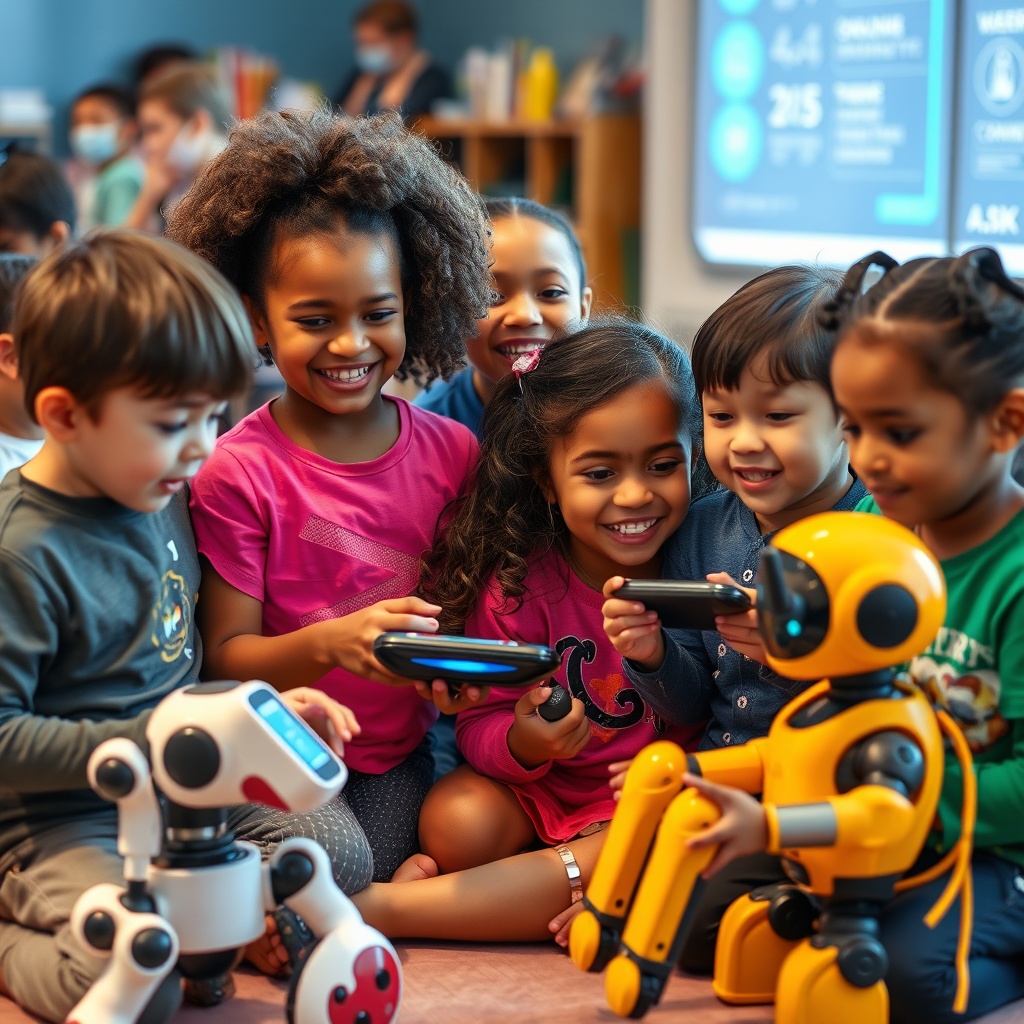
AI is the brain behind many robots, enabling them to perform tasks autonomously. For example, robotic vacuum cleaners use AI to navigate rooms and avoid obstacles. Children can see this in action by observing how these devices learn their surroundings. This practical example shows how AI translates into real-world applications.
Another fascinating area is robotic pets, which respond to touch and voice commands. These toys use AI to mimic real animals, making them interactive companions. By exploring these examples, children can grasp how AI brings robots to life. It’s a fun way to connect abstract concepts to everyday experiences.
Famous Robots and Their AI
Some robots have become famous for their advanced AI. For instance, Sophia the robot can hold conversations and express emotions. Discussing these robots sparks curiosity about how AI enables such human-like interactions. Movies like Wall-E also introduce the idea of robots with personalities, blending entertainment with education.
Robots like Boston Dynamics’ Spot demonstrate agility and problem-solving skills. These examples show the diverse capabilities of AI-powered robots. By learning about these innovations, children can appreciate the creativity and engineering behind them. It’s a great way to inspire future inventors.
AI in Nature
AI Inspired by Animals
Nature has always been a rich source of inspiration for technology, and AI is no exception. Scientists study how animals solve problems to create smarter AI systems. For example, ants’ ability to find the shortest path to food has inspired algorithms for optimising routes in logistics. Similarly, the way birds flock together has led to advancements in swarm robotics, where multiple robots work together seamlessly.
These bio-inspired AI systems are not just fascinating; they’re incredibly practical. By mimicking nature, we can develop AI that’s more efficient and adaptable. Whether it’s the echolocation of bats improving sonar technology or the neural networks of bees enhancing machine learning, the natural world offers endless possibilities for innovation. It’s a reminder that sometimes, the best solutions are already around us.
Using AI to Protect the Environment
AI is playing a crucial role in safeguarding our planet. From tracking endangered species to monitoring deforestation, AI tools help us understand and address environmental challenges. For instance, AI-powered drones can analyse vast areas of forest to detect illegal logging activities, while machine learning models predict climate patterns to aid conservation efforts. These technologies empower us to act before it’s too late.
Beyond monitoring, AI also aids in restoring ecosystems. Projects like coral reef restoration use AI to identify the healthiest areas for replanting, ensuring long-term success. By combining AI with environmental science, we’re not just observing nature—we’re actively working to heal it. It’s a powerful partnership that highlights how technology can be a force for good.
AI in Space Exploration
How AI Helps Explore Space
Space exploration is one of the most exciting frontiers for AI. Autonomous rovers like NASA’s Perseverance use AI to navigate Mars’ rugged terrain, making decisions without human intervention. AI also analyses vast amounts of astronomical data, identifying patterns that might indicate new planets or cosmic phenomena. This speeds up discoveries that would take humans years to uncover manually.
AI’s role extends to mission planning and safety. It predicts equipment failures and optimises fuel usage, ensuring missions stay on track. With AI, we’re not just exploring space more efficiently; we’re pushing the boundaries of what’s possible. The cosmos is vast, but AI helps us make sense of it, one discovery at a time.
AI and the Search for Alien Life
The search for extraterrestrial life is another area where AI shines. Machine learning algorithms sift through radio signals from space, filtering out noise to identify potential signs of intelligent life. Projects like SETI (Search for Extraterrestrial Intelligence) rely on AI to process data faster and more accurately than ever before. It’s like having a super-powered assistant in the quest for cosmic neighbours.
AI also helps scientists interpret data from exoplanets, assessing their potential to support life. By analysing atmospheric compositions and surface conditions, AI narrows down the most promising candidates for further study. While we haven’t found definitive proof yet, AI brings us closer to answering one of humanity’s oldest questions: Are we alone in the universe?
Debunking AI Myths
Common Misconceptions About AI
Many people believe AI will soon surpass human intelligence and take over the world, but this is far from the truth. Current AI, known as narrow AI, is designed for specific tasks and lacks general intelligence. It can’t think or feel like humans. Another myth is that AI is infallible. In reality, AI systems learn from data, and if the data is biased, so are the results.
Understanding these limitations is key to using AI responsibly. While AI can outperform humans in certain areas, it’s a tool, not a replacement. By demystifying these misconceptions, we can appreciate AI’s potential without fearing it. The goal isn’t to create superintelligence but to enhance human capabilities in meaningful ways.
The Truth Behind AI Superintelligence
The idea of AI superintelligence—machines with intellect far beyond humans—is a popular topic in science fiction. However, achieving such a level of intelligence is still theoretical. Experts debate whether it’s even possible, and if so, how to ensure it aligns with human values. For now, AI remains a powerful assistant, not an autonomous entity with its own agenda.
Rather than fearing superintelligence, we should focus on developing ethical AI frameworks. This ensures AI benefits society without unintended consequences. The truth is, AI’s future depends on how we guide its evolution. By prioritising transparency and accountability, we can harness its potential while safeguarding humanity’s interests.
Frequently Asked Questions
Can AI really think like humans?
No, AI doesn’t think like humans. Current AI systems, known as narrow AI, excel at specific tasks but lack consciousness or understanding. They process data and identify patterns, but they don’t experience thoughts or emotions. AI is a tool designed to augment human capabilities, not replicate human intelligence.
How is AI used to protect the environment?
AI helps protect the environment by monitoring ecosystems, tracking wildlife, and predicting climate changes. For example, AI-powered drones detect illegal deforestation, while machine learning models analyse data to optimise conservation efforts. These technologies enable faster, more accurate responses to environmental threats, making AI a valuable ally in sustainability.
Will AI replace human jobs?
AI will automate certain tasks, but it’s unlikely to replace jobs entirely. Instead, it will transform industries by handling repetitive tasks, allowing humans to focus on creative and complex work. The key is adapting to these changes by developing new skills and embracing AI as a collaborative tool rather than a competitor.
Is AI dangerous?
AI isn’t inherently dangerous, but its misuse can pose risks. Biased data or unethical applications can lead to harmful outcomes. That’s why responsible development and regulation are crucial. By prioritising transparency and accountability, we can ensure AI benefits society while minimising potential dangers.
