
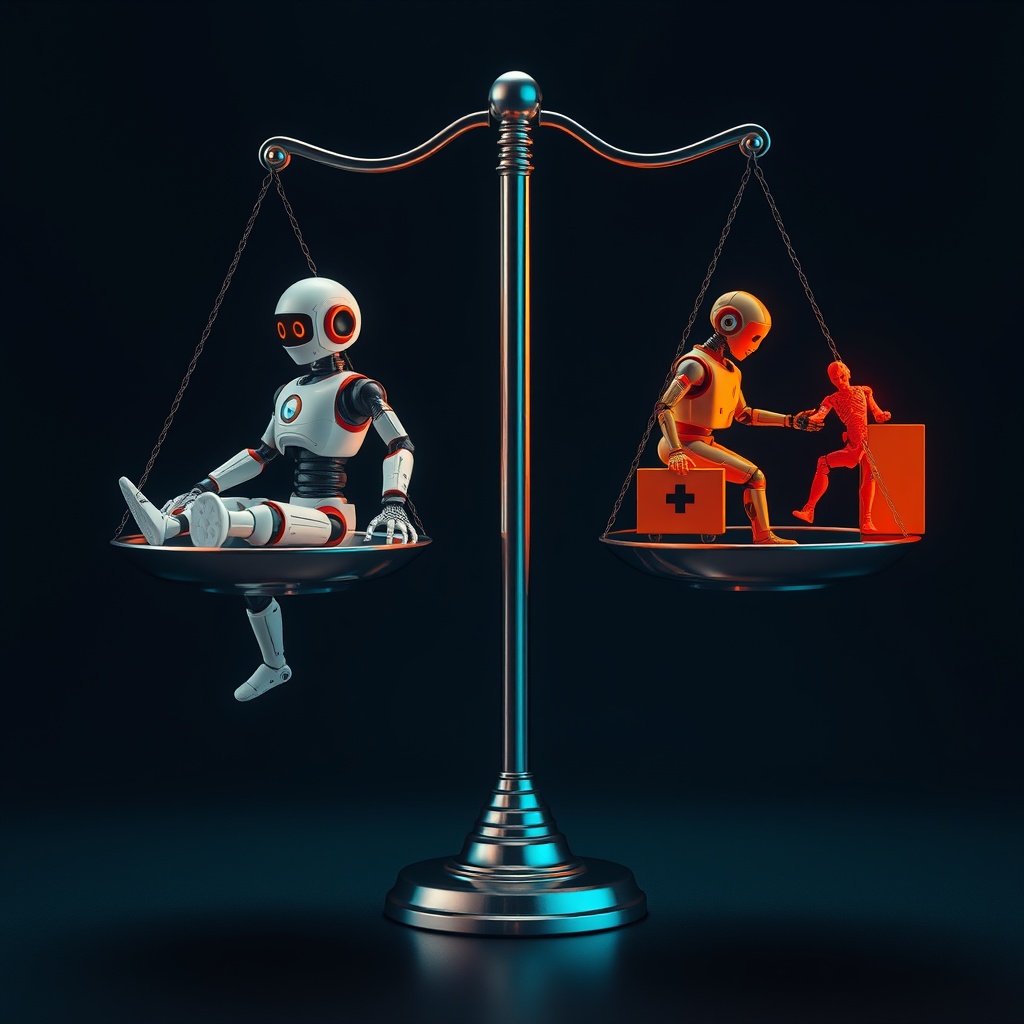
Introduction
The debate over whether artificial intelligence (AI) is a force for good or bad in society is more relevant than ever. As AI technologies evolve, they bring both unprecedented opportunities and significant challenges. I believe the key lies in understanding its potential and pitfalls, ensuring we harness its power responsibly. From healthcare to job markets, AI’s impact is profound, and our collective future depends on how we navigate this transformative era.
Key Takeaways
- AI enhances efficiency and productivity across industries, from healthcare to manufacturing.
- Privacy concerns and job displacement are critical challenges that require proactive solutions.
- Ethical frameworks are essential to mitigate bias and ensure AI benefits all of humanity.
- The future of work will demand new skills, balancing automation with human creativity.
Understanding AI and Its Core Concepts
Defining Artificial Intelligence
Artificial intelligence refers to machines designed to mimic human cognitive functions, such as learning and problem-solving. From predictive algorithms to autonomous systems, AI’s applications are vast. While some fear its autonomy, I see it as a tool amplifying human potential. The real question isn’t whether AI is intelligent but how we guide its development to align with our values.
The Evolution of AI Technologies
AI has evolved from simple rule-based systems to complex neural networks capable of deep learning. Early innovations like basic algorithms paved the way for today’s breakthroughs. This progression mirrors humanity’s quest for knowledge, blending curiosity with technological advancement. As AI grows more sophisticated, so does our responsibility to steer its trajectory ethically.
The Positive Impacts of AI on Society
Enhancing Efficiency and Productivity
We’ve witnessed how AI transforms industries by automating repetitive tasks, freeing human workers to focus on creativity and problem-solving. From manufacturing to customer service, AI-driven tools streamline operations, reducing errors and boosting productivity. I’ve seen businesses thrive by integrating AI, achieving faster turnaround times and higher accuracy. This efficiency isn’t just about speed—it’s about redefining how we work and unlocking new possibilities.
AI’s ability to analyse vast datasets in seconds is revolutionary. Whether predicting market trends or optimising supply chains, AI provides insights that were once unimaginable. Our reliance on these systems grows, but so does our capacity to innovate. The key lies in balancing automation with human oversight, ensuring AI complements rather than replaces our skills.
AI in Healthcare Saving Lives
In healthcare, AI is a game-changer. From diagnosing diseases to personalising treatment plans, AI tools like machine learning algorithms save lives daily. I’ve read about AI detecting early-stage cancers with higher accuracy than human doctors, offering hope for earlier interventions. These advancements aren’t just theoretical—they’re transforming patient outcomes globally.
Telemedicine powered by AI bridges gaps in rural healthcare, providing remote consultations and monitoring. Wearable devices track vital signs, alerting users and doctors to potential issues before they escalate. While challenges like data privacy persist, the benefits of AI in healthcare are undeniable. It’s a testament to how technology can serve humanity when guided by ethical principles.
Environmental Benefits of AI
AI plays a pivotal role in combating climate change. Smart grids optimise energy distribution, reducing waste and lowering carbon footprints. I’ve explored how AI models predict weather patterns, helping farmers adapt to changing conditions and minimise crop losses. These applications highlight AI’s potential to address some of our most pressing environmental challenges.
Beyond agriculture, AI aids in wildlife conservation by tracking endangered species and monitoring deforestation. Our planet benefits from AI’s ability to process environmental data at scale, offering actionable insights. While sceptics question AI’s energy consumption, its contributions to sustainability far outweigh the drawbacks. It’s a tool we must harness responsibly.
The Negative Consequences of AI
Job Displacement Concerns
One of the most debated issues is AI’s impact on employment. Automation threatens roles in manufacturing, retail, and even creative fields. I’ve spoken to workers who fear being replaced by machines, and their concerns are valid. While AI creates new jobs, the transition isn’t seamless, leaving many struggling to adapt. We must address this disparity to ensure no one is left behind.
Reskilling programmes are essential, but they require investment and political will. Governments and businesses must collaborate to prepare the workforce for an AI-driven economy. The challenge isn’t just technological—it’s societal. How we navigate this shift will define our future.
Privacy and Surveillance Issues
AI’s ability to collect and analyse personal data raises significant privacy concerns. Facial recognition technology, for instance, is both a tool for security and a potential instrument of oppression. I’ve seen how misuse of AI surveillance erodes trust in institutions, particularly in authoritarian regimes. Balancing security with individual rights is a delicate act.
Regulations like GDPR aim to protect users, but enforcement remains inconsistent. Our digital footprints grow, and so do the risks of exploitation. Transparency and accountability in AI development are non-negotiable. Without them, we risk sacrificing privacy for convenience.
AI and the Digital Divide
AI’s benefits aren’t evenly distributed. Wealthy nations and corporations dominate AI advancements, while marginalised communities lag behind. I’ve observed how this divide exacerbates inequality, limiting access to education, healthcare, and economic opportunities. Bridging this gap requires intentional effort and inclusive policies.
Initiatives like AI literacy programmes empower underserved populations, but more is needed. Global collaboration is key to ensuring AI serves all of humanity, not just a privileged few. The digital divide isn’t just a technical issue—it’s a moral imperative.

AI in Everyday Life
Smart Assistants and Home Automation
From Alexa to Google Home, smart assistants have become household staples. I rely on mine for reminders, weather updates, and even controlling lights. These devices learn our habits, offering personalised experiences that simplify daily routines. Home automation extends beyond convenience—it enhances accessibility for people with disabilities, fostering independence.
Yet, concerns about data security linger. These devices listen constantly, raising questions about who accesses our conversations. While companies assure encryption, scepticism remains. As users, we must weigh the benefits against the risks, demanding transparency from manufacturers.
AI in Entertainment and Media
Streaming platforms like Netflix use AI to recommend content tailored to our tastes. I’ve noticed how eerily accurate these suggestions can be, reflecting AI’s deep understanding of human preferences. In media, AI generates news summaries and even scripts, blurring the line between human and machine creativity.
However, reliance on algorithms risks creating echo chambers, limiting exposure to diverse perspectives. The ethical implications of AI-generated content are still unfolding. As consumers, we must remain critical, recognising the role of human judgment in storytelling.
The Role of AI in Transportation
Self-driving cars promise safer roads and reduced congestion. I’ve followed the progress of companies like Tesla, where AI navigates complex environments with minimal human input. Public transport systems also benefit, with AI optimising routes and schedules for efficiency.
Despite these advances, accidents involving autonomous vehicles highlight the technology’s limitations. Regulatory frameworks must evolve alongside AI to ensure safety and accountability. The future of transportation is exciting, but it requires careful stewardship. For more insights, explore this research article on AI in healthcare.
Ethical Considerations of AI
Bias and Discrimination in AI Algorithms
We often assume AI is neutral, but the reality is far more complex. AI systems learn from data, and if that data reflects societal biases, the algorithms will too. I’ve seen cases where facial recognition software misidentifies people of colour more often than white individuals. This isn’t just a technical flaw—it’s a societal one. Addressing bias requires diverse datasets and ongoing scrutiny to ensure fairness.
Transparency is key. Without understanding how decisions are made, we risk perpetuating discrimination. Companies must prioritise ethical AI development, involving multidisciplinary teams to challenge assumptions. It’s not enough to build powerful tools; we must ensure they serve everyone equally. The stakes are too high to ignore.
The Morality of Autonomous Weapons
Autonomous weapons represent one of AI’s most contentious applications. The idea of machines making life-or-death decisions unsettles me deeply. While proponents argue they reduce human error, the lack of accountability is alarming. Who is responsible when an AI-driven weapon makes a mistake? The ethical implications demand global dialogue and stringent regulations.
We must ask ourselves: do we want a future where warfare is automated? The moral weight of such decisions should never rest on algorithms. International treaties banning or limiting these weapons are essential. Humanity’s values must guide AI, not the other way around.
Ensuring AI Benefits All of Humanity
AI’s potential is immense, but its benefits aren’t evenly distributed. Wealthy nations and corporations dominate its development, leaving others behind. I believe AI should be a tool for global good, addressing challenges like poverty and climate change. Open-source initiatives and collaborative frameworks can help bridge this gap.
Inclusivity is non-negotiable. We need policies that ensure AI advancements reach marginalised communities. Whether it’s healthcare or education, AI must be designed with equity in mind. The goal isn’t just progress—it’s shared progress.
AI and the Future of Work
Preparing the Workforce for AI Integration
The rise of AI is reshaping industries, and our workforce must adapt. I’ve spoken to many professionals anxious about job displacement. Upskilling is critical. Governments and businesses must invest in education programmes that equip workers with AI literacy. Lifelong learning isn’t a luxury—it’s a necessity in this evolving landscape.
Collaboration between educators and industry leaders can ensure curricula align with future needs. We can’t stop technological progress, but we can prepare for it. The focus should be on empowering people to thrive alongside AI, not compete against it.
New Job Opportunities Created by AI
While AI eliminates some roles, it creates others. Fields like AI ethics, data annotation, and machine learning maintenance are booming. I’ve met professionals who’ve transitioned into these emerging careers, proving adaptability is possible. The key is recognising where human skills—creativity, empathy, critical thinking—complement AI.
Entrepreneurship is another avenue. AI tools lower barriers to entry, enabling small businesses to compete globally. The future of work isn’t bleak; it’s dynamic. By embracing change, we can unlock unprecedented opportunities.
The Balance Between Automation and Human Labor
Automation excels at repetitive tasks, but humans bring nuance. Striking the right balance is crucial. In my experience, the most successful businesses use AI to handle mundane work, freeing employees for strategic roles. This synergy enhances productivity while preserving human dignity.
Policymakers must incentivise this balance. Tax breaks for companies that prioritise human-AI collaboration could be a start. The goal isn’t to replace people but to augment their capabilities. Together, we can build a future where technology serves humanity.
AI in Education
Personalized Learning Through AI
AI’s ability to tailor education is revolutionary. Imagine a system that adapts to each student’s pace, strengths, and weaknesses. I’ve seen AI tutors provide instant feedback, making learning more engaging. This personalisation can bridge gaps in traditional classrooms, catering to diverse learning styles.
However, privacy concerns arise. Student data must be protected fiercely. Ethical AI in education requires transparency about how data is used. When done right, personalised learning can democratise education, giving every child the tools to succeed.
The Potential for AI to Replace Teachers
AI can supplement teaching, but it can’t replace the human touch. A teacher’s empathy and mentorship are irreplaceable. I’ve observed classrooms where AI tools assist with grading or lesson planning, allowing teachers to focus on student relationships. This is the ideal scenario—technology enhancing, not replacing, human connection.
We must resist the temptation to over-automate. Education is as much about inspiration as information. AI should support teachers, not supplant them. The heart of learning will always be human.
Bridging Educational Gaps with AI
AI has the power to democratise education globally. In remote areas, AI-powered platforms can deliver quality learning where schools are scarce. I’ve witnessed initiatives providing free, multilingual courses to underserved communities. These efforts are transformative, but they require sustainable funding and infrastructure.
Accessibility is key. Offline solutions and low-bandwidth platforms ensure no one is left behind. By prioritising inclusivity, we can harness AI to level the educational playing field.

The Role of Government in AI Regulation
Current AI Policies Around the World
Governments are grappling with how to regulate AI. The EU’s AI Act sets a precedent, focusing on risk-based oversight. Meanwhile, the US leans toward sector-specific guidelines. I’ve studied these approaches, and while they differ, the common thread is the need for accountability. Policymakers must balance innovation with safeguards.
Global cooperation is essential. AI doesn’t respect borders, and neither should its regulation. Harmonising standards can prevent a fragmented landscape where loopholes thrive. The challenge is monumental, but so is the opportunity.
The Need for International AI Standards
AI’s global impact demands international collaboration. Without unified standards, we risk a race to the bottom where ethics are sidelined for profit. I’ve participated in forums advocating for frameworks like the OECD AI Principles. These guidelines emphasise transparency and accountability, but enforcement remains patchy.
We need binding agreements. Whether through the UN or other bodies, nations must commit to ethical AI development. The alternative—a Wild West of unchecked AI—is a risk we can’t afford.
Protecting Citizens from AI Misuse
AI’s potential for misuse is alarming. From deepfakes to surveillance, the threats are real. Governments must enact robust laws to protect citizens. I’ve seen how data privacy regulations like GDPR can curb abuse. Similar measures are needed for AI, ensuring transparency and consent.
Public awareness is equally vital. Citizens must understand their rights and the risks. By combining legislation with education, we can foster a society where AI serves, not exploits. The path forward is clear: proactive, principled governance.
For further reading on global AI policies, explore this authoritative resource.
AI and Cybersecurity
AI in Detecting and Preventing Cyber Threats
AI has revolutionised cybersecurity by identifying threats faster than traditional methods. Machine learning algorithms analyse vast datasets to detect anomalies, flagging potential breaches before they escalate. We’ve seen AI-powered tools like future systems predict attacks with remarkable accuracy. These advancements are crucial in an era where cybercriminals employ sophisticated tactics. By automating threat detection, AI reduces human error and enhances our digital safety.
However, AI isn’t infallible. False positives can overwhelm security teams, and adversaries are already exploiting AI weaknesses. Despite these challenges, integrating AI into cybersecurity frameworks is a necessity. It complements human expertise, offering a proactive defence against evolving threats. The key lies in continuous improvement and collaboration between AI and cybersecurity professionals to stay ahead of malicious actors.
The Risk of AI-Powered Cyber Attacks
While AI defends against cyber threats, it also empowers attackers. Hackers use AI to automate phishing campaigns, craft convincing deepfakes, and bypass security protocols. These double-edged capabilities highlight the ethical dilemmas of AI development. The same tools protecting us can be weaponised, creating an arms race between defenders and attackers.
Addressing this risk requires robust regulations and ethical guidelines. Governments and tech firms must collaborate to mitigate AI’s misuse. Transparency in AI development and stricter access controls can curb malicious applications. As we harness AI’s potential, we must also safeguard against its darker uses, ensuring it remains a force for good in cybersecurity.
Strengthening Digital Defenses with AI
AI’s role in cybersecurity extends beyond detection to proactive defence. Predictive analytics identify vulnerabilities before they’re exploited, enabling preemptive fixes. AI-driven systems also adapt to new threats in real-time, learning from each attack to improve resilience. This dynamic approach is vital in protecting sensitive data and critical infrastructure.
Yet, reliance on AI alone is insufficient. Human oversight ensures ethical considerations and contextual understanding. Combining AI with digital success strategies creates a holistic defence. By fostering innovation while prioritising security, we can build a safer digital future.
The Economic Impact of AI
AI’s Contribution to Global GDP
AI is a driving force behind economic growth, projected to add trillions to global GDP by 2030. Industries like healthcare, finance, and manufacturing leverage AI to boost productivity and innovation. Automation streamlines operations, while data analytics unlock new revenue streams. This economic transformation is reshaping markets and creating opportunities for businesses of all sizes.
However, the benefits aren’t evenly distributed. Developed nations and tech giants dominate AI adoption, widening the global economic divide. Policymakers must address this imbalance by promoting inclusive growth. Investing in education and infrastructure ensures smaller economies can participate in the AI revolution, fostering equitable prosperity.
The Cost of Implementing AI Technologies
Adopting AI isn’t without financial hurdles. High upfront costs for infrastructure, talent, and training deter many organisations. Small businesses, in particular, struggle to compete with tech giants’ resources. Despite these barriers, the long-term ROI of AI justifies the investment for those who can afford it.
To democratise access, governments and private sectors must collaborate on funding initiatives. Subsidies, grants, and basics training programs can level the playing field. By reducing entry barriers, we ensure AI’s economic benefits reach a broader audience, driving collective progress.
AI and the Future of Capitalism
AI challenges traditional capitalist models by prioritising efficiency over human labour. Automation displaces jobs, while AI-driven platforms disrupt industries. This shift raises questions about wealth distribution and the role of work in society. Some advocate for universal basic income or alternative economic frameworks to address these changes.
Yet, AI also creates new opportunities. Emerging roles in AI ethics, maintenance, and creativity offset job losses. The future of capitalism hinges on adaptability. By embracing innovation while addressing societal impacts, we can shape an economy that balances profit with purpose.

The Psychological Effects of AI
Human Attachment to AI Entities
As AI becomes more lifelike, humans form emotional bonds with virtual assistants and robots. These attachments blur the line between technology and companionship, offering solace to the lonely. However, reliance on AI for emotional support raises ethical concerns. Can machines truly replace human connection, or do they risk isolating us further?
Research suggests moderation is key. While AI can supplement social interactions, it shouldn’t replace them. Designers must prioritise ethical boundaries, ensuring AI enhances—not undermines—human relationships. By fostering healthy engagement, we can harness AI’s benefits without compromising our emotional well-being.
The Impact of AI on Mental Health
AI’s role in mental health is transformative yet contentious. Chatbots provide immediate support, but their lack of empathy limits effectiveness. Studies show mixed results, with some users benefiting from AI therapy while others feel unheard. The challenge lies in balancing accessibility with quality care.
Integrating AI with human oversight offers a middle ground. Therapists can use AI tools to streamline diagnostics while maintaining personalised care. This hybrid approach ensures technology complements, rather than replaces, the human touch in mental health treatment.
AI in Therapy and Counseling
AI-powered therapy platforms are gaining traction, offering affordable and accessible mental health support. These tools analyse speech and text to detect emotional distress, providing timely interventions. For many, AI therapy bridges gaps in traditional healthcare systems, especially in underserved areas.
Yet, ethical concerns persist. Data privacy and algorithmic bias must be addressed to ensure equitable care. By combining AI’s efficiency with authoritative human expertise, we can create a mental health ecosystem that’s both innovative and compassionate.
AI and Social Media
The Role of AI in Content Moderation
AI plays a pivotal role in moderating content across social media platforms, ensuring harmful or inappropriate material is swiftly identified and removed. By leveraging machine learning, these systems can analyse vast amounts of data in real-time, flagging violations with remarkable accuracy. However, the reliance on AI raises concerns about over-censorship and the potential for bias in algorithmic decision-making, which can inadvertently silence legitimate voices.
Despite these challenges, AI-driven moderation is indispensable in maintaining safe online spaces. Platforms like Facebook and Twitter use AI to combat hate speech, misinformation, and graphic content. Yet, the balance between automation and human oversight remains critical to address nuanced cases where context is key. We must continually refine these systems to uphold fairness and transparency in digital discourse.
AI and the Spread of Misinformation
AI algorithms, while powerful, can inadvertently amplify misinformation by prioritising engagement over accuracy. Viral content often spreads faster than fact-checkers can intervene, creating echo chambers where false narratives thrive. The challenge lies in designing AI that not only detects misinformation but also promotes credible sources without stifling free expression.
Efforts like Google’s Fact Check Explorer and Facebook’s Third-Party Fact-Checking Programme demonstrate progress. However, the sheer volume of content demands more robust solutions. We need AI that can contextualise information, distinguish satire from malice, and adapt to evolving tactics used by bad actors. The fight against misinformation is ongoing, and AI must evolve alongside it.
Personalisation Algorithms and Echo Chambers
AI-driven personalisation algorithms tailor content to individual preferences, enhancing user experience but also fostering echo chambers. By prioritising familiar viewpoints, these algorithms can limit exposure to diverse perspectives, reinforcing biases and polarising discourse. This phenomenon is particularly concerning in political and social debates, where balanced information is crucial.
Addressing this requires algorithmic transparency and user control. Platforms like YouTube have introduced features to diversify recommendations, but more can be done. We must empower users to customise their feeds and encourage AI to surface contrasting viewpoints. Striking this balance is essential for fostering informed, open-minded communities online.
The Future of AI Development
Breakthroughs on the Horizon
The next decade promises groundbreaking advancements in AI, from quantum computing to neuromorphic engineering. These innovations could revolutionise industries, enabling AI to solve complex problems like climate modelling and disease prediction. However, such progress must be tempered with ethical considerations to ensure benefits are widely distributed and risks mitigated.
Collaboration between researchers, policymakers, and industry leaders is vital. Initiatives like the EU’s AI Act and OpenAI’s safety protocols set precedents for responsible development. We must prioritise transparency, accountability, and inclusivity to harness AI’s potential without compromising societal values.
The Quest for General AI
General AI, capable of human-like reasoning across diverse tasks, remains the holy grail of AI research. While narrow AI excels in specific domains, achieving general intelligence requires overcoming monumental challenges in cognition, adaptability, and ethics. The implications of such a breakthrough are profound, raising questions about autonomy, rights, and coexistence.
Current efforts focus on hybrid models combining neural networks with symbolic reasoning. Though progress is incremental, each step brings us closer to understanding intelligence itself. We must approach this quest with caution, ensuring alignment with human values and safeguards against unintended consequences.
Ethical AI Development Frameworks
Ethical frameworks are essential to guide AI development, addressing bias, privacy, and accountability. Organisations like the IEEE and Partnership on AI advocate for principles such as fairness, explainability, and human oversight. These frameworks ensure AI serves the greater good, not just corporate or political interests.
Implementing these principles requires global cooperation. Standards must be adaptable to cultural and societal differences while upholding universal human rights. By embedding ethics into AI design, we can build systems that enhance, rather than undermine, trust and equity in technology.
Public Perception and Misconceptions About AI
Common Myths About AI
Public perception of AI is often shaped by myths, such as the inevitability of superintelligence or AI’s inherent malevolence. These misconceptions stem from sensationalist media portrayals and a lack of accessible education. In reality, AI is a tool whose impact depends on human intent and governance.
Dispelling these myths requires clear communication from experts and educators. Initiatives like AI literacy programmes and open-access resources can demystify the technology, fostering informed public discourse. We must bridge the gap between hype and reality to cultivate a balanced understanding of AI’s capabilities and limitations.
The Influence of Media on AI Perception
Media narratives often exaggerate AI’s risks or overpromise its benefits, skewing public perception. Films like “The Terminator” and headlines about job losses fuel fear, while optimistic stories overlook ethical dilemmas. This dichotomy creates confusion, hindering constructive dialogue about AI’s role in society.
Balanced reporting is crucial. Journalists must contextualise AI developments, highlighting both opportunities and challenges. By fostering nuanced discussions, we can empower the public to engage critically with AI’s evolving landscape and advocate for responsible innovation.
Educating the Public on AI Realities
Public education is key to navigating AI’s complexities. Schools, universities, and community programmes must integrate AI literacy into curricula, covering topics like data privacy, algorithmic bias, and digital citizenship. Informed citizens are better equipped to participate in shaping AI policies and hold developers accountable.
Governments and tech companies have a role to play in funding and supporting these initiatives. By prioritising education, we can ensure AI’s benefits are accessible to all and its risks are collectively managed. Knowledge is the foundation of a future where AI serves humanity equitably.
Frequently Asked Questions
How does AI impact social media content moderation?
AI automates the detection and removal of harmful content, such as hate speech and misinformation, on social media platforms. While efficient, it can sometimes over-censor or exhibit bias, highlighting the need for human oversight and continuous refinement of algorithms to ensure fairness and accuracy.
Can AI algorithms contribute to the spread of misinformation?
Yes, AI algorithms designed to maximise engagement can inadvertently amplify misinformation by prioritising sensational or divisive content. Combating this requires integrating fact-checking mechanisms and promoting diverse, credible sources to balance algorithmic recommendations.
What are echo chambers, and how does AI create them?
Echo chambers are environments where users are exposed only to viewpoints similar to their own, reinforcing biases. AI personalisation algorithms contribute by tailoring content to user preferences, limiting exposure to diverse perspectives and polarising discourse.
What ethical considerations are important in AI development?
Key ethical considerations include addressing bias, ensuring transparency, protecting privacy, and maintaining human oversight. Frameworks like those from the IEEE emphasise fairness, accountability, and inclusivity to guide responsible AI innovation.
How can the public stay informed about AI developments?
The public can stay informed through AI literacy programmes, open-access resources, and balanced media reporting. Engaging with expert discussions and advocating for transparent policies also helps cultivate a nuanced understanding of AI’s societal impact.
