

Introduction
Artificial Intelligence (AI) is no longer a futuristic concept—it’s here, shaping our daily lives in ways we might not even notice. From voice assistants to personalised recommendations, AI is everywhere. But what exactly is AI, and why does it matter? In this article, I’ll break down the basics of AI for beginners, helping you understand its significance and how it works. Let’s dive in.
Key Takeaways
- AI mimics human intelligence to perform tasks like learning, reasoning, and problem-solving.
- It powers everyday tools like smartphones and home devices, making life easier.
- Understanding basic AI terminology is the first step to grasping its potential.
- Ethical considerations, such as privacy, are crucial as AI becomes more integrated into society.
Introduction to AI for Beginners
Defining Artificial Intelligence
Artificial Intelligence refers to machines designed to think and learn like humans. These systems can analyse data, recognise patterns, and make decisions with minimal human intervention. Whether it’s a chatbot answering your questions or a self-driving car navigating traffic, AI is all around us. The goal? To create technology that enhances efficiency and solves complex problems.
The Importance of AI in Today’s World
AI isn’t just a buzzword—it’s transforming industries. Healthcare, finance, and transportation are just a few sectors benefiting from AI’s capabilities. For instance, AI can predict diseases early or optimise supply chains. Its ability to process vast amounts of data quickly makes it indispensable in our fast-paced world. The future of AI promises even more groundbreaking advancements.
Basic AI Terminology Explained
Terms like “machine learning” and “neural networks” might sound intimidating, but they’re simpler than you think. Machine learning is a subset of AI where systems learn from data without explicit programming. Neural networks, inspired by the human brain, help machines recognise patterns. Understanding these terms is key to demystifying AI’s inner workings.
The History and Evolution of AI
The Origins of Artificial Intelligence
The journey of artificial intelligence began in the mid-20th century, rooted in the ambition to replicate human intelligence in machines. Early pioneers like Alan Turing and John McCarthy laid the groundwork, with Turing’s seminal paper posing the question Can machines think?” McCarthy later coined the term “artificial intelligence” in 1956, marking the birth of AI as a formal discipline. These visionaries imagined a future where machines could reason, learn, and solve problems autonomously.
In the decades that followed, AI research oscillated between optimism and scepticism, often hindered by technological limitations. Early efforts focused on symbolic AI, where rules and logic dictated machine behaviour. While these systems excelled in controlled environments, they struggled with real-world complexity. Despite setbacks, the foundational work of these early years set the stage for the breakthroughs we see today.
Key Milestones in AI Development
The 1990s and early 2000s witnessed pivotal advancements that reshaped AI’s trajectory. The rise of machine learning, powered by increased computational power and vast datasets, enabled systems to learn from experience rather than rigid rules. IBM’s Deep Blue defeating chess champion Garry Kasparov in 1997 was a landmark moment, showcasing AI’s potential in strategic thinking. Later, Google’s AlphaGo victory in 2016 demonstrated the power of deep learning and neural networks.
Another milestone was the advent of natural language processing (NLP), allowing machines to understand and generate human language. Tools like AI-driven chatbots and voice assistants revolutionised user interactions. These milestones reflect AI’s evolution from theoretical concepts to practical applications, transforming industries and everyday life.
The Current State of AI
Today, AI is ubiquitous, embedded in everything from cloud computing platforms to healthcare diagnostics. Narrow AI, designed for specific tasks, dominates the landscape, powering recommendation systems, fraud detection, and autonomous vehicles. However, the pursuit of general AI—machines with human-like adaptability—remains a distant goal, fraught with ethical and technical challenges.
The democratisation of AI tools has also accelerated innovation, enabling startups and researchers to experiment with cutting-edge models. Yet, concerns about bias, privacy, and job displacement underscore the need for responsible development. As we stand on the cusp of AI’s next era, the lessons of its history remind us to balance ambition with caution.
Understanding How AI Works
The Role of Data in AI
Data is the lifeblood of AI, fueling the algorithms that drive intelligent systems. Without high-quality, diverse datasets, AI models cannot learn or make accurate predictions. For instance, image recognition systems rely on millions of labelled images to distinguish between objects. The adage “garbage in, garbage out” holds true—flawed or biased data leads to unreliable outcomes, highlighting the importance of meticulous data collection and preprocessing.
Organisations now invest heavily in data infrastructure, leveraging tools like e-commerce platforms to gather customer insights. Open-source datasets and collaborative initiatives further democratise access, enabling smaller players to compete. However, ethical considerations around data privacy and ownership remain critical, urging a balance between innovation and accountability.
Machine Learning Basics
Machine learning (ML) is the cornerstone of modern AI, enabling systems to improve through experience. Supervised learning, where models train on labelled data, is widely used for tasks like spam detection. Unsupervised learning, on the other hand, identifies patterns in unlabelled data, useful for clustering and anomaly detection. Reinforcement learning, inspired by behavioural psychology, rewards models for optimal decisions, powering advancements in robotics and gaming.
The versatility of ML algorithms—from decision trees to support vector machines—allows tailored solutions for diverse problems. Frameworks like TensorFlow and PyTorch simplify model development, while cloud-based services offer scalable compute power. As ML continues to evolve, its applications will only expand, reshaping industries and creating new opportunities.
Neural Networks and Deep Learning
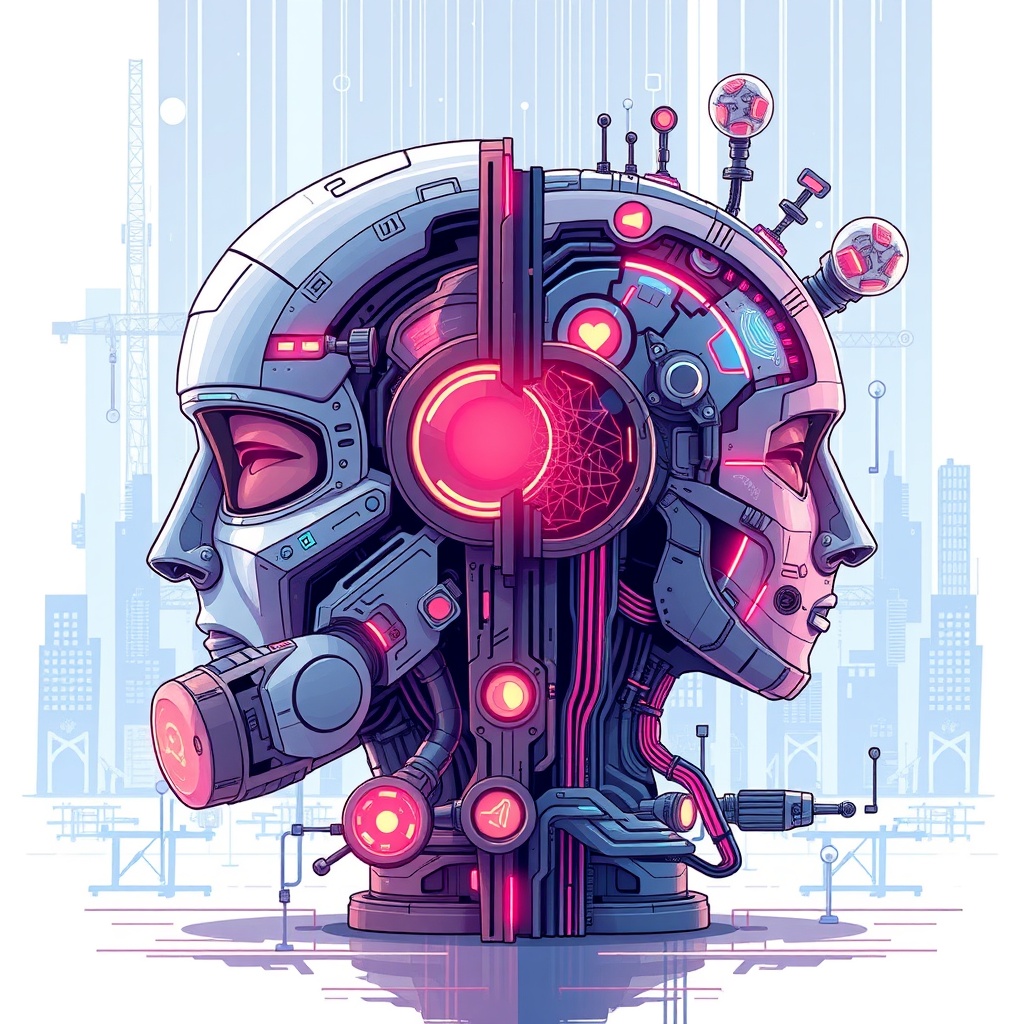
Neural networks, inspired by the human brain, are the backbone of deep learning. These interconnected layers of nodes process data hierarchically, extracting features at each level. Convolutional neural networks (CNNs) excel in image analysis, while recurrent neural networks (RNNs) handle sequential data like speech. The rise of transformers, as seen in models like GPT-3, has revolutionised NLP, enabling human-like text generation and translation.
Deep learning’s success hinges on massive datasets and computational power, often requiring specialised hardware like GPUs. Despite its complexity, frameworks like Keras abstract the intricacies, making it accessible to developers. As we push the boundaries of AI’s future, neural networks will remain at the forefront, driving innovations we can scarcely imagine today.
Different Types of AI
Narrow AI vs. General AI
Narrow AI, or weak AI, excels in specific tasks but lacks broader understanding. Examples include virtual assistants like Siri and recommendation algorithms on streaming platforms. These systems operate within predefined boundaries, unable to transfer knowledge to unrelated domains. In contrast, general AI, or strong AI, aspires to human-like versatility, capable of reasoning, learning, and adapting across diverse contexts. While narrow AI thrives today, general AI remains theoretical, posing profound ethical and technical challenges.
The distinction between these types underscores AI’s current limitations and future potential. Narrow AI’s success lies in its specificity, delivering tangible benefits in healthcare, finance, and beyond. General AI, however, demands breakthroughs in cognition and consciousness, raising questions about autonomy and accountability. As we explore AI’s possibilities, the balance between ambition and pragmatism will shape its trajectory.
Reactive Machines and Limited Memory AI
Reactive machines, the simplest form of AI, respond to inputs without memory or context. IBM’s Deep Blue, which defeated Kasparov, epitomises this type—it analysed chess positions in real-time but couldn’t learn from past games. Limited memory AI, like self-driving cars, incorporates historical data to inform decisions, improving over time. These systems rely on recent inputs to navigate dynamic environments, blending reactivity with adaptive learning.
The evolution from reactive to limited memory AI reflects progress in machine learning and data utilisation. While reactive systems excel in static scenarios, limited memory AI thrives in complexity, adapting to real-world unpredictability. This progression hints at the next frontier: AI with theory of mind, capable of understanding emotions and intentions, bridging the gap between machines and humans.
Theory of Mind and Self-aware AI
Theory of mind AI represents a future where machines comprehend human emotions, beliefs, and intentions. This level of understanding would enable more natural interactions, such as empathetic customer service bots or collaborative robots. While still speculative, advances in affective computing and social robotics hint at its feasibility. Self-aware AI, the pinnacle of artificial intelligence, would possess consciousness and self-reflection, blurring the line between machine and sentient being.
The ethical implications of such advancements are profound, demanding rigorous debate and regulation. As we inch closer to these milestones, the focus must remain on aligning AI’s development with human values. The journey from narrow AI to self-aware systems is fraught with challenges, but it also holds the promise of unlocking unprecedented possibilities for humanity.
AI Applications in Everyday Life
AI in Smartphones and Home Devices
We interact with AI daily, often without realising it. Our smartphones use AI for facial recognition, voice assistants like Siri, and predictive text. Home devices, such as smart thermostats and security systems, leverage AI to learn our habits and optimise energy usage. These technologies make our lives more convenient, showcasing how AI seamlessly integrates into our routines.
Beyond convenience, AI enhances accessibility. Features like real-time translation and voice-to-text empower users with disabilities. As AI evolves, we can expect even smarter devices that anticipate our needs, transforming how we interact with technology at home and on the go.
AI in Healthcare and Medicine
AI is revolutionising healthcare, from diagnostics to personalised treatment plans. Machine learning algorithms analyse medical images with remarkable accuracy, aiding early detection of diseases like cancer. Our hospitals use AI-powered systems to monitor patients, predicting complications before they arise and improving outcomes.
Personalised medicine is another breakthrough. AI analyses genetic data to tailor treatments for individuals, reducing trial-and-error in prescriptions. While challenges like data privacy persist, the potential of AI to save lives and reduce healthcare costs is undeniable, making it a cornerstone of modern medicine.
AI in Transportation and Logistics
From self-driving cars to optimised delivery routes, AI is reshaping transportation. Autonomous vehicles rely on AI to navigate safely, reducing human error and accidents. Logistics companies use AI to streamline supply chains, predicting demand and minimising delays, ensuring goods reach us faster and more efficiently.
Public transport benefits too. AI-powered systems manage traffic flow and schedule maintenance, reducing congestion and downtime. As these technologies mature, we’ll see greener, smarter cities where AI drives sustainability and convenience.
Getting Started with AI Tools and Languages
Popular Programming Languages for AI
Python is our go-to language for AI, thanks to its simplicity and robust libraries like TensorFlow and PyTorch. R is another favourite for statistical analysis, while Java and C++ offer performance benefits for complex systems. Choosing the right language depends on your project’s needs, but Python’s versatility makes it ideal for beginners.
Learning these languages opens doors to AI development. Online tutorials and communities provide ample support, making it easier to start coding AI solutions. Whether you’re building chatbots or predictive models, mastering these tools is the first step toward creating impactful AI applications.
Essential AI Tools and Platforms
Platforms like Google Colab and Jupyter Notebooks simplify AI experimentation with cloud-based resources. Frameworks such as Keras and Scikit-learn offer pre-built algorithms, accelerating development. These tools democratise AI, allowing even beginners to build and deploy models without extensive infrastructure.
For collaboration, GitHub is invaluable. Sharing code and projects fosters learning and innovation. As AI tools evolve, they become more user-friendly, empowering more of us to contribute to this transformative field.
Setting Up Your First AI Project
Start small with a clear goal, like a sentiment analysis tool or image classifier. Gather a dataset—Kaggle and UCI Machine Learning Repository are great resources. Clean and preprocess the data, then choose a model suited to your task. Experiment, tweak, and learn from mistakes.
Document your progress and seek feedback from communities like Stack Overflow. Your first project might be humble, but it’s a stepping stone to more ambitious AI endeavours. Remember, every expert was once a beginner.
The Role of Machine Learning in AI
Supervised vs Unsupervised Learning
Supervised learning relies on labelled data to train models, ideal for tasks like spam detection. Unsupervised learning, on the other hand, finds patterns in unlabelled data, useful for clustering customer segments. Both approaches have strengths, and choosing the right one depends on your data and objectives.
Hybrid methods, like semi-supervised learning, combine the best of both worlds. Understanding these techniques helps us design smarter AI systems that adapt to diverse challenges, from fraud detection to recommendation engines.
Reinforcement Learning Explained
Reinforcement learning trains models through trial and error, rewarding desired behaviours. It’s behind breakthroughs like AlphaGo and autonomous robotics. This approach mimics how we learn, making it powerful for dynamic environments where rules aren’t predefined.
Applications range from game AI to resource management. While complex, reinforcement learning pushes the boundaries of what AI can achieve, teaching machines to navigate the unpredictable real world.
Choosing the Right Machine Learning Model
Selecting a model involves balancing accuracy, speed, and interpretability. Decision trees are transparent but may overfit, while neural networks excel at complex tasks but require vast data. Consider your project’s constraints—sometimes a simpler model is more practical.
Tools like AutoML automate model selection, saving time for beginners. As you gain experience, you’ll develop intuition for matching models to problems, a skill crucial for effective AI development.

Data The Fuel for AI
Understanding Data Sets for AI
Data is the foundation of AI. Structured data, like spreadsheets, is easy to process, while unstructured data, such as images or text, requires preprocessing. The quality and diversity of your dataset directly impact your model’s performance, so invest time in sourcing and curating it carefully.
Open datasets, like those from government portals or academic institutions, are invaluable for practice. Remember, garbage in, garbage out—clean, relevant data is non-negotiable for building reliable AI systems.
Data Cleaning and Preparation
Cleaning data involves handling missing values, removing duplicates, and normalising formats. Tools like Pandas in Python streamline this tedious but critical step. Well-prepared data reduces noise, ensuring your model learns meaningful patterns rather than anomalies.
Feature engineering—creating new variables from raw data—can enhance model accuracy. This step requires domain knowledge and creativity, turning raw data into actionable insights that drive AI success.
Ethical Considerations in Data Usage
AI’s power comes with responsibility. Biased data can perpetuate discrimination, while privacy breaches erode trust. We must anonymise sensitive information and ensure datasets represent diverse populations. Transparency about data sources and usage builds accountability.
Regulations like GDPR guide ethical practices, but the onus is on us to prioritise fairness and privacy. Ethical AI isn’t just a legal requirement—it’s a moral imperative for building trust and inclusivity in technology.
Building Your First AI Model
Step-by-Step Guide to Model Building
Building your first AI model can feel daunting, but breaking it down into manageable steps makes it achievable. Start by defining your problem and gathering relevant data. Next, choose a suitable algorithm—whether it’s regression, classification, or clustering. Tools like Python libraries or TensorFlow simplify the process. Finally, train your model and evaluate its performance. Remember, iteration is key; refining your model improves accuracy over time.
Once your model is trained, it’s time to deploy it. Platforms like AWS or Google Cloud offer scalable solutions. Testing in a real-world environment helps identify gaps. Don’t shy away from tweaking parameters or even revisiting your data. The goal is a robust model that delivers reliable results. With patience and persistence, you’ll master the art of model building.
Testing and Validating Your AI Model
Testing and validation are critical to ensuring your AI model works as intended. Split your data into training and testing sets to avoid overfitting. Use metrics like accuracy, precision, and recall to gauge performance. Cross-validation techniques, such as k-fold, provide a more comprehensive assessment. If your model underperforms, revisit your data or algorithm choices.
Validation doesn’t end with technical metrics. Consider ethical implications, especially if your model impacts decision-making. Bias in data or outcomes can have real-world consequences. Tools like fairness indicators help identify and mitigate biases. A well-validated model is not just accurate but also fair and transparent.
Common Pitfalls in Model Development
One common pitfall is neglecting data quality. Garbage in, garbage out—flawed data leads to unreliable models. Ensure your data is clean, representative, and free from biases. Another mistake is overcomplicating the model. Simpler models often outperform complex ones, especially with limited data. Avoid overfitting by using regularization techniques.
Finally, don’t overlook scalability. A model that works well on a small dataset might fail under larger loads. Plan for growth from the outset. By anticipating these pitfalls, you’ll build models that are both effective and resilient.
AI Ethics and Privacy Concerns
The Importance of Ethical AI
Ethical AI ensures that technology serves humanity without causing harm. It’s about fairness, accountability, and transparency. For instance, AI used in hiring should avoid biases against certain demographics. Ethical frameworks, like those from the EU or IEEE, provide guidelines. We must prioritise human rights and societal well-being in AI development.
Ethics also extend to environmental impact. Training large models consumes significant energy. Opt for energy-efficient algorithms and sustainable practices. Ethical AI isn’t just a moral obligation—it builds trust and ensures long-term adoption.
Privacy Issues in AI Applications
AI often relies on vast amounts of personal data, raising privacy concerns. Compliance with regulations like GDPR is non-negotiable. Techniques like federated learning allow model training without centralising sensitive data. Anonymisation and encryption further protect user privacy.
Transparency is equally important. Users should know how their data is used and have control over it. Privacy-by-design principles integrate these considerations from the outset. Balancing innovation with privacy safeguards is essential for ethical AI.
Developing Responsible AI Solutions
Responsible AI solutions align with ethical and privacy standards. Start by involving diverse stakeholders in development. Regular audits ensure compliance and identify potential issues. Open-source tools like AI fairness toolkits help maintain accountability.
Education is another pillar. Teams must understand ethical implications and best practices. By fostering a culture of responsibility, we create AI that benefits everyone. The future of AI depends on our commitment to these principles.
The Future of AI Trends and Predictions
Emerging AI Technologies
AI is evolving rapidly, with breakthroughs like quantum AI and neuromorphic computing on the horizon. These technologies promise unprecedented speed and efficiency. Generative AI, such as GPT-4, is transforming content creation. Edge AI enables real-time processing on devices, reducing reliance on cloud infrastructure.
Another exciting trend is AI-driven automation in industries like healthcare and logistics. These advancements aren’t just theoretical—they’re reshaping how we live and work. Staying informed about emerging technologies ensures we’re prepared for the future.
The Impact of AI on Future Jobs
AI will undoubtedly disrupt job markets, automating routine tasks while creating new roles. Upskilling is crucial to remain competitive. Fields like AI ethics, data science, and robotics will see growing demand. Collaboration between humans and AI will define the workplace of tomorrow.
However, job displacement is a real concern. Policymakers and businesses must invest in retraining programs. A proactive approach ensures a smooth transition and equitable opportunities for all.
Preparing for an AI-Driven Future
Preparation begins with education. Schools and universities must integrate AI literacy into curricula. Lifelong learning platforms, like online courses, make upskilling accessible. Businesses should adopt AI strategically, focusing on augmenting human capabilities.
On a societal level, we must address ethical and regulatory challenges. Public-private partnerships can foster innovation while safeguarding rights. The future is AI-driven—embracing it thoughtfully ensures shared prosperity.

AI in Business Opportunities and Challenges
Leveraging AI for Business Growth
AI offers businesses unparalleled opportunities for growth. From personalised marketing to predictive analytics, it enhances decision-making and efficiency. Chatbots improve customer service, while AI-driven logistics optimise supply chains. The key is identifying areas where AI adds the most value.
Investing in AI talent and infrastructure is essential. Partnering with experts, like those at Bennetts Design, ensures successful implementation. AI isn’t just a tool—it’s a competitive advantage.
Overcoming Implementation Challenges
AI adoption isn’t without hurdles. Data silos, lack of expertise, and high costs can stall projects. Start small with pilot programs to demonstrate ROI. Cloud-based AI solutions reduce upfront investments. Training employees fosters buy-in and smooths the transition.
Regulatory compliance is another challenge. Stay updated on laws like GDPR to avoid penalties. With careful planning, businesses can navigate these obstacles and unlock AI’s full potential.
Case Studies of AI in Business
Real-world examples highlight AI’s transformative power. Retailers use AI for inventory management and demand forecasting. Banks deploy fraud detection systems to safeguard transactions. Healthcare providers leverage AI for diagnostics and personalised treatment plans.
These case studies underscore AI’s versatility. By learning from successful implementations, businesses can tailor AI solutions to their unique needs. The future belongs to those who harness AI’s potential wisely.
AI and Creativity
AI in Art and Music
We’ve seen AI transform creative fields like art and music, generating everything from paintings to symphonies. Tools like AI-powered platforms allow artists to experiment with new styles, while algorithms compose music that rivals human creations. Yet, the debate lingers: can AI truly understand emotion, or is it merely mimicking patterns? The answer lies in the balance between human intuition and machine precision.
AI’s role in music extends beyond composition to performance and production. From virtual bands to personalised playlists, technology is reshaping how we experience sound. While purists argue it lacks soul, others celebrate its ability to democratise creativity, making art accessible to all. The future promises even more collaboration between humans and machines.
Writing and Content Creation with AI
AI has become a valuable ally in writing, assisting with everything from grammar checks to generating entire articles. Tools like GPT-4 can draft coherent narratives, but they lack the nuance of human experience. We use these tools to streamline workflows, yet the best content still requires a human touch—whether it’s injecting personality or refining context.
For businesses, AI-driven content creation offers efficiency and scalability. However, ethical concerns arise around originality and authenticity. How do we credit AI-generated work, and where do we draw the line? These questions challenge us to redefine creativity in an era where machines can write, but humans must still inspire.
The Debate on AI and Human Creativity
The rise of AI sparks a heated debate: does it enhance or threaten human creativity? Some fear it will replace artists and writers, while others see it as a tool to amplify imagination. The truth likely lies in collaboration—AI handles repetitive tasks, freeing humans to focus on innovation and emotional depth.
Critics argue AI lacks the spontaneity and emotional resonance of human art. Yet, pioneers like creative technologists blend both worlds, producing groundbreaking work. The key is embracing AI as a partner, not a competitor, in the creative process. After all, creativity thrives when boundaries are pushed, not erased.
Learning Resources and Communities for AI Beginners
Online Courses and Tutorials
Starting your AI journey is easier than ever with platforms like Coursera and Udemy offering beginner-friendly courses. These resources cover everything from Python basics to advanced machine learning, often with hands-on projects. We recommend starting with free tutorials to gauge your interest before investing in paid programmes.
For those who prefer structured learning, universities like Stanford and MIT provide open-access AI courses. The flexibility of online learning allows you to pace yourself, making it ideal for busy schedules. Remember, consistency is key—dedicate time daily to build a strong foundation.
Books and Publications on AI
Books remain a timeless resource for deepening your AI knowledge. Titles like “Artificial Intelligence: A Guide for Thinking Humans” offer accessible insights, while technical manuals cater to budding developers. We suggest blending theory with practice—read a chapter, then apply the concepts through coding exercises.
Publications like AI journals and blogs keep you updated on industry trends. Subscribing to newsletters ensures you never miss breakthroughs. Whether you’re a visual learner or prefer text, there’s a resource tailored to your style.
Joining AI Forums and Groups
Community is invaluable when learning AI. Platforms like Reddit and Stack Overflow host vibrant discussions where beginners can ask questions and share progress. We’ve found that joining local meetups or online study groups fosters accountability and motivation.
Forums like Kaggle also offer competitions to test your skills against peers. The collaborative spirit of these communities demystifies complex topics and provides real-world feedback. Don’t hesitate to engage—every expert was once a beginner.
Practical Projects to Apply Your AI Knowledge
Simple AI Projects for Beginners
Begin with projects like a chatbot or image classifier to apply basic concepts. These tasks introduce you to data handling and model training without overwhelming complexity. We recommend using Python libraries like TensorFlow or PyTorch, which offer extensive documentation for newcomers.
Another fun starter project is sentiment analysis on social media posts. It teaches you about natural language processing while delivering tangible results. The goal is to build confidence—small wins pave the way for bigger challenges.
Intermediate Projects to Challenge Yourself
Once comfortable, tackle projects like predictive analytics or recommendation systems. These require deeper understanding but offer rewarding outcomes. For example, building a movie recommender sharpens your skills in collaborative filtering and data preprocessing.
Intermediate projects often involve real-world datasets, bridging the gap between theory and practice. Document your process—it’s a valuable habit for troubleshooting and future reference. Remember, mistakes are part of the learning curve.
Contributing to Open Source AI Projects
Open source contributions are a fantastic way to grow while giving back. Platforms like GitHub host countless AI projects seeking collaborators. Start by fixing bugs or improving documentation—it’s a low-pressure entry point.
Contributing exposes you to diverse coding styles and best practices. Plus, it’s a resume booster. We’ve seen many beginners transition to professionals through open source. The key is persistence—every line of code counts.
Frequently Asked Questions
Can AI replace human creativity?
AI can mimic creativity but lacks the emotional depth and originality of humans. It excels at generating ideas or automating tasks, but true innovation still requires human intuition. Think of AI as a collaborator, not a replacement, in creative fields.
What are the best programming languages for AI beginners?
Python is the top choice due to its simplicity and robust libraries like TensorFlow. R is also popular for statistical analysis. Start with Python—it’s versatile and widely supported, making it ideal for beginners diving into AI development.
How do I stay updated with AI advancements?
Follow reputable blogs, subscribe to journals, and join online communities like DeepLearning.AI. Attending webinars and conferences also helps. Consistency is key—dedicate time weekly to explore new trends and tools in the fast-evolving AI landscape.
Is ethical AI development important?
Absolutely. Ethical AI ensures fairness, transparency, and accountability in applications. From bias mitigation to privacy protection, responsible development builds trust and safeguards users. Always consider the societal impact of your AI projects.
